MGD → Master Graphic Design
How can Graphic Designers be agents of change and social transformation?
An expanded vision of Graphic Design for critical thinkers that question the present to build new futures.
Start date — September 2026
End date — July 2027
Course lenght — 400 hours
ECTS — 60 credits
Languages — Two editions
MGD → in English
MDG → in Spanish
The workshops, showcases, case studies and lectures of both editions are in English.
Schedule*
Monday, Tuesday and Wednesday
from 5pm to 9.15pm
Workshops from Monday to Friday
*For academic reasons, sessions may be scheduled exceptionally outside these hours.
Tuition fee
Academic year 25-26
English edition — 12.400€
(plus 500€ in registration fees)
Director
Marc Panero
Coordinator
Thais Caballero
Introduction
We live in a world that is constantly challenging us. Social issues, environmental, economic and cultural dilemmas… We need to generate interesting solutions that plan new futures out. Graphic Design is a discipline that changes and evolves constantly, with a potential to have an impact on all media: digital, print and environmental.
We need versatile Graphic Designers that are critical with the society. That question themselves about their social responsibility as contemporary professionals. With the energy necessary to tackle challenges posed by the rapidly evolving new-media landscape. That are capable of developing visual communication disruptive concepts. And that look out for answers for the problems of tomorrow.
Elisava’s Master in Graphic Design is a forward thinking one-year programme focused on the contemporary practice of Graphic Design. A course to find your own distinctive character as a professional and to explore new visual languages.
This focus is embodied in the completion of a global project in which we put into practice all the traditional areas of Graphic Design: visual identity, editorial, digital, packaging, environmental graphics and audiovisual… As well as other disciplines paramount in the nowadays scenario: strategy, research, verbal identity, process design, management, experimentation…
We want to work with curious, non-conformist students ready to use design to leave a mark on society. People that make questions, that rethink the role of Graphic Design and that are aware that this discipline can change social, environmental, economic and cultural contexts.
Multidisciplinary vision of Design
The holistic approach of the programme comprises all the needs of the Graphic Design practice. A global training to make your career evolve in a wide range of formats, topics, platforms and scales.
Our process is collaborative
We have a big team of professors, active professionals, experts and guests that are passionate for what they do and love sharing and generating synergies. Moreover, the experience is completed with other events such as lectures, showcases and case studies that allow students to connect with different fields of Graphic Design.
Personal evolution and professional guidance. Who are you? What are your interests? What do you want to do? To find your own voice we will explore and search for new languages, formats and ways to work. We will learn to read and comprehend professional realities.
We will continue learning more about typography, the backbone of Graphic Design and a very powerful functional tool with a huge expressive potential. We will study it from different perspectives, from the traditional ones to the ones offered by new technologies.

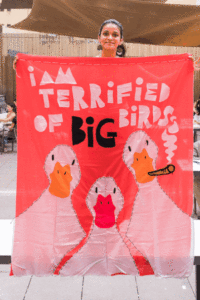
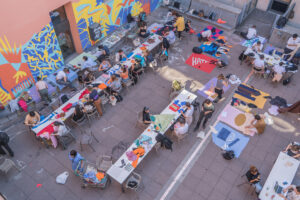
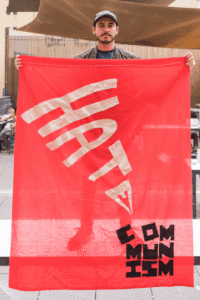
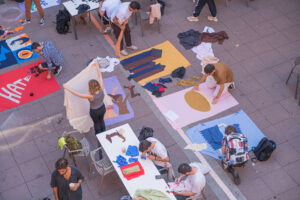
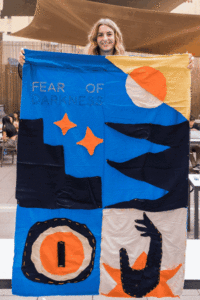
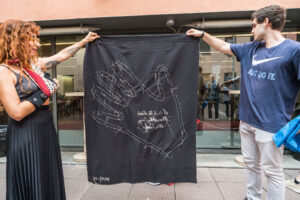
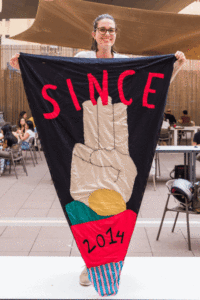
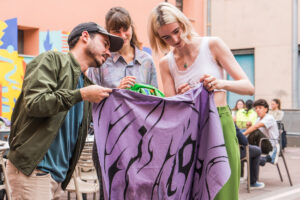
Our Values
Our passion? Graphic Design. We are committed to education and to open, flexible and multidisciplinary investigation oriented to the professional world.
Critical thinking
What’s happening in the world? The topics we will work with will always have a direct link to the nowadays reality. In this programme you will experiment a process of fluid transition between the academic and the professional world, with a critical vision of the field of Design to positively impact our society.
Teamwork
Graphic Designers are used to work as a team, being part of multidisciplinary or specialized teams, big and small. We have to learn to relate, share and connect with our colleagues, clients, suppliers and collaborators to work in an effective and solution-oriented way.
Learning through practice
You will grow as a Graphic Designer in this 100% practical programme created through different projects. The theory will have its place, needless to say, but the main project of this course will give you the true holistic vision.
Professor-student synergies
A great tandem. Leading practicing designers will be your mentors and your guide. During the whole course, you will have the constant support of your teachers and guests that will walk along with you to make the best out of your projects, finding the perfect balance between reflection, planning and action.
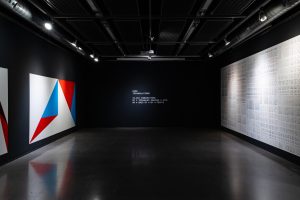
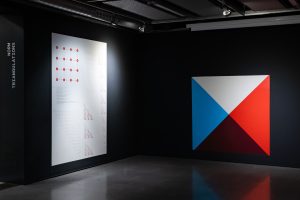
Featured Projects
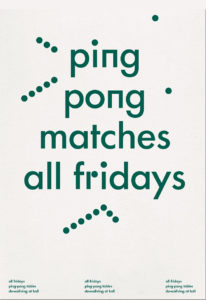
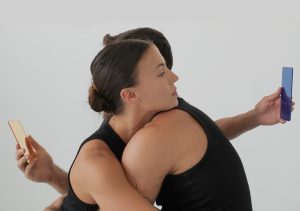
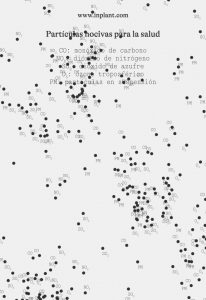
Methodology
What do you, designer, want to make out of this society? In the nowadays complex and changing context there are infinite paths to explore. You decide.
The methodology of this programme is designed to prepare multipurpose Creative Directors ready to lead global projects in any area of Graphic Design.
This is why this course is developed around the Master’s Project in which all the traditional areas of graphic design are considered along with new disciplines, achieving a comprehensive and complete vision.
Summing it up, the MGD brings together the practical perspective, professional and personal guidance in a format that is closely connected to the professional world, with experts who will give us the keys to influence society with our work.



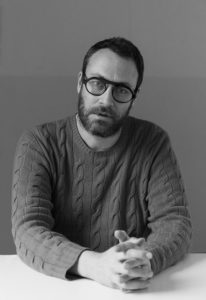
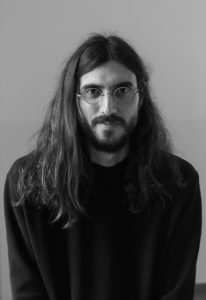
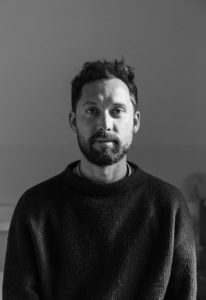

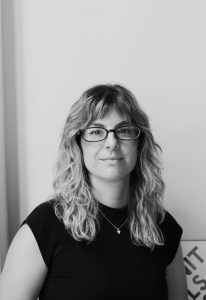

Guest Teachers and Lecturers
Workshops 25.26
Martin Lorenz, Two Points Net
Piero di Biase, Formula Type
David Galar, Thru Motion
Jorge León y Mikel Romero, LeónRomero
Graphic — Elisava Lectures 25.26
Kris De Decker, Low-Tech Magazine
Anja Kaiser
Delphine Volkaert, Base Design
Piero di Biase, Formula Type
Ann Richter, Studio Pandan
Bart de Baets
Masters’ Interdisciplinary Workshops Week 25
Kaave Pour, 21st Europe
Luna Maurer
Tereza Ruller, The Rodina
AI week workshops 24.25
Self Andrea, Domestic Data Streamers
Juan Arizti, Domestic Data Streamers
Masters’ Talks 25.26
Dries Depoorter
Ronan Bouroullec
Arno Brandlhuber, B+


Study plan
1
Master Project
↓
Each course is designed around a current topic to explore and experiment how Graphic Design can be a tool of change and transformation for society. You will work in teams and each one will define its own brief. You will create a global project to face different needs, environments, processes and languages with versatility.
1.1
Context and research
→
↓
Insightful classes on the Master’s Project theme taught by a specialist The goal of these sessions is to develop a critical mind as designers and citizens to create projects that lead to new ideas and forms that question the status quo of the profession and society.
1.2
Integral project
→
↓
Based on a predetermined theme, we will develop a holistic design project in teams of two. We will help you define the brief, find out how to research what you are interested in, set out the strategy and build the verbal and visual identity. You will create a language by developing digital and audiovisual design pieces, including editorial design, packaging and environmental graphics. You will present the project in a concise, attractive and powerful way in order to share it in the best possible way.
1.3
Consultancies
→
↓
The development of the Master Project requires constant assistance and support during the course. These sessions are the chance to share doubts to different professionals, a conceptual and formal consultancy to improve your project.
1.4
Design Crit
→
↓
Feedback sessions of informal discussion about the valuable and improvable sides of the Master Project with a guest professional and the Master’s Director. The critique considers the work in relation to the previously defined goals and objectives, and explores why certain decisions are taken and how effective (or not) they are in the context of the project.
1.5
Showcases and Case studies
→
↓
Meetings with local designers that, through their experiences, allow us to identify current phenomena and obtain new points of view, thoughts and references that will broaden our knowledge of the practice of graphic design.
Insightful classes on the Master’s Project theme taught by a specialist The goal of these sessions is to develop a critical mind as designers and citizens to create projects that lead to new ideas and forms that question the status quo of the profession and society.
Based on a predetermined theme, we will develop a holistic design project in teams of two. We will help you define the brief, find out how to research what you are interested in, set out the strategy and build the verbal and visual identity. You will create a language by developing digital and audiovisual design pieces, including editorial design, packaging and environmental graphics. You will present the project in a concise, attractive and powerful way in order to share it in the best possible way.
The development of the Master Project requires constant assistance and support during the course. These sessions are the chance to share doubts to different professionals, a conceptual and formal consultancy to improve your project.
Feedback sessions of informal discussion about the valuable and improvable sides of the Master Project with a guest professional and the Master’s Director. The critique considers the work in relation to the previously defined goals and objectives, and explores why certain decisions are taken and how effective (or not) they are in the context of the project.
Meetings with local designers that, through their experiences, allow us to identify current phenomena and obtain new points of view, thoughts and references that will broaden our knowledge of the practice of graphic design.
2
Fundamentals
↓
One never knows enough about typography. We will go deeper in the discipline that defines Graphic Design from various perspectives. The creation of good graphic systems allow us to efficiently articulate our projects through different disciplines, formats and media. Experimenting is an intrinsic part that we must never forget.
2.1
Typography
→
↓
Typography helps us show ideas and information in a structured and understandable way. We explore different sides of typography usage in various applications, both on physical as well as on digital, without leaving the most technical aspects behind. We develop ways of communication with the most essential thing, letters.
2.2
Graphic Systems
→
↓
We already know the big possibilities of graphic systems, considered to be the Swiss knife of Design. Through theory, practical workshops and project examples, we will reach a double goal: to make a global identity project through the creation of a graphic system.
2.3
Experimentation
→
↓
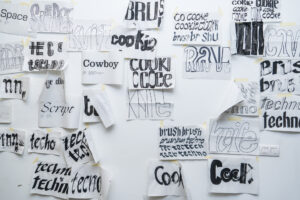
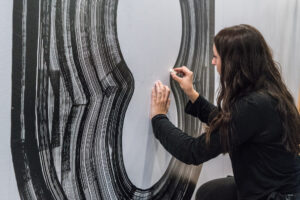
It is very important to take into consideration all the opportunities and spaces to experiment. Even though many of these explorations do not have a definite focus, they are extremely useful when making a difference in a signature or the identity of a designer.
2.4
Art Direction
→
↓
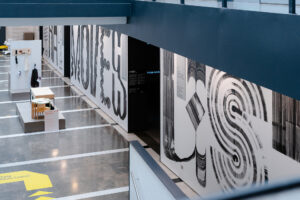
The overwhelming amount of visual information we are exposed to every day requires an effort to differentiate and develop our own visual codes in order to connect with an audience through any type of media. We will explore how to deepen and strengthen visual languages through art direction, the supervision of all creative aspects of a project from a designer’s point of view.
Typography helps us show ideas and information in a structured and understandable way. We explore different sides of typography usage in various applications, both on physical as well as on digital, without leaving the most technical aspects behind. We develop ways of communication with the most essential thing, letters.
We already know the big possibilities of graphic systems, considered to be the Swiss knife of Design. Through theory, practical workshops and project examples, we will reach a double goal: to make a global identity project through the creation of a graphic system.
It is very important to take into consideration all the opportunities and spaces to experiment. Even though many of these explorations do not have a definite focus, they are extremely useful when making a difference in a signature or the identity of a designer.
The overwhelming amount of visual information we are exposed to every day requires an effort to differentiate and develop our own visual codes in order to connect with an audience through any type of media. We will explore how to deepen and strengthen visual languages through art direction, the supervision of all creative aspects of a project from a designer’s point of view.
3
Professional projection
↓
Graphic Design is not only about the concept, the shape, the colours or the types. It’s also a business; establishing human relations, working in a team, looking out for new opportunities, making good presentations in front of the clients, invoicing profitable projects… These topics are part of the routine of the job and they need to be perfectly implemented.
3.1
Principles of Modern Teamwork
→
↓
We no longer work on our own. The industry makes us work along with clients, users and other profiles to complete our tasks in an excellent way. These collaborations don’t happen out of the blue; they are generated. We will design our own processes of co-creation and we will establish frames to work in a fluid and efficient way.
3.2
Design Management
→
↓
Did I receive a good brief? How do I organize time and tasks? How much should I charge for a project? How do I prepare a budget that contains the work I’ll have to perform? This class will give us the tools needed to manage a studio and/or a work team, while it will help us understand how the processes embedded in the Design field function.
3.3
Professional development
→
↓
What kind of professional am I? What do I need to turn into who I want to be? Do I feel that sometimes I try to align my projects with my values, emotions and beliefs? We will understand who we want to be, how to develop our habilites and which are the best ways for the world to get to know our superpowers.
We no longer work on our own. The industry makes us work along with clients, users and other profiles to complete our tasks in an excellent way. These collaborations don’t happen out of the blue; they are generated. We will design our own processes of co-creation and we will establish frames to work in a fluid and efficient way.
Did I receive a good brief? How do I organize time and tasks? How much should I charge for a project? How do I prepare a budget that contains the work I’ll have to perform? This class will give us the tools needed to manage a studio and/or a work team, while it will help us understand how the processes embedded in the Design field function.
What kind of professional am I? What do I need to turn into who I want to be? Do I feel that sometimes I try to align my projects with my values, emotions and beliefs? We will understand who we want to be, how to develop our habilites and which are the best ways for the world to get to know our superpowers.
4
Workshops
↓
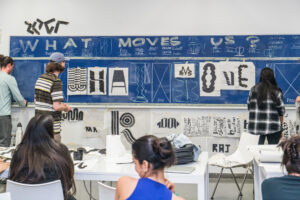
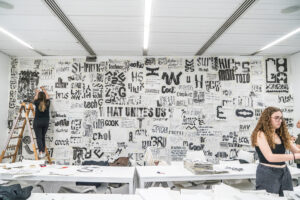
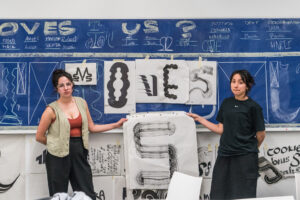
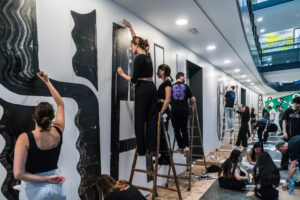
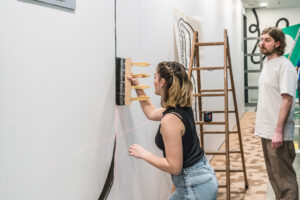
Workshops allow us to supplement and deepen our knowledge around other Graphic Design competences and disciplines. They are five-day events along with specialists and renowned professionals in which we will share experiences and synergies. Usually they follow a Monday to Friday schedule.
4.1
Systemic Type Design
→
↓
We live in a (new) golden age of systemic type design. The new technologies and easy-to-use programmes have leveled the field and give us a chance to experiment with new ideas. The world of display fonts has been witness to many new impulses; fonts have turned into more flexible, variable and kinetic than ever.
4.2
Motion Graphic Systems
→
↓
We are witnesses of a new way of consuming information. Digital media are the new containers. The workshop consists of developing the audiovisual behavior of a brand through a creative concept that uses motion as the main axis to communicate. An animated graphic system that represents the brand values and will be able to communicate on digital media.
4.3
Collaboration
→
↓
The Graphic Design job is enriched through collaborations with other fields of work. We will carry out a workshop with other Master’s programmes of Elisava, guided by guest instructors, to explore the interdisciplinary capacities of the students.
4.4
Experience
→
↓
Investigation, experimentation and observation are essential to nurture talent. In this sense, we will share and learn, during a whole week, from an important personality of the international design scene that has developed a distinctive and recognizable visual language.
4.5
Grad Show
→
↓
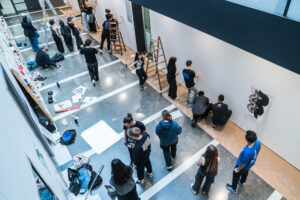
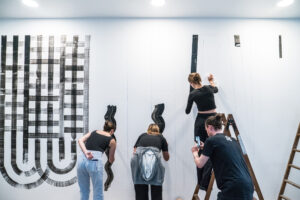
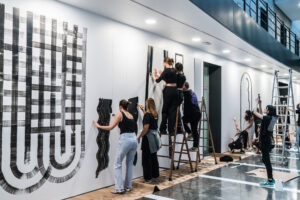
The last workshop of the course focuses on showing to the public the experiences of the Master through different formats. We will face the challenge of creating an exhibition and editorial project, real and complete, in an intense process that happens in a short period of time and that culminates at the Grad Show.
We live in a (new) golden age of systemic type design. The new technologies and easy-to-use programmes have leveled the field and give us a chance to experiment with new ideas. The world of display fonts has been witness to many new impulses; fonts have turned into more flexible, variable and kinetic than ever.
We are witnesses of a new way of consuming information. Digital media are the new containers. The workshop consists of developing the audiovisual behavior of a brand through a creative concept that uses motion as the main axis to communicate. An animated graphic system that represents the brand values and will be able to communicate on digital media.
The Graphic Design job is enriched through collaborations with other fields of work. We will carry out a workshop with other Master’s programmes of Elisava, guided by guest instructors, to explore the interdisciplinary capacities of the students.
Investigation, experimentation and observation are essential to nurture talent. In this sense, we will share and learn, during a whole week, from an important personality of the international design scene that has developed a distinctive and recognizable visual language.
The last workshop of the course focuses on showing to the public the experiences of the Master through different formats. We will face the challenge of creating an exhibition and editorial project, real and complete, in an intense process that happens in a short period of time and that culminates at the Grad Show.
5
Events
↓
Listening is learning. Above all, when professionals, both emerging and established, share their life experiences through their professional careers. Inspiration must find you working, but also paying attention.
5.1
Graphic — Elisava Lectures
→
↓
We invite prestigious international designers to speak at lectures that allow us to learn about experiences, projects and case studies of different fields of design first hand.
5.2
Masters’ Talks
→
↓
We organize talks with famous creators of different fields that allow us to share experiences, observe design phenomena, obtain new ways of looking at things, reflections and references that enrich our interdisciplinary perspective of design.
We invite prestigious international designers to speak at lectures that allow us to learn about experiences, projects and case studies of different fields of design first hand.
We organize talks with famous creators of different fields that allow us to share experiences, observe design phenomena, obtain new ways of looking at things, reflections and references that enrich our interdisciplinary perspective of design.
Due to our interest to constantly improve our programme and the professional realities of our teachers, we keep the right to make changes in the content and the professors of the course.
Experience
“Thanks to a team of amazing teachers and directors who believe in your potential and always push you to be the best that you can, I really stepped out of my comfort zone. The course was a very enlightening experience and it turned me into a stranger, more informed, and more confident designer” Nathalie Hanna, MGD 20
Explore all the disciplines
How can you change the world through Graphic Design? Find your professional path in an independent way. After your Degree Studies, the MGD will allow you to broaden your knowledge to find your own formula.
Discover your potential
This is the moment in which you start your own adventure. In which you choose your future. We offer you the tools and needed experience to investigate, design, direct and lead a creative process.
Build your portfolio
The projects you’ll do along the course will turn into your portfolio. During the whole programme you’ll carry out practical jobs that will allow you to build your complete, powerful and multidisciplinary portfolio.
Practical Info
Who is this programme for?
Graphic Design graduates and professional practitioners with experience. Exceptionally we will admit Communication, Fine Arts and Advertising graduates with a suitable portfolio. You must have advanced knowledge on Graphic Design software.
Editions and languages
There are two editions of each course, one in Spanish (MDG / Master Diseño Gráfico) and one in English (MGD / Master Graphic Design).
In both editions most of the workshops, showcases, case studies and lectures are in English.
Number of students
Each year a maximum of 20 students are selected in each edition of the programme. The candidates will be selected as inscriptions come through till the quota is filled.
Degree
Master’s Degree in Graphic Design, degree awarded by Universitat de Vic – Universitat Central de Catalunya (UVic-UCC) and Elisava, Barcelona School of Design and Engineering