Events are an integral part of the master programs: from workshops with guests professors to lectures series with relevant practitioners.
Wed, Oct 21, 2026
Graphic — Elisava lectures
7.30 pm — Sala Aleix Carrió
Open to the public

Luisa Milani, La Tigre
An illustrated alphabet of vibrant matters
An illustrated alphabet of vibrant matters
La Tigre looks at graphic design as a living material: shapes that breathe, colours that vibrate, signs that shift between the abstract and the figurative. The talk composes an illustrated alphabet of the qualities that guide the studio’s work, from synthesis to colour, from research to play. A journey through forms and words, where visual language becomes a playground and every element, however small, has something to say.
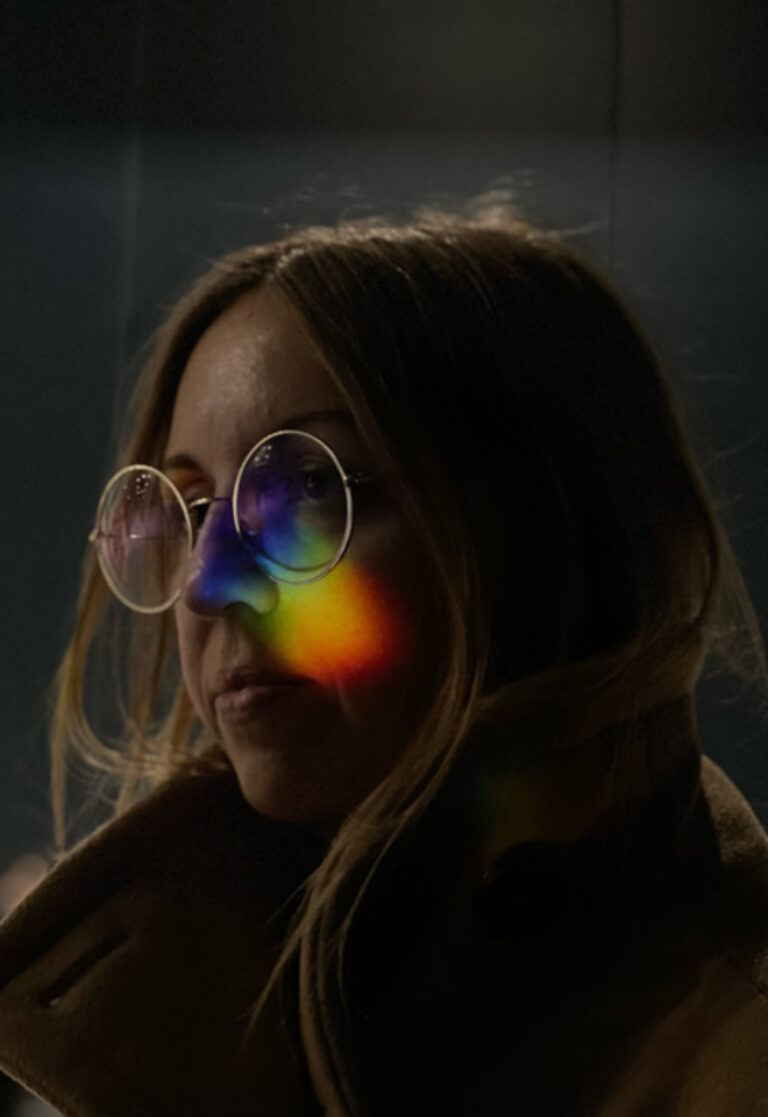
Luisa Milani is the art director and co-founder of the independent graphic design studio LaTigre. She studied at Politecnico di Milano and, a few years later, in 2009, founded the studio. Alongside her practice, she has spent several years teaching. Always in search of the sublime in color and form, her design approach is solid and concrete, yet spontaneous—free from constraints or creative limits. She draws inspiration from everything around her, making intuition a core aspect of her practice. A long-time yoga practitioner, she brings the same balance and awareness to her creative work, leaving room for serendipity, her motto.
La Tigre is a graphic design studio founded and directed by Luisa Milani and Walter Molteni, members of AGI (Alliance Graphique Internationale). Since 2009, the studio has been developing multiform visual languages in which formal research is driven by synthesis and a vibrant use of color, where the boundary between the abstract and the figurative at times becomes blurred. It collaborates with international entities such as Apple, Bitossi Home, Living and Abitare – Corriere della Sera, Max Mara, The New York Times, Phaidon, and Wired USA. Alongside commissioned projects, the studio conducts experimental research across various media.


Wed, Nov 4, 2026
Masters’ Talks
7.30 pm — Event at DHub
Open to the public

Izaskun Chinchilla
Los barrios del buen vivir: A Perspective from Tentative Design
Los barrios del buen vivir: A Perspective from Tentative Design
What if designers made fewer mistakes if they stopped trying to get it right the first time? Neighborhoods of Good Living explore a city understood not as a finished object, but as a living laboratory: spaces that are tested, inhabited, evaluated, and transformed. The lecture will explore the work of Izaskun Chinchilla Architects and the book Neighborhoods of Good Living to ask what happens when design abandons certainty and embraces hypothesis, experimentation, and adaptation. A perspective from tentative design to conceive of well-being as something experienced collectively.

Izaskun Chinchilla, a professor at the Bartlett School of Architecture, University College London (UCL), and an honorary fellow of the Royal Institute of British Architects (RIBA), integrates ecology, care, and participation into her practice, research, and teaching. Her work promotes more equitable and sustainable cities. She combines design, critical thinking, and cultural knowledge to promote an architecture that is educational, cooperative, and oriented toward the common good. She is the author of La ciudad de los cuidados (Catarata, 2021) and Los barrios del buen vivir (Catarata, 2026).
Izaskun Chinchilla Architects is a group of architects led by Izaskun Chinchilla that brings together interdisciplinary teams for each project. Their work focuses on optimizing the environmental performance of architecture, public space, facilities, art, and cultural products through innovation. Public engagement and social participation are pillars of their practice, which promotes collaboration in the construction of shared spaces and community-based decision-making regarding the use, location, and characteristics of the facilities they design.


past events
Wednesday,
March 8, 2023
7.30 pm

Tim Rodenbröker, trcc
graphic.elisava lectures
Creative Coding as a School of Thought
Our world is changing at a breathtaking pace. Technological progress is continuously leading to significant transformations. It is high time that we, as designers, courageously and critically engage with the technologies that shape our everyday lives. This requires that we consequently engage with the hidden structures that are hidden behind the visible surfaces. One method that makes this possible is called Creative Coding.
Tim Rodenbröker is a designer, entrepreneur and community builder. After several years of running his own studio and teaching at various international universities, he founded his own learning platform, around 2019, which he now runs full-time. As a creative technologist, he has worked for clients such as nytimes.com, IBM, CCCB, ZKM Karlsruhe, Slate+Ash, Holo Magazine, DEMO Festival and Springer Science and Business Media.
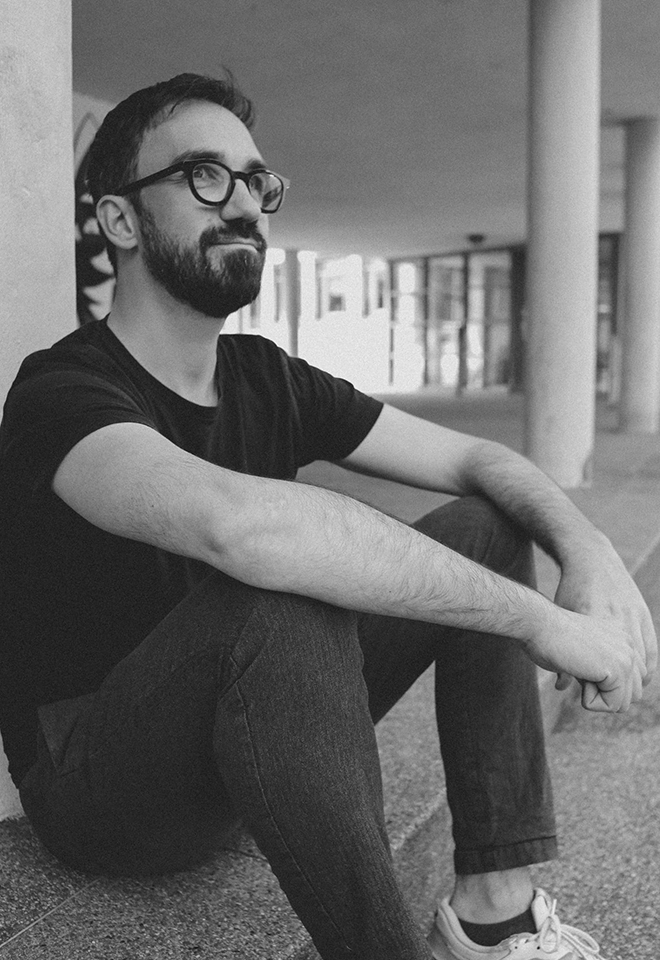
trcc (tim rodenbröker creative coding) is an international online learning platform with an associated community for creative coding in the realms of graphic design. With about 800 active students from all over the world and a broad network of experts from universities and agencies, festivals and conferences, the Patreon-funded platform is a globally renowned institution in the current landscape of creative coding education.


Wednesday,
February 22, 2023

Contemporary books
Bookworm 2
Awarded books
Only for MED students
In this second session we will focus on contemporary books, analysing some examples that have won awards in recent years.
What is currently considered a well-designed book?
Through the verdict of the jury of the LAUS awards and the “Best Book Design From All Over The World” we will be able to take a look at recent editorial design and detect what the trends are in this field. We will be able to assess the adequacy between form and content and explore the role of the designer in the process of creating a book.
The book has been the medium and the message of the diverse movements in the arts during the last century. The book, with its emphatic material presence, takes on a special value now that we are witnessing its dematerialization, reduced to digital data in electronic format.
Over the Bookworm sessions we will explore several iconic books that capture the spirit of the era in which they were designed. We will place the books in their context and try to define what makes them relevant in the history of 20th century book design. The Bookworm sessions are guided by Andreu Jansà, librarian and curator of the Enric Bricall Reserve Fund.


Wednesday
February 22, 2023
7.30 pm

Amical Dall, Assemble
Masters’ Talks
The Work of Repair
Event at COA, Plaça Nova 5
Book your seat (soon)
The Work of Repair
Amica will reflect on how architectural and creative practices can orientate themselves away from invention and innovation towards the patient and slow work of repair, and consider work that is based on making long-term, personal or ethical commitments to sites, situations, and social contexts. She will cover some of Assemble’s early work, before discussing a set of projects that reorientated her and the studio’s attitudes towards the city and the rural, material ethics and intergenerational justice.
Amica Dall is an inter-disciplinary practitioner focused on architecture and city culture and children’s right to the city. She is a founding member of Assemble, where she delivered more than 15 major projects over ten years. Her work as a writer and filmmaker has been broadcast on the BBC, exhibited at the Venice Biennale, and published in E-Flux. She recently co-wrote a book on post-carbon future for architecture with architecture practice, Material Cultures. Amica has taught across a wide range of subjects and works with both children and post-graduates.

Assemble is a multi-disciplinary collective working across architecture, design and art. Founded in 2010 to undertake a single self-built project, Assemble has since delivered a diverse and award-winning body of work, whilst retaining a democratic and co-operative working method that enables built, social and research-based work at a variety of scales, both making things and making things happen. Turner Prize in 2016, and nominated in 2022 to the Royal Academy in recognition of their collective contribution to the culture of city making.


Wednesday,
February 8, 2023
7.30 pm

Peter Biľak, Typotheque
graphic.elisava lectures
Giving voice to People
Giving voice to People
Peter will discuss reasons for designing type today, from seeking new possibilities within the Latin script, using cognitive research to fuel design project, to designing type for minority languages.
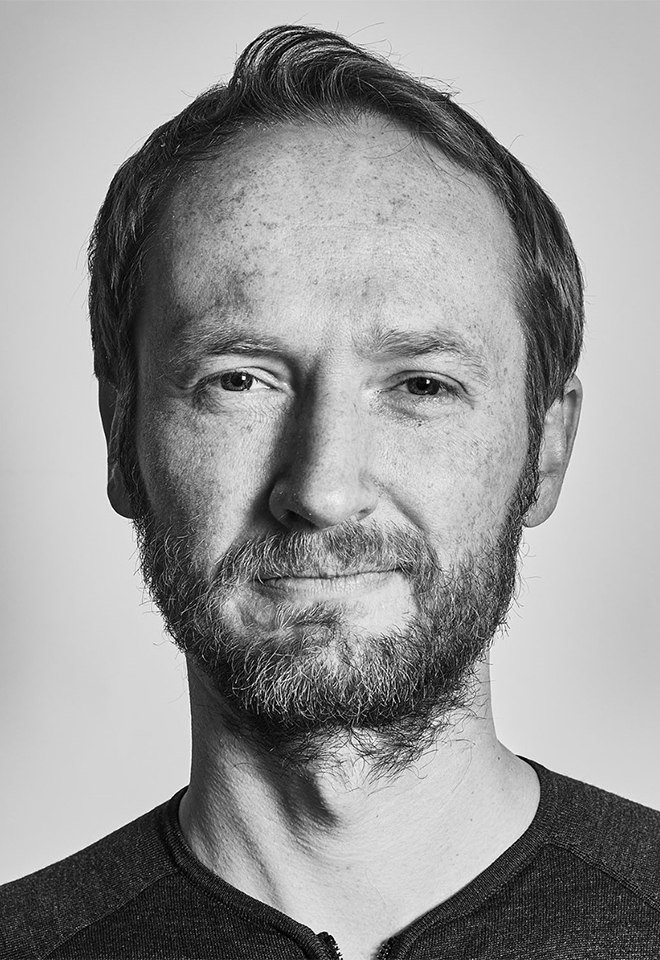
Peter Biľak works in the field of editorial, graphic, and type design. In 1999 he started Typotheque type foundry, in 2000, together with Stuart Bailey he co-founded art & design journal Dot Dot Dot, in 2012 he started Works That Work, a magazine of unexpected creativity, in 2015 together with Andrej Krátky he co-founded Fontstand.com, a font rental platform. He collaborates with the choreographer Lukas Timulak on creation of modern dance performances.
Typotheque is a type Company giving shape to language, designing for communication in a world that is increasingly digital and multicultural.


Wednesday,
January 25, 2023
7.30 pm

Luna Maurer, Moniker
Masters’ Talks
Rewind and fastforward
Rewind and fastforward
Luna Maurer will elaborate on Moniker’s relation with technology in the past 20 years and its impact on their practice. Moniker is currently developing a new outlook and perspective on technology, sparked by recent rapid developments in the field. The web changed from an emancipating democratizing network into an infrastructure for big capital, the screen from a desktop publishing interface to a fundamental extension of our identity. Luna will share their latest experiments.
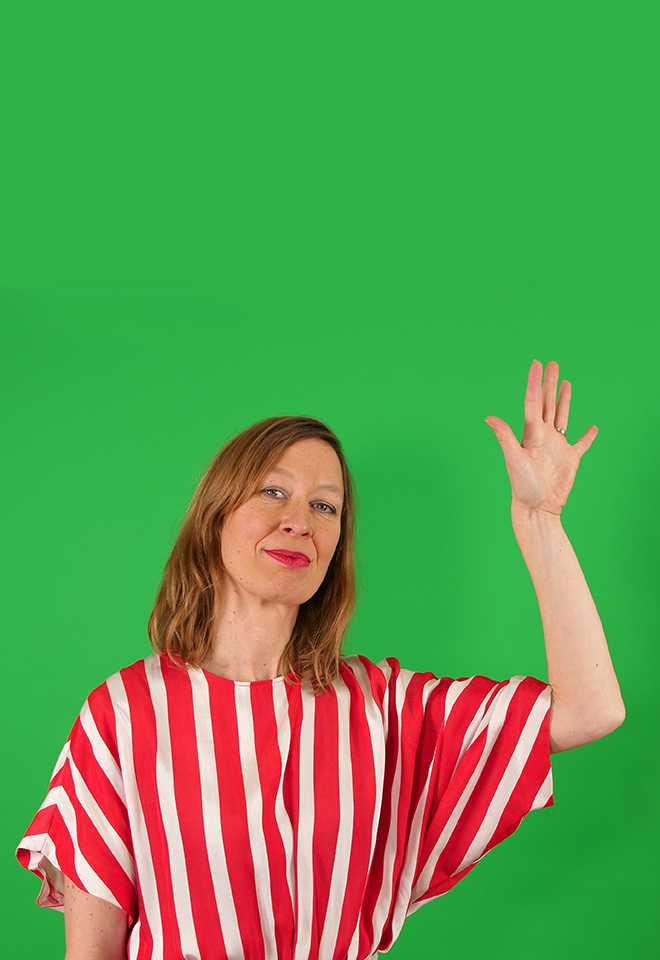
Luna Maurer is an interaction and media design artist. Originally from Stuttgart (Germany), she completed her studies at the Gerrit Rietveld Academy and the Sandberg Institute in Amsterdam.
With Roel Wouters she heads the Amsterdam based studio Moniker. Moniker is well known for authoring the Conditional Design Manifesto (together with Edo Paulus and Jonathan Puckey). Luna Maurer has been teaching media courses at the Gerrit Rietveld Academy, the Sandberg Institute, Royal Academy of Art, The Hague, HfG Karlsruhe and at Yale University School of Art.
Moniker explores the characteristics of technology and its influence on our daily lives. They have designed many participatory projects (online and offline), as well as other web projects, films and performances. Their clients range from cultural institutions like Stedelijk Museum, Amsterdam and Fondation Beyeler, Basel to more technology oriented clients like the Mozilla Foundation, Unity 3D and Google.
Moniker has won many awards, including a British Music Video Award, a Webby, several Dutch Design Awards and the Amsterdam Prijs voor de Kunst.


Wednesday,
January 11, 2023
7.30 pm

Dahyun Hwang, HHHA
graphic.elisava lectures
Between Digital and Analog
dahyunhwang.com
hhha.online
@da_hyonni
@hejhellohalloannyeong
Open to the public
Dahyun will talk about how we can convert analog into digital things and explore the possibilities of the web. Furthermore, how can we create exciting websites in unexpected ways? And how can we use online tools for better communication nowadays?

Dahyun Hwang is a graphic designer. She studied visual communication at University of Seoul in Korea and finished her master’s at Bauhaus University in Weimar, Germany. She thinks about how we can connect analog and digital. She is also a co-initiator of HHHA, a creative coding collective. She has participated in ‘Post Modern Child’ Exhibition in MoCA Busan and ‘POST IT!’ Exhibition in Tokyo. Her works have been featured in Monthly Design, It’s Nice That, CA Magazine, and so on.
HHHA (Hej Hello Hallo Annyeong) is a creative coding collective in which female creators gather to share and explore web-based works. Dahyun Hwang co-initiated HHHA with Naree Shin, and they gathered other teammates living in various places such as Germany, Denmark, and Korea.


Wednesday
November 30, 2022
7.30 pm

Viviane Stappmanns, Vitra Design Museum
Masters’ Talks
Curating for the Common Good
To curate means to care. Literally. In the case of design, these objects – and the exhibitions they are featured in – talk about the human drive for progress, about creative leadership, about material economies and technological innovations. But what does it mean to curate within the field of design in the 21st century? How can exhibitions and books make a contribution to fostering more just, socially and ecologically sustainable societies? In her lecture, she will provide insights into the hands-on practice of curating, and into the broader issues that may inform how we present, discuss and practice design in the future.
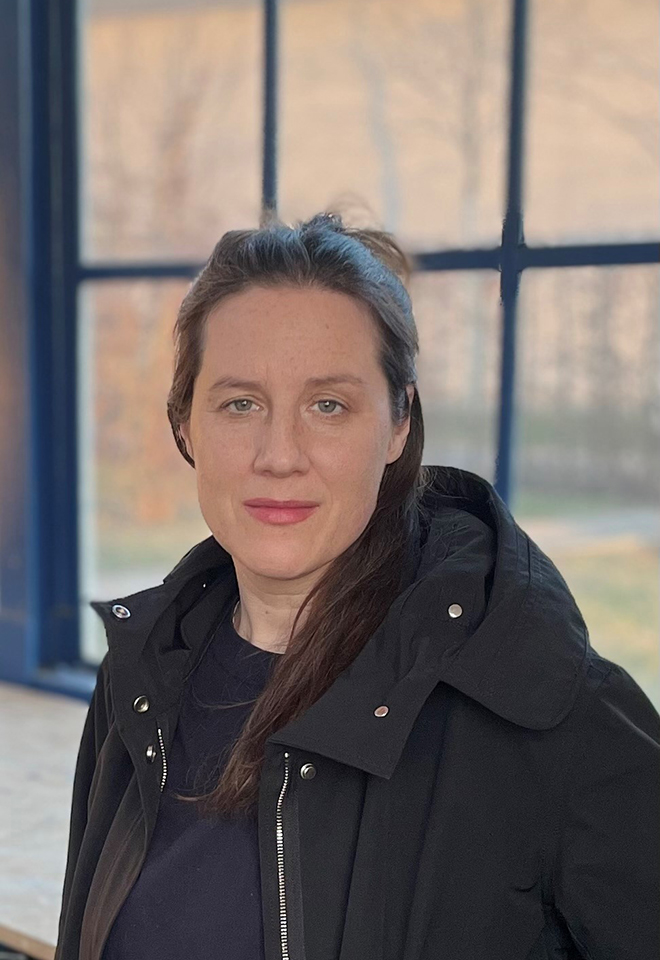
Viviane Stappmanns is a curator at the Vitra Design Museum in Weil am Rhein. She is interested in exploring the contribution curators can make to rethinking design as a practice concerned with ecological and social sustainability. In her exhibition and teaching work, she experiments with new, collaborative approaches to curating and exhibiting. She has taught at different schools and universities, among them the School of Architecture and Urban Design at RMIT University in Melbourne, Australia and, most recently the University of Arts and Design in Karlsruhe.
Prior to working at the Vitra Design Museum, Viviane has worked as an editor and curator within architecture and design contexts in Australia and Germany, and holds degrees in Interior Design and Journalism.
The exhibition “Here We Are! Women in Design 1900 – Today!” (2021) will open at the Barcelona Design Museum in October 2023. Currently, she is working on the international travelling exhibition “Garden Futures”, due to open at the Vitra Design Museum in Spring 2023.


1 & 2 — Exhibition «Typology. An ongoing study of everyday items», 2020 / 3 — Exhibition «Beyond the Surface», 2018 / 4 — Installation of the exhibition «Better Nature», 2019 / 5 & 6 — Exhibition «Here We Are! Women in Design», 2021 / 7 — Preparing the exhibition « Here We Are! Women in Design », 2021
Wednesday,
November 16, 2022
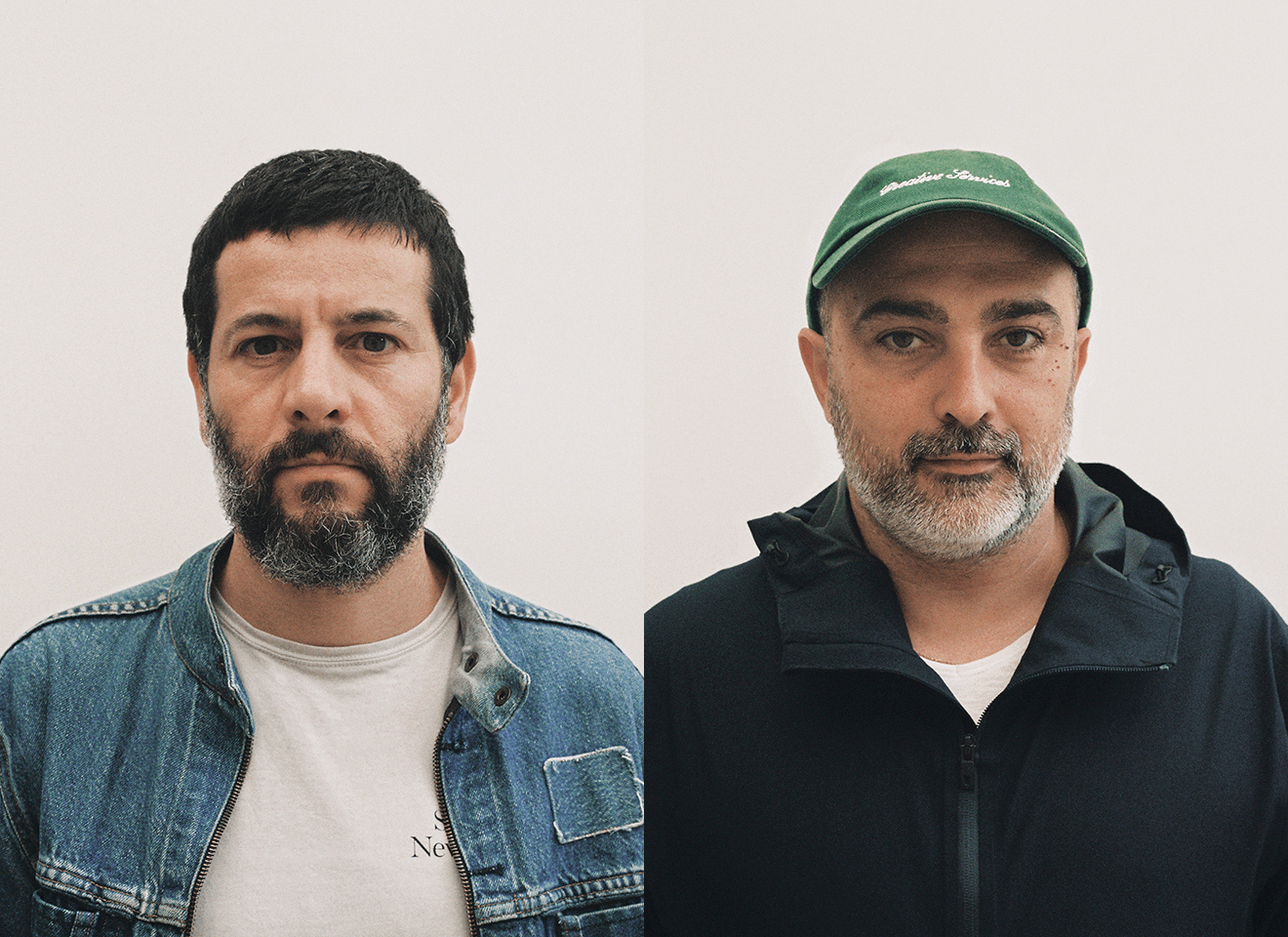
Albert Folch & Rafa Martínez, Folch
Case Studies
Latests projects
Only for MDV students
Latest projects
In an accelerated world, every aspect of our lives is in constant change. At Folch we bring together different disciplines to respond to every brief, always seeking to have an atypical vision. Each project is an opportunity to design concepts, brands, narratives and digital events, reaching and involving audiences to this new liquid paradigm.
Folch Creative-driven brand ecosystem. Acid House (creative and business innovation hub in Barcelona and Madrid), White Horse (creative production), Avanti Studio (city branding & way finding ), NOW (digital innovation and transformation), Creative Services (fashion and e-commerce), PILLS (digital education), Gallery Studio (New music formats), G.Records (Record label), Gallery (Music Innovation), Eldorado Agency (outdoor creative agency), J.Franc (3D visualization and AR/VR solutions), FFF (Digital type foundry) and Self (talent management).


Wednesday,
November 9, 2022

From 1900 to Postmodernism
Bookworm 1
Enric Bricall Special Collection
Only for MED students
Introduction to the Enric Bricall Special Collection, a collection of books whose design and typography represent excellence in 20th century editorial design. We will offer a historical review from 1900 to Postmodernism, passing through the interwar avant-garde, the New Typography and Swiss graphics.
We will look at some representative books from each period and analyse their characteristics. We will try to understand where their importance lies and why they have gone down in the history of graphic design as canonical examples of editorial design in the last century.
The book has been the medium and the message of the diverse movements in the arts during the last century. The book, with its emphatic material presence, takes on a special value now that we are witnessing its dematerialization, reduced to digital data in electronic format.
Over the Bookworm sessions we will explore several iconic books that capture the spirit of the era in which they were designed. We will place the books in their context and try to define what makes them relevant in the history of 20th century book design. The Bookworm sessions are guided by Andreu Jansà, librarian and curator of the Enric Bricall Reserve Fund.


Wednesday,
November 9, 2022

Pablo Juncadella, Mucho
Case studies
Degrow or grow in another way?
Only for MVD students
Degrow or grow in another way?
The value of a project cannot be measured only in monetary terms. And we are clear about that.
It is important for us to develop ideas and concepts that contribute to society, that help to fulfill an objective and that lead us to think beyond the limits. We call these projects ‘pro-bono’ and they are part of the commitment we have with others and with society, but especially with our community of designers.
How do we organize pro-bono projects? How do we limit collaboration so that it is sustainable for both parties? How do we maintain the client relationship over time?
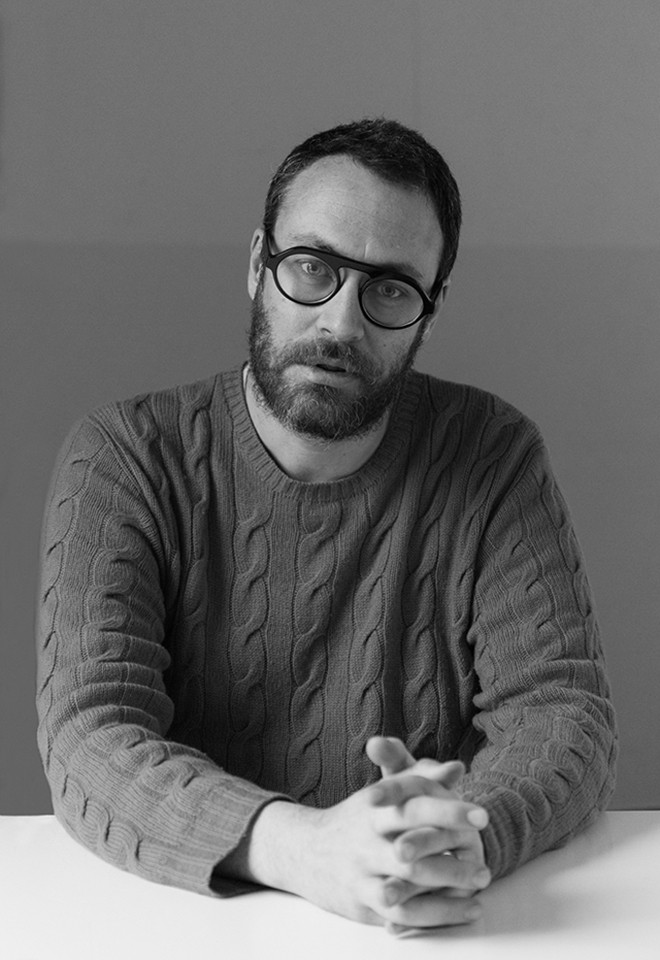
Pablo Juncadella
Co-founder and creative director at Mucho. Thanks to his constant search for new challenges, Pablo was promoted to the position of Creative Director of the English newspaper The Observer after working as a graphic designer for grafica and Pentagram. His global vision and his great interest in visual knowledge have been fundamental contributions to the growth of the studio. Today, together with his team at Mucho, he works with the purpose of finding solutions that fit in the positioning of the brands by contributing with original ideas.


Wednesday,
November 9, 2022

Robbie Whitehead, Apartamento Magazine
Case studies
Title
Title
Description of the session
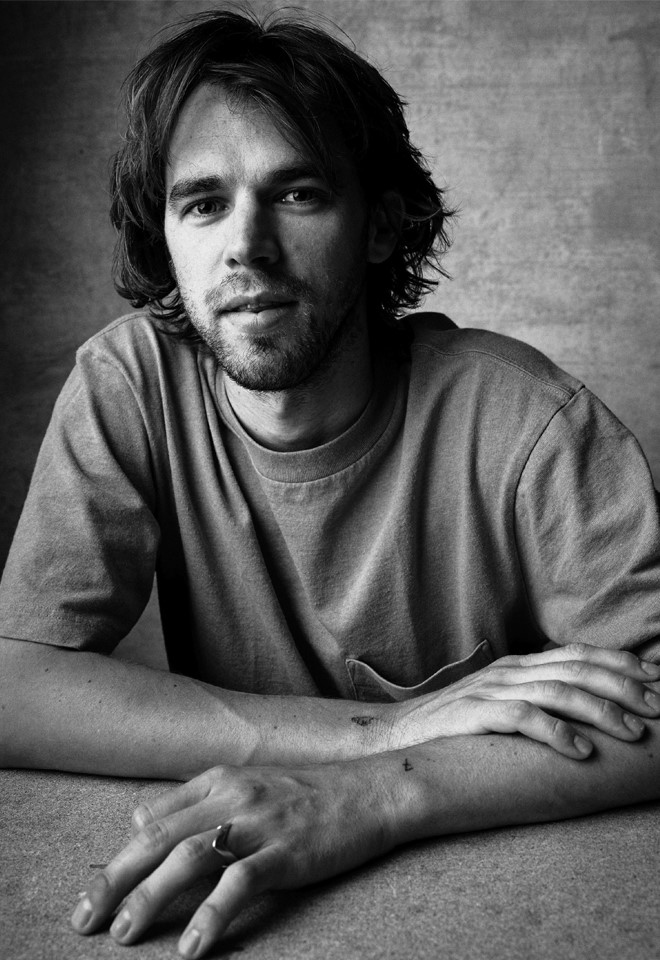
Robbie Whitehead (London, 1988) is the editorial director of the magazine Apartment. In 2010, after finishing his graphic design studies in Sydney, Australia, he came to Barcelona to work on the publication. In it, together with its founders Nacho Alegre, Omar Sosa and Marco Velardi, is responsible for the editorial direction of the magazine and the rest of the brand’s editorial projects, directing in a close manner a network of photographers, writers and illustrators of recognition international.
Apartamento is widely recognised as today’s most influential, inspiring, and honest interiors magazine. International, well designed, simply written, and tastefully curated since 2008, it is an indispensable resource for individuals who are passionate about the way they live. The publication is published biannually from its headquarters in Barcelona. It also has offices in New York, Milan and Berlin.


Tuesday,
November 8, 2022

Clara Layti, LLOS&
Showcase
Design-focused website development
After more than 10 years collaborating with designers for the creation of digital projects, we will analyze relevant works of our trajectory, share experiences and give examples of how to prepare the ideal hand off for the development of a website, making life easier for the developer and minimizing feedback and unforeseen events.

Clara Layti is a web programmer at LLOS& since 2020. She has led the development of web projects produced by studios such as Folch, Hey, Affaire or Proxi, among others. Working with the latest web development technologies, she seeks to adapt to the needs of each project to offer the best user experience. He studied Creation and Development of Digital Activities, specializing in UX design and web programming.
LLOS& is a web development studio in Barcelona specialized in pixel-perfect front-end finishing.
Our projects are programmed from scratch with emphasis on aesthetics, animations and interactions, almost always executed by the hand of art direction and design professionals.
