Events are an integral part of the master programs: from workshops with guests professors to lectures series with relevant practitioners.
Apr 23 — 27, 2026
Workshop
Serge Rompza, NODE Berlin Oslo
Beyond the Canon: Alternative Histories of Graphic Design
Only for MED students
Beyond the Canon: Alternative Histories of Graphic Design
Design history is not fixed — it is shaped by visibility, selection, and repetition.
This workshop revisits the canon of graphic design from a global perspective, focusing on historically relevant yet often underrepresented designers.
Each student will research and portray one designer, situating their work within its cultural, political, and technological context. Rather than simply presenting biographical information, participants will critically interpret and visually reframe these positions through editorial and typographic design.
The resulting works should not only communicate information but also respond visually to the designer’s attitude, working methods, and conceptual approach.
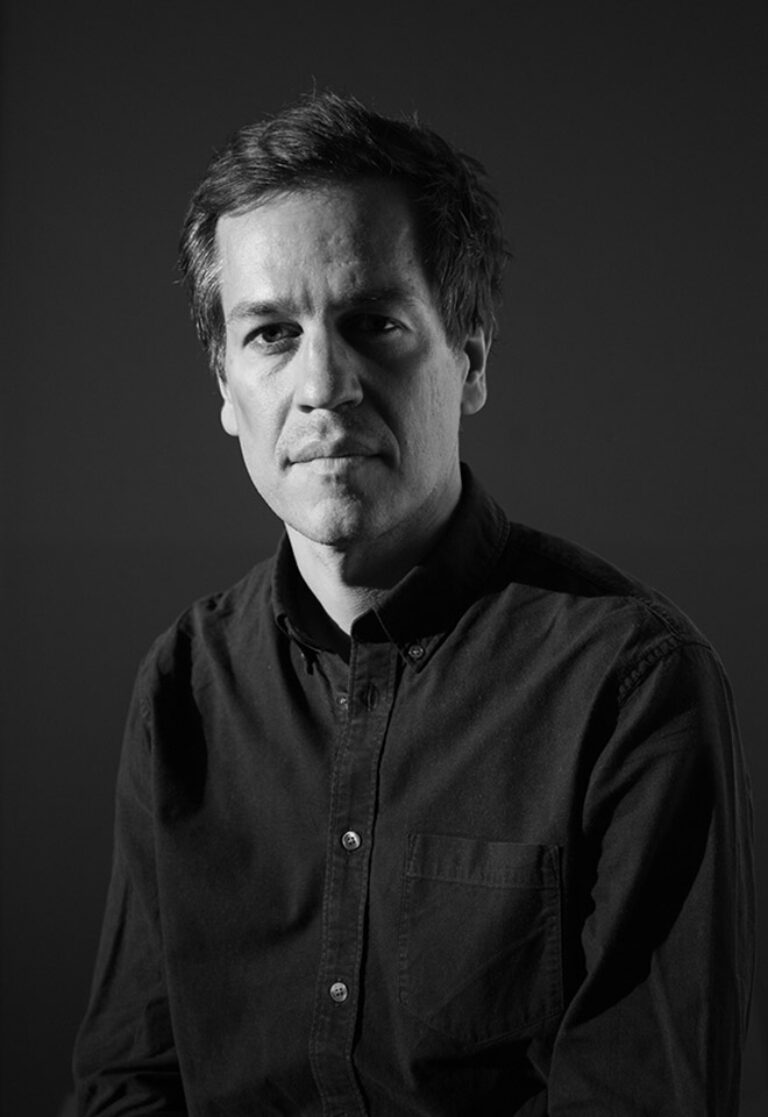
After graduating from Gerrit Rietveld Academie in Amsterdam, Serge Rompza has co-founded the Berlin and Oslo based design studio NODE in 2003, together with Anders Hofgaard. The two offices collaboratively focus on identity, print, exhibition and interactive work. Clients include Haus der Kulturen der Welt Berlin, Vitra, MIT Program in Art, Culture and Technology (ACT), Lithuanian Pavilion / La Biennale di Venezia, Office for Metropolitan Architecture (OMA).
Since 2004, he has regularly been teaching at art and design academies across Europe.


Feb 23 — 27, 2026
Workshop

Piero Di Biase, Formula Type
Modular approaches in Type Design: Resource or Restriction?
Only for MVD students
Modular approaches in Type Design: Resource or Restriction?
The workshop explores the possibilities that the module offers in structuring typographic forms, questioning whether it acts as a supportive framework or a creative constraint. Through the analysis of historical and contemporary modular typefaces, as well as the investigation of the module in art, design, and architecture, students will be guided to work within a modular system to design a display typeface. The aim is to understand how predefined structures can generate coherent visual languages while still allowing room for experimentation and expressive innovation.

© Andrea Arduini
Piero Di Biase is a graphic and type designer. He trained in the graphic arts sector and then became a graphic designer. After collaborating with various design agencies, in 2011 he co–founded Think Work Observe, where he worked for national and international clients until 2022, when he launched Formula Type, an independent digital foundry that produces and distributes retail and custom fonts. Since 2017, he has been a member of the Alliance Graphique Internationale (AGI).
Formula Type is a digital type foundry started in the wettest region in Italy. Formula is a potion blended especially for those who will drink it; Formula is a chemical equation that leads to a result. This playful yet precise idea captures the dual soul of Formula Type. Its past was graphic design, and its present is type design, but there’s no real separation between the past and the present. Our fonts are crafted with a flexible designer eye and in the fifteen years since our first releases they have evolved freely through experimentation. Our approach is that of expert beginners, always welcoming new partnerships and projects.


Wed, Apr 8, 2026
Graphic — Elisava lectures
7.30 pm — Sala Aleix Carrió
Open to the public

Bart de Baets
Paperclips
Paperclips
In his lecture, graphic designer Bart de Baets will show a large variety of works and elaborate more on the ways they find their form and are realized eventually. Although Bart’s practice is mostly spent working at the studio in Amsterdam, it is alternated by a parttime teaching position at the Royal Academy in The Hague, where he works with the first year students and the ones graduating. The way he teaches and cooks up his assignments is inspired by transforming everyday observations (at times obsessions) into educational exercises. The students are triggered to think of formal executions that evoke solutions close to Bart’s own practice visualizing abilities and editorial voice.
Although appearing less frequently today, Bart’s body of work’s been known to feature self initiated publications, such as Success and Uncertainty (together with Sandra Kassenaar), Dark and Stormy (together with Rustan Söderling), and Tabrat, a zine from 2022 in which de Baets confesses to be a tab hoarder (phone only, the browser tabs on his laptop are opened briefly and closed again efficiently) and shares them here with us in the charming A4-sized publication. His editorial assets have not been forlorn, and are frequently demonstrated more so in his collaborative works for artbook shop Page Not Found and exhibition space Nest (both are located in the city of The Hague). The talk at Elisava will prominently feature all of these works—and more—and provide insights into the developments of these designs by showing sketches, references and many inspirations.

Graphic designer Bart de Baets (1979, Knokke, BE) is based in Amsterdam. His design for the Sandberg Institute’s temporary master programme The Radical Cut Up was nominated for a Dutch Design Award. As a result, PostNL commissioned De Baets to design a series of stamps titled ‘Talk to the Hand’. With Sandra Kassenaar he designed the exhibition, campaign and catalogue for ‘Circulate’, an exhibition on photographic art acquisitions at the Stedelijk Museum Amsterdam. The two also design the graphic identity of Kunstmuseum Bochum. He designed ‘On the Necessity of Gardening: An ABC of Art, Botany and Cultivation’ (2021), which was published parallel to ‘The Botanical Revolution’, an exhibition at the Centraal Museum, Utrecht. That year, the Stiftung Buchkunst awarded the book with the highest prize in the category Best Book Design from all over the World. A second title in that series, Mothering Myths, an ABC of Art, Birth and Care was released in May of 2025, for which he collaborated once again with editors Laurie Cluitmans and Heske ten Cate. He holds a part-time teaching position at the Graphic Design department of the Royal Academy of Art in The Hague, and he has taught at the Gerrit Rietveld Academie in Amsterdam for fifteen years.
Being educated by notorious wild collaborator Will Holder, the radical typographic thinkers of Experimental Jetset and conceptual makers like Linda van Deursen, triggered Bart de Baets to think like an editor early in his graphic design studies, making zines with and for his peers, or whipping up catchy writings to go with his posters and projects. His design skills were fed ferociously when working with Maureen Mooren and Daniel van der Velden (now Metahaven) whose interest in art inspired him. For them, that always seemed to come first, then design. For the pages of Archis (an architecture magazine–now Volume), the layouts of existing periodical publications were used to give form to the magazine’s content, and Bart was taught to study their characteristics and so became an excellent copycat.
Over the years de Baets’ body of work has developed immensely mostly so by certain significant collaborations. A few early memorable ones have been those with Melanie Bonajo and Frank Koolen, two (then) Amsterdam-based artists not much older than himself and whose practice inspired an idea on which to work together, and which, in a way, kicked off de Baets’ career. The likes of Rustan Söderling and Sandra Kassenaar are of similar influence and remain crucial design partners; both are good friends to this day. Their influence on some self initiated works, such as Dark and Stormy and Success and Uncertainty is essential for de Baets’ current design approach and visual language. Kassenaar and de Baets nowadays share a studio and work together as designers regularly.
His designs are rooted heavily in a kind of conceptual thinking, and his abilities to think along editorially with commissioners has given Bart’s body of work an outspoken character. His work is distinctively playful and seemingly intuitive, giving the impression that the designs could be made quickly or hand-made. Yet, each one of the designs is a carefully put-together composition made according to a bunch of guidelines and often uses typography or visuals referencing things “found” on the street. For years Bart’s been a teacher in graphic design often working with the first year students, introducing them to the job. Surrounded by other designers, skilled coders, letter drawers and colour wizards, his teaching encourages to explore what it’s like to make art and design in today’s environments by demonstrating personal fascinations.


Wed, May 27, 2026
Masters’ Talks
7.30 pm — Event at DHub
Open to the public

Jonas Janke, b+
Love me one time, two times … x times !
Love me one time, two times … x times !
The lecture is not a conventional showcase of selected projects from our daily practice, but rather aims to provide a broader insight into the network of actors in which b+ (bplus.xyz) operates, how we understand the contemporary way of an architectural practice and scope of work of an architect, and how we approach our projects—in short: who b+ is and how we work, what our values are, and what our understanding of our duties and responsibilities as architects is.
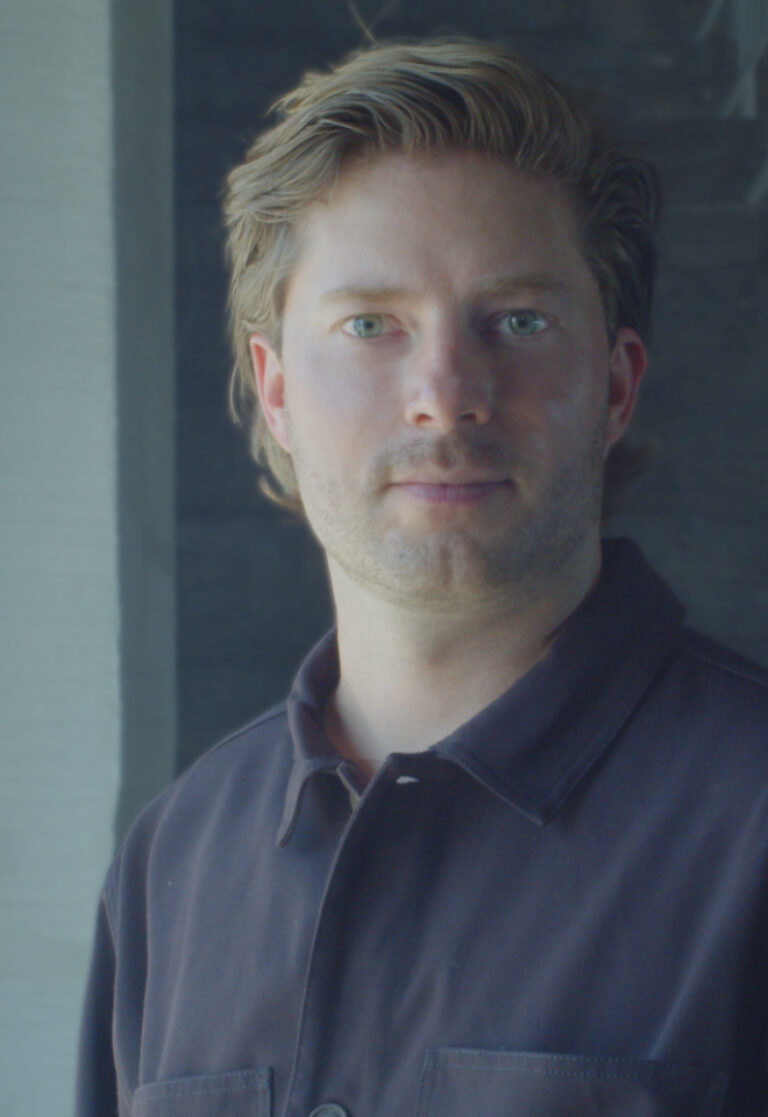
Jonas Janke (DE, 1991) is an architect and partner at bplus.xyz (Berlin). He has a diverse background in architecture, was trained as an architectural draughtsman before pursuing his studies in Hamburg, Stockholm, and Berlin. He gained valuable experience as a tutor and assistant in various departments including design & typologies, building construction, and structural design. He was part of the team 2038, the German Pavilion at 17th Venice Architecture Biennale 2021.
His early teaching experiences include guest studios at the University of Innsbruck (Austria) and Politecnico di Milano (Italy). He is regularly invited to give lectures and guest critiques at universities, cultural institutions, and public institutions. His focus is on new ecological construction materials and methods for adaptive reuse and renovation projects, seeking pragmatic and efficient technical and mechanical solutions that use material and construction thoughtfully.
bplus.xyz (b+) is a collaborative architecture practice (led by Arno Brandlhuber, Olaf Grawert, Jonas Janke and Roberta Jurčić) that operates at the intersection of theory and practice, using different media and formats. The practice seeks to engage with the contemporary challenges of our time, particularly those related to the social-ecological transformation of existing buildings, offering economically viable solutions.
b+ understands architecture as an open process, and views buildings as part of larger systems that require a systemic approach. The practice sees the given framework of existing buildings and legislation as an active design tool with the potential for transformation. Thus, b+ celebrates the potential of the existing built environment and aims to reveal and activate the latent potentials within.
b+ emphasizes working with different actors and stakeholders in project development. The practice values their knowledge and expertise and aims to create spaces for exchange and collaboration. b+ seeks to advance a new value system in architecture, one that places greater emphasis on collective responsibility, systemic thinking, and ecologically and economically viable solutions.
The current project in the field of political activism is the European citizens’ initiative HouseEurope! – HouseEurope! wants to create incentives that make renovation the new norm. This will boost the renovation market and give new value to what is already there. The goal is to preserve homes and communities, ensure a fairer and more local building industry, save energy and resources, and preserve our memories and stories.


past events
Feb 16 — 20, 2026
MIWW workshop
Masters’ Interdisciplinary Workshops Week

Elaine Lopez, Parsons School of Design NYC
Bound Together
Open to all Master’s students
Collective Bookmaking Through Dialogue, Connection, and Risograph Printing
Bound Together is an interactive, dialog-based workshop that uses conversation and Risograph bookmaking as tools for connection, reflection, and collective meaning-making. Created in response to transactional modes of communication, it invites participants to slow down, listen deeply, and engage one another as whole people rather than roles or titles. Through paired dialogue and hands-on making, the workshop emphasizes presence, care, and shared experience.
Grounded in psychologist Arthur Aron’s research on intimacy and informed by dialogical art practices and thinkers such as David Bohm and James Baldwin, the workshop combines structured questions with collage, Risograph printing, and binding. Participants print pages reflecting their conversations and assemble them into a collaborative book. Rather than prioritizing polish or productivity, Bound Together values experimentation, attentive listening, and the radical act of making together.

Elaine Lopez is a Cuban American designer, researcher, and educator whose work uses print, self-publishing, and participatory workshops to explore cultural identity, memory, diaspora, and U.S.–Cuba relations. Centered on collaboration and pedagogy, she frames publishing as a political, relational act. She is Assistant Professor of Communication Design at Parsons and runs LoPress Press, collaborating with institutions and exhibiting, lecturing, and leading workshops internationally.


Feb 16 — 20, 2026
MIWW workshop
Masters’ Interdisciplinary Workshops Week

Stephanie Rodriguez & Ricardo Lynch
Garden of Light, Movement & Sound
Open to all Master’s students
An AI + Arduino Creative Technology Experience for Artists
In this 4-day workshop, artists collaborate with AI and Arduino to craft reactive plants that glow, move, and sing — forming a shared Garden of Light, Movement & Sound. This hands-on workshop invites participants to explore creative human–machine collaboration through the design and construction of a living plant prototype.
Working in small groups, participants will create a sculptural plant that responds to human presence using light, sound, and movement. Each plant will be built on a shared physical framework and will include 3D-printed structural components, ensuring coherence while leaving room for creative expression. The workshop is designed for beginners—no prior experience in programming or electronics is required.
Participants will learn how AI can be used as a creative partner through “vibe coding,” helping to shape each plant’s personality, behavior, color palette, and narrative. By the end of the session, all creations come together to form a collective interactive garden, bringing to life the concept of human–machine co-creation. Participants will leave with a practical understanding of AI-assisted creativity, basic interactive design principles, and a tangible experience of collaborative making.
Stephanie Rodriguez is a leader and educator working at the intersection of technology and human experience. With a background in mechatronics engineering and a master’s degree in intelligent interactive systems, her work centers on human-centered and ethical AI. She has led and contributed to projects in robotics and artificial intelligence across multiple organizations, with experience in social robotics, generative AI, computer vision, data science, and emotion-inspired robotic systems.

Ricardo Lynch is a Digital Interaction Designer and engineer passionate about technology, politics, and education. Experienced in manufacturing, electronics, and digital products with societal value, currently focused on product design and development at Futurity Systems. Former Deputy Director at Exploratec UDD, bridging technology with design and engineering students, consulting on projects. Professor for interaction, robotics, and prototyping workshops at UDD and OAS Dlab Global.


Feb 16 — 20, 2026
MIWW workshop
Masters’ Interdisciplinary Workshops Week

Germán León & Regina Dos Santos
AI Entrepreneurship & Vibe Coding
Open to all Master’s students
Building Human-Centered AI Products
This intensive four-day workshop introduces participants to the ASPIC Framework, a practical, human-centered methodology for building AI products that truly matter. Rather than starting with technology, this workshop teaches participants to begin with empathy: identifying real user pain, designing trustworthy AI interactions, and building sustainable AI businesses. The framework stands for: Attract, Segment, Personalize, Interact, and Convert. Participants will walk away with a working prototype of an AI product, validated by real users, and a clear go-to-market strategy.
By the end of this workshop, participants will be able to: Discover real user pain through structured interviews, Define AI value aligned with measurable business outcomes, Design trustworthy AI interfaces using the Five Moments of AI, Develop working AI MVP using no-code/low-code tools, Test through feedback loops and user validation, Grow using the Bullseye Framework for focused strategy, Monetize with pricing models designed for AI products, Build Responsibly with ethics, privacy, and trust as foundations.
Vibe coding is the art of building AI products with personality and intention. It moves beyond mechanical automation to create AI systems that feel intelligent, responsive, and genuinely helpful. Through careful design of prompts, interfaces, and feedback loops, participants learn to craft AI products that don’t just function,they resonate. Key vibe coding techniques include: Prompt craftsmanship, Personality design, Micro-interactions, Trust signals, and Feedback systems.
Germán León is a futurist, AI and UX expert, entrepreneur, and advisor. He is the founder and CEO of Helvetica Digital and founder of Gestoos, a computer vision startup acquired by Preact. With a master’s degree in Interaction Design from Umeå University and training in AI Design at MIT, he has led innovation at Oblong Europe and Vodafone Group. He currently directs master’s programs in AI and UX at Elisava. In this practical workshop, his goal is to provide students with clear and applicable tools to develop and bring their own projects to fruition.

Regina Dos Santos is a UX/UI designer and front-end developer focused on user-centered digital products. Her hybrid profile blends design, technology, and strategy, linking concept to execution. She covers full UX/UI processes—research, flows, IA, prototyping, interface design, and testing—guided by clarity, usability, and visual consistency. As a front-end developer, she works in the Google Cloud ecosystem, using Firebase, cloud services, and APIs to build scalable, production-ready apps. She collaborates with multidisciplinary teams, bridging design and technology with a product-driven, experimental mindset. In the workshop, Regina presents a practical approach combining UX, UI, code, and AI.


Wed, Feb 11, 2026
Masters’ Talks
7.30 pm — Event at DHub
Open to the public

Karel Martens & Thomas Castro
Unbound
Unbound
From July to October 2025, the Stedelijk Museum honored Dutch design icon Karel Martens with a comprehensive retrospective curated by Thomas Castro. Karel and Thomas will “flip-through” 200 pages of Martens’ works and invite the audience to participate in a lively conversation of anecdotes, insights, and unique examples of works, systems and sketches from his personal archive. From stamps and books to monoprints, architectural signage, and digital experiments, this is a unique opportunity to dive deep into the work of one of the most influential voices in graphic design.

Karel Martens (1939) is a Dutch graphic designer and educator. He studied at the Arnhem Academy of Art and Design, graduating in 1961. From 1977 to 2020, he taught internationally at ArtEZ, the Jan van Eyck Academie, and Yale University, and co-founded the Werkplaats Typografie in 1998. Martens designed the award-winning OASE magazine from 1990 to 2021. His work is held in collections including SFMOMA and The Art Institute of Chicago, and has been shown in solo exhibitions at P! (New York), Kunstverein München, 019 (Ghent), and Platform-L (Seoul). He received the BNO Piet Zwart Prize in 2023.
Alongside commissioned work, Martens has consistently developed an autonomous practice, most notably through his monoprints, begun in the 1960s. Since the 1990s he has used archival cards from the Stedelijk Museum Amsterdam, printing found objects onto them to create compositions that integrate printed imagery with existing archival text. Known for an experimental approach to typography, grids, color, and printing, his work moves fluidly between books, stamps, monoprints, signage, and digital systems.
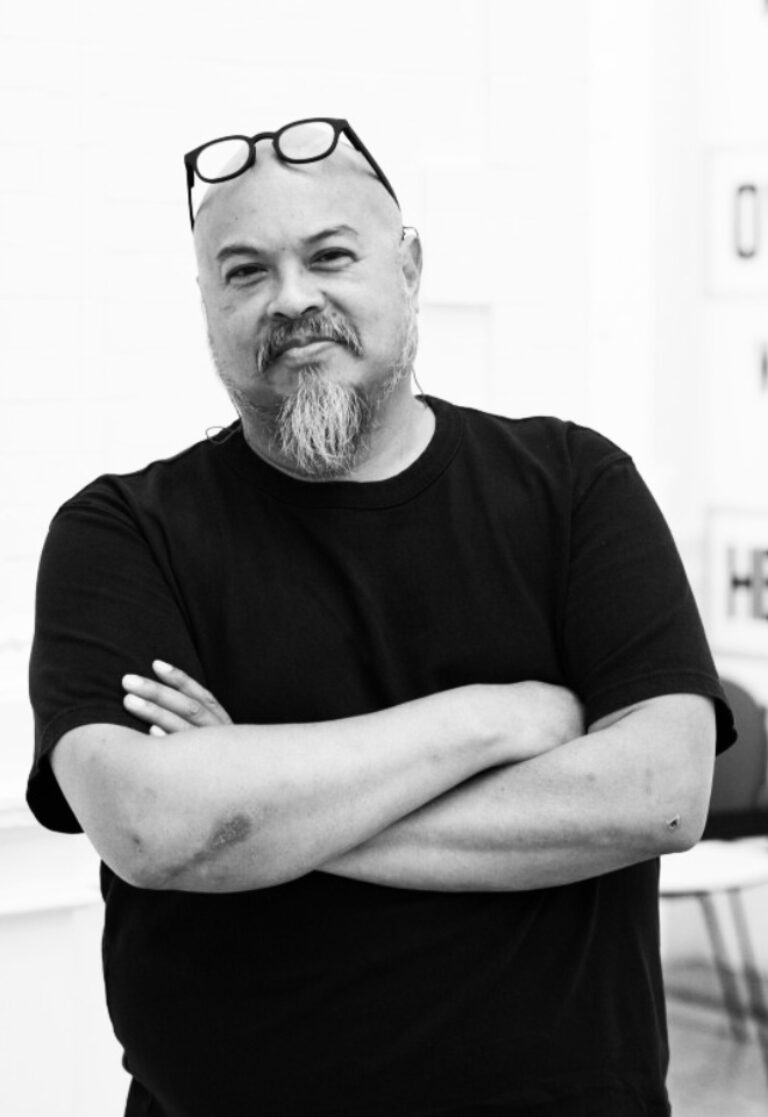
Thomas Castro (1967) is a graphic designer, educator, and curator, and since 2019 Curator of Graphic Design at the Stedelijk Museum Amsterdam. There he initiated the Post/No/Bills public poster circuit, curated the exhibition Karel Martens: Unbound, and edited the collection book Stedelijk Museum Posters by Color. Previously, he co-founded the multidisciplinary studio LUST and LUSTlab in 1996, which was awarded the BNO Piet Zwart Award in 2017 for their two-decade oeuvre. His practice connects making, education, and curating, with a focus on expanding the graphic design canon.


Wed, Feb 11, 2026
Bookworm

Joost Grootens books
Only for MED students
Joost Grootens is a Dutch graphic designer known for his innovative approach to book design, especially in the field of atlases and reference works. His publications are characterised by an ability to present complex information in an accessible and visually appealing way, promoting the idea that design should serve content and not compete with it. He uses infographics, graphs and maps to simplify and organise large amounts of data aimed primarily at scientific and academic audiences, providing them with an intuitive visual navigation that allows them to explore the book in a non-linear way. We will see several examples of his work that demonstrate that such books can be functional and beautiful at the same time. Grootens knows how to find beauty in information and poetry in data.
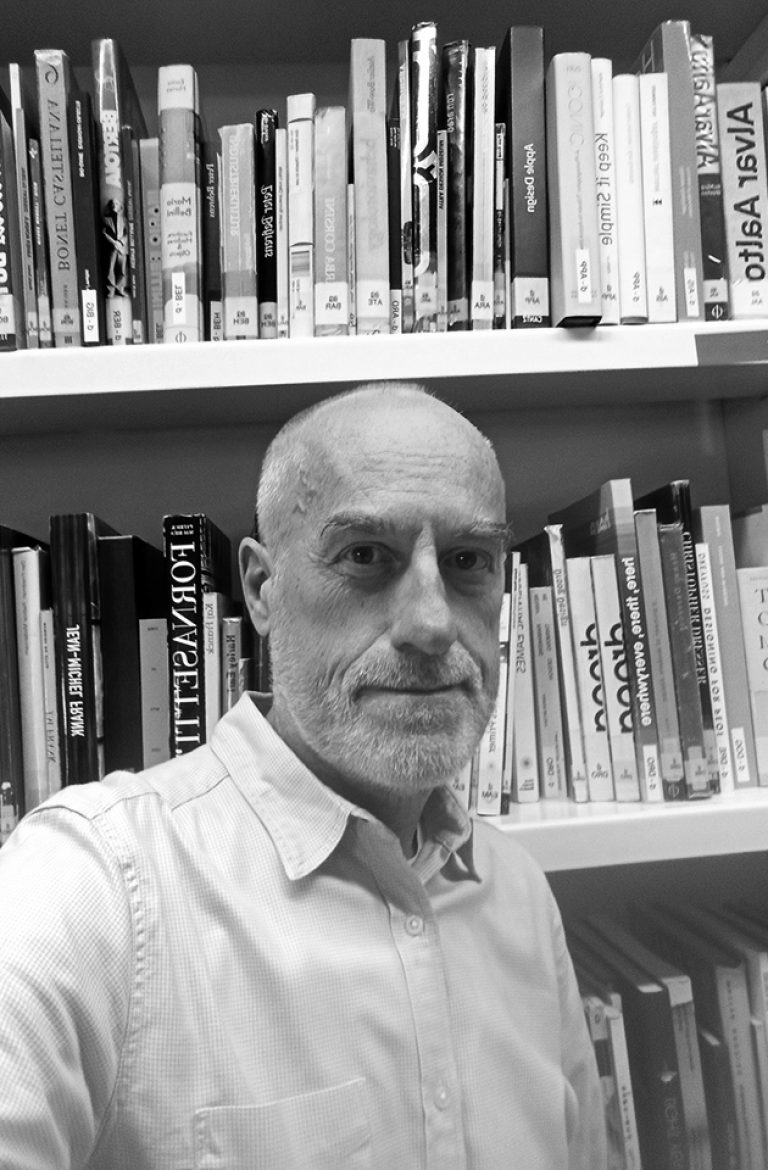
In the Bookworm sessions we will explore iconic magazines and books that capture the spirit of the era in which they were created. The material comes from Elisava’s library collections, especially from its Reserve Fund, which contains publications that, due to their design, constitute a journey through the best of the past and present of modern graphics applied to the field of editorial design.
The Bookworm sessions are guided by Andreu Jansà, librarian and curator of the Enric Bricall Reserve Fund.
We will place the publications in their context and try to define what makes them relevant in the history of editorial design in the 20th and 21st centuries. The direct contact with the books and magazines that we will see in each session will allow us to experience the printed document from a material point of view: binding, paper, lay out, illustrations, typography. We will also be able to assess the adequacy between form and content.


Wed, Feb 4, 2026
Showcase

Andreu Llos, LLOS&
Design-focused website development
Based on a showcase of web projects developed in collaboration with design studios, we will analyze how design decisions directly influence development, animations, interactions, and the final result. We will look at real examples of handoffs, what information is key to smooth development, and what mistakes lead to rework, unnecessary feedback, or deviations from the original design.
Andreu Llos is the founder and director of LLOS&. After more than a decade working with design studios, he manages web projects where design, technology, and process must be aligned from the outset. His role focuses on defining technical criteria, supporting creative teams, and ensuring that visual proposals translate into solid digital products that are faithful to the design.

© Arnau Rovira Vidal
LLOS& is a web development studio based in Barcelona, specializing in digital projects with a strong focus on design. The studio works closely with creative teams to develop custom websites, working with different stacks (from WordPress to headless architectures with Nuxt) and paying special attention to the front-end, animations, interactions, and the robustness of the final result.
Jan 26—30, 2026
Workshop

David Galar, Thru
Motion Systems
Only for MVD students
We are witnessing a new way of consuming information as today’s digital media presents as the new information container. If we look at this from a graphic design point of view, we could say that we are in front of new ways of communication.
In this workshop we will study the possibilities offered by these new media and we will learn to adapt what we want to communicate via an optimal format for digital media.
Animated graphic systems consist of developing the audiovisual behavior of a brand through a creative concept that uses motion as the main axis of communication.
We will develop an animated graphic system that reflects the values behind a brand and will develop them into digital media communication.

David Galar is a graphic designer specialized in motion design. Graduated in Graphic Design and postgraduate in Motion graphics by Idep Barcelona and Diploma in Marketing and Business Management by ESIC and Skema Business School. He worked at Mucho studio where he developed, mainly, identity projects. From 2015 to 2018 he worked as a freelance, in 2019 he founded the Gimmewings studio and later, in 2022 he founded the Motion Design studio Thru.
Thru is a motion design studio that specializes in using animation and interaction to communicate concepts through movement.


Wed, Jan 28, 2026
Graphic — Elisava lectures
7.30 pm — Sala Aleix Carrió
Open to the public

Delphine Volkaert, Base Design
Designing for the living web
Designing for the living web
What if the web wasn’t a place we design for but a medium we design with?
A space that listens, responds, remembers, and occasionally drifts off script.
What happens when digital experiences carry presence and intent? When identity shifts in real time? And how can that change the way we perceive a brand today?
This talk offers a moment to pause – a reminder that the web is not static, but alive, restless, and open to endless possibilities.

Delphine Volkaert is a Senior Digital Designer at Base Design Brussels. After graduating from La Cambre and broadening her perspective through an exchange at EINA in Barcelona, she has spent ten years exploring how brands behave and evolve online. Her work begins with clear, conceptual ideas that she develops into responsive and dynamic digital systems. She is driven by the openness of the digital realm – a space where identity can constantly shift, reinvent itself, and move beyond fixed forms.
Base Design is an international network of creative studios. A company of cultures working across Brussels, New York, Geneva, Melbourne, Saigon, and our Digital studio.
We’re independent by nature and connected by choice. Each studio is rooted in its own city and culture, yet linked by shared curiosity, craft, and values. Together we work across strategy, design, and technology to create ideas that move with the world – clear, meaningful, and built to last.
Founded in the early ’90s, Base continues to evolve through collaboration. Today, the group is led by partners across all studios, shaping a model that grows through difference rather than duplication.
Wed, Jan 21, 2026
Case studies

Xavier Lienas, Bakoom
Narrative-driven design
Only for MVD students
The talk will take the audience on a journey through the evolution of a design studio, highlighting a narrative-driven approach to design and its impact on graphic solutions. The talk breaks down selected projects to reveal how storytelling guides creative choices from concept to final outcome.
Xavier Lienas is a graphic designer and creative director with more than 15 years of experience. After some years working as a designer for agencies & studios, in 2014, he
co-founded BAKOOM, where he develops identities, campaigns, and communication projects for a wide range of brands, companies, and institutions. In addition, he is the
co-founder of Latent Festival and he combines his professional practice with teaching at design universities, where he lectures on design and creative project direction.
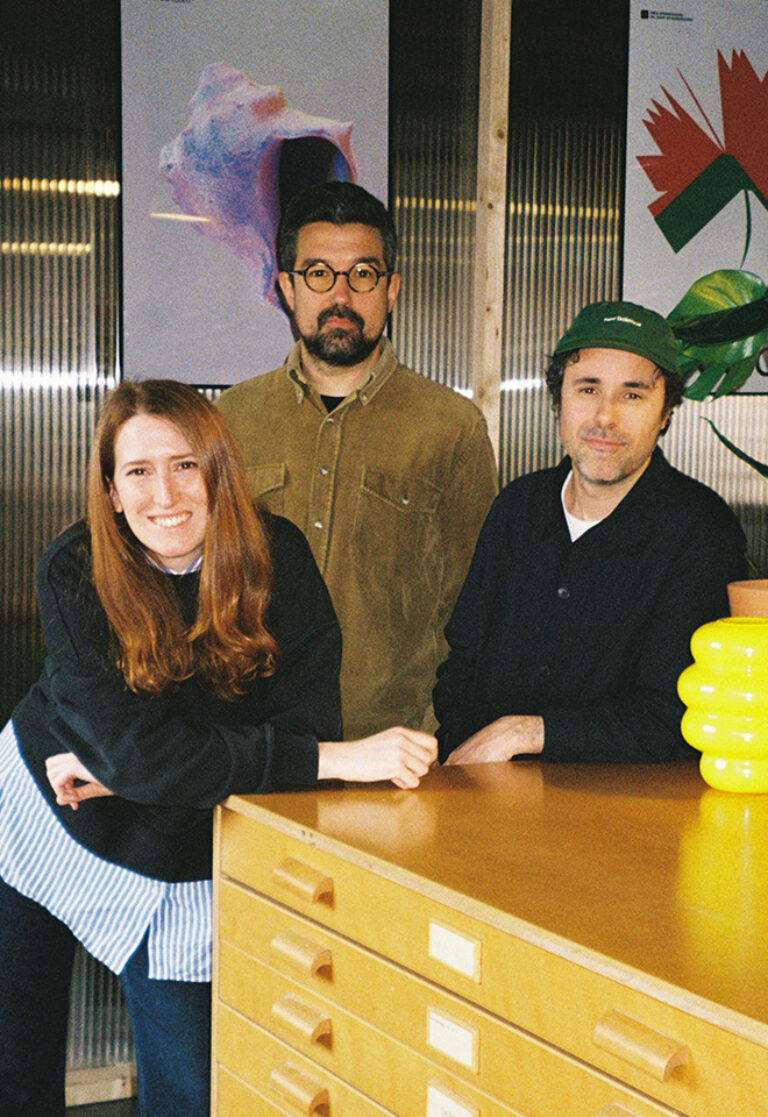
We are Bakoom, a graphic design studio where we approach each project as a unique narrative. Guided by a strong conceptual mindset, we combine strategy, storytelling, and bold aesthetics to create visual identities and graphic solutions with clarity and character.
Our work has been recognized with ADG Laus and European Design Awards, consolidating a career that combines concept, emotion, and visual strategy. We are also the founders and directors of Latent Festival, an event dedicated to emerging talent in design and creativity.


Wed, Jan 21, 2026
Bookworm

Awarded books
Only for MED students
In this first session we will try to find out what makes a well-designed book and what factors determine excellence in editorial design. We will look at recent examples of award-winning publications from the Most Beautiful Swiss Books,Best Book Design From All Over The World and the LAUS Awards. By browsing through the books we will be able to feel their material presence and examine the elements that make them up: binding, paper, composition, typography and the fit between form and content. Moreover, through the verdict of these prestigious prizes awarded by specialists, we will be able to analyse current trends in editorial design. Each student will be able to express their opinion and choose their own favorites according to his or her own sensibility.
In the Bookworm sessions we will explore iconic magazines and books that capture the spirit of the era in which they were created. The material comes from Elisava’s library collections, especially from its Reserve Fund, which contains publications that, due to their design, constitute a journey through the best of the past and present of modern graphics applied to the field of editorial design.
The Bookworm sessions are guided by Andreu Jansà, librarian and curator of the Enric Bricall Reserve Fund.
We will place the publications in their context and try to define what makes them relevant in the history of editorial design in the 20th and 21st centuries. The direct contact with the books and magazines that we will see in each session will allow us to experience the printed document from a material point of view: binding, paper, lay out, illustrations, typography. We will also be able to assess the adequacy between form and content.


Wed, Dec 17, 2025
showcase

Marc Torrell, Usted
I don’t write very well
Only for MVD students
In this session, I will share the stories and the behind-the-scenes details of some of the projects I have participated in throughout my career from a strategy and verbal identity perspective. The goal is to showcase the key aspects of my work and the impact it has on the design and visual creation processes of the teams I collaborate with.
It’s going to be mostly about words, but please don’t panic, I’ll be showing some images too.

Marc Torrell
I’ve loved writing since I was a kid. As I grew older, I wrote less. The novels and poems I once dreamed of writing turned into headlines, simple concepts, and brand names. I graduated in Advertising and Audiovisual Communication, worked for large international agencies and dinosaur clients, and later discovered the meaning of design through collaborations with studios like Mucho, Hey, Lo Siento, Querida, and Pràctica. In 2013, I co-founded Usted with my friend and partner, Martí Pujolàs.
We consider Usted a hybrid between a traditional advertising agency and a design studio. The focus, whatever the project is, is always the same: strategic thinking, concept with longevity and carefully crafted art direction. We work straight with clients or collaborate with fellow studios in conceptualization and verbal identity tasks for clients of all sizes and markets.


Wed, Dec 10, 2025
masters’ talks
19:30 h — Event at DHub
Open to the public

Ronan Bouroullec
Day After Day: Rencontre with Ronan Bouroullec
Day After Day
Despite not always being entirely comfortable with the label “designer,” Ronan Bouroullec is undeniably among the most prolific and admired practitioners working today. For more than three decades, his Paris atelier—led with his brother Erwan until 2023—has produced a remarkable series of “singular objects,” often in collaboration with leading design manufacturers such as Alessi, Artek, and Vitra. In a special conversation with journalist Anne Quito, Bouroullec reflects on the arc of his career and explains how his drawing practice has remained a central pillar of his life and work. Vignettes from his latest monograph, Ronan Bouroullec: Day After Day (Phaidon, 2023) will be a highlight of the evening.

© Marion Berrin
Born in Quimper, Brittany, Ronan Bouroullec is a celebrated artist and designer based in Paris. His studio, formerly led with his younger brother Erwan, has collaborated with some of the world’s most prestigious design companies, including Artek, Alessi, Cappellini, Galerie Kreo, Hay, Kartell, Kvadrat, Magis, Mattiazzi, Mutina, and Vitra. Also a prolific artist, his drawings have been exhibited in museums and galleries worldwide, including the Centre Pompidou in Paris, the Museum of Modern Art in New York, and the Victoria and Albert Museum in London.
Ronan Bouroullec’s studio, founded 30 years ago, is based in Paris and comprises a team of six assistants.


