Events are an integral part of the master programs: from workshops with guests professors to lectures series with relevant practitioners.
Wed, Oct 21, 2026
Graphic — Elisava lectures
7.30 pm — Sala Aleix Carrió
Open to the public

Luisa Milani, La Tigre
An illustrated alphabet of vibrant matters
An illustrated alphabet of vibrant matters
La Tigre looks at graphic design as a living material: shapes that breathe, colours that vibrate, signs that shift between the abstract and the figurative. The talk composes an illustrated alphabet of the qualities that guide the studio’s work, from synthesis to colour, from research to play. A journey through forms and words, where visual language becomes a playground and every element, however small, has something to say.
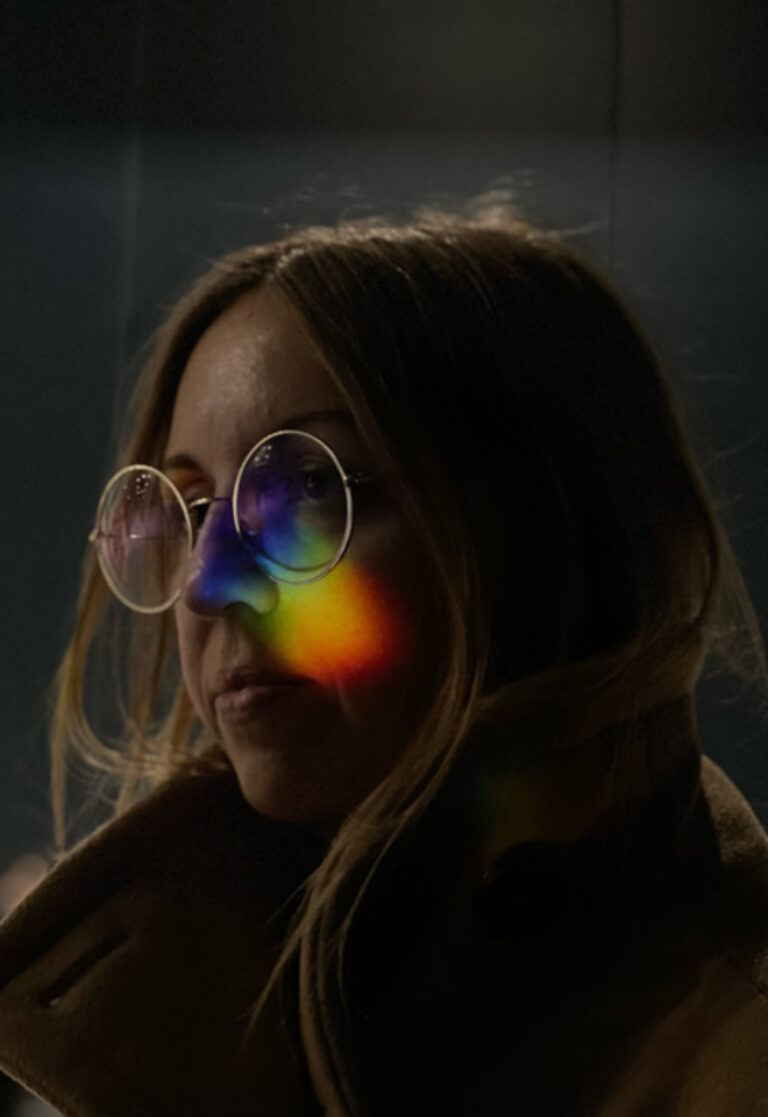
Luisa Milani is the art director and co-founder of the independent graphic design studio LaTigre. She studied at Politecnico di Milano and, a few years later, in 2009, founded the studio. Alongside her practice, she has spent several years teaching. Always in search of the sublime in color and form, her design approach is solid and concrete, yet spontaneous—free from constraints or creative limits. She draws inspiration from everything around her, making intuition a core aspect of her practice. A long-time yoga practitioner, she brings the same balance and awareness to her creative work, leaving room for serendipity, her motto.
La Tigre is a graphic design studio founded and directed by Luisa Milani and Walter Molteni, members of AGI (Alliance Graphique Internationale). Since 2009, the studio has been developing multiform visual languages in which formal research is driven by synthesis and a vibrant use of color, where the boundary between the abstract and the figurative at times becomes blurred. It collaborates with international entities such as Apple, Bitossi Home, Living and Abitare – Corriere della Sera, Max Mara, The New York Times, Phaidon, and Wired USA. Alongside commissioned projects, the studio conducts experimental research across various media.


Wed, Nov 4, 2026
Masters’ Talks
7.30 pm — Event at DHub
Open to the public

Izaskun Chinchilla
Los barrios del buen vivir: A Perspective from Tentative Design
Los barrios del buen vivir: A Perspective from Tentative Design
What if designers made fewer mistakes if they stopped trying to get it right the first time? Neighborhoods of Good Living explore a city understood not as a finished object, but as a living laboratory: spaces that are tested, inhabited, evaluated, and transformed. The lecture will explore the work of Izaskun Chinchilla Architects and the book Neighborhoods of Good Living to ask what happens when design abandons certainty and embraces hypothesis, experimentation, and adaptation. A perspective from tentative design to conceive of well-being as something experienced collectively.

Izaskun Chinchilla, a professor at the Bartlett School of Architecture, University College London (UCL), and an honorary fellow of the Royal Institute of British Architects (RIBA), integrates ecology, care, and participation into her practice, research, and teaching. Her work promotes more equitable and sustainable cities. She combines design, critical thinking, and cultural knowledge to promote an architecture that is educational, cooperative, and oriented toward the common good. She is the author of La ciudad de los cuidados (Catarata, 2021) and Los barrios del buen vivir (Catarata, 2026).
Izaskun Chinchilla Architects is a group of architects led by Izaskun Chinchilla that brings together interdisciplinary teams for each project. Their work focuses on optimizing the environmental performance of architecture, public space, facilities, art, and cultural products through innovation. Public engagement and social participation are pillars of their practice, which promotes collaboration in the construction of shared spaces and community-based decision-making regarding the use, location, and characteristics of the facilities they design.


past events
Wed, Feb 11, 2026
Masters’ Talks
7.30 pm — Event at DHub
Open to the public

Karel Martens & Thomas Castro
Unbound
Unbound
From July to October 2025, the Stedelijk Museum honored Dutch design icon Karel Martens with a comprehensive retrospective curated by Thomas Castro. Karel and Thomas will “flip-through” 200 pages of Martens’ works and invite the audience to participate in a lively conversation of anecdotes, insights, and unique examples of works, systems and sketches from his personal archive. From stamps and books to monoprints, architectural signage, and digital experiments, this is a unique opportunity to dive deep into the work of one of the most influential voices in graphic design.

Karel Martens (1939) is a Dutch graphic designer and educator. He studied at the Arnhem Academy of Art and Design, graduating in 1961. From 1977 to 2020, he taught internationally at ArtEZ, the Jan van Eyck Academie, and Yale University, and co-founded the Werkplaats Typografie in 1998. Martens designed the award-winning OASE magazine from 1990 to 2021. His work is held in collections including SFMOMA and The Art Institute of Chicago, and has been shown in solo exhibitions at P! (New York), Kunstverein München, 019 (Ghent), and Platform-L (Seoul). He received the BNO Piet Zwart Prize in 2023.
Alongside commissioned work, Martens has consistently developed an autonomous practice, most notably through his monoprints, begun in the 1960s. Since the 1990s he has used archival cards from the Stedelijk Museum Amsterdam, printing found objects onto them to create compositions that integrate printed imagery with existing archival text. Known for an experimental approach to typography, grids, color, and printing, his work moves fluidly between books, stamps, monoprints, signage, and digital systems.
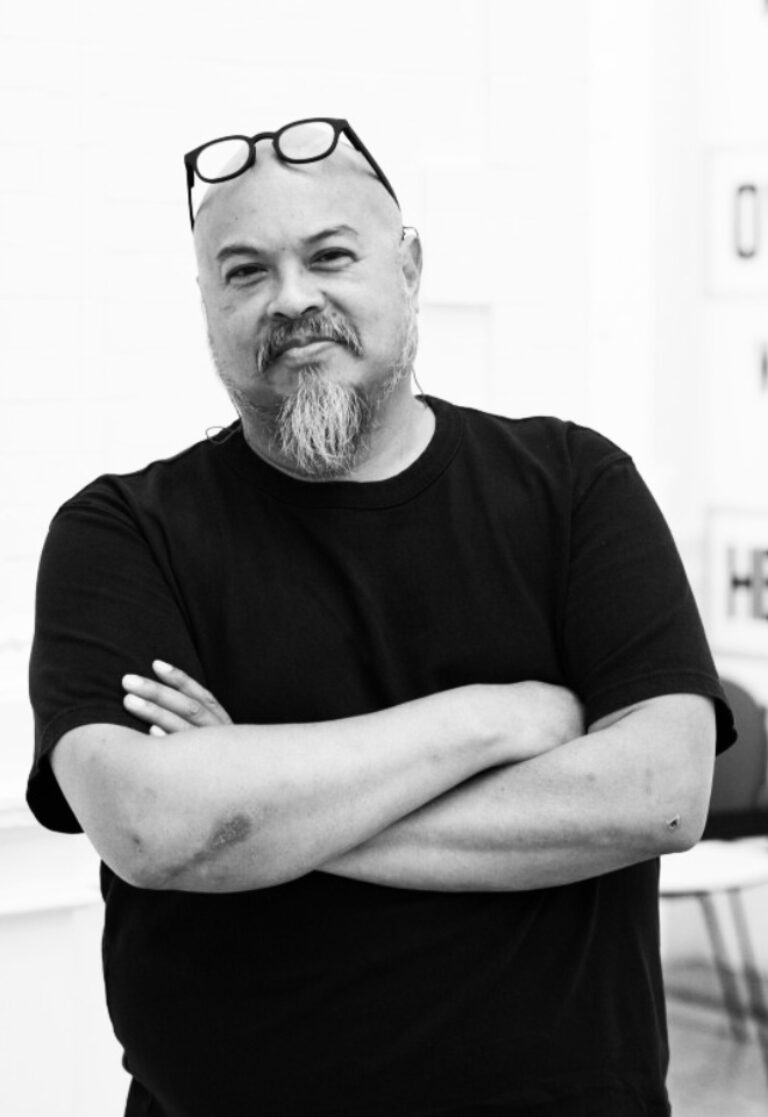
Thomas Castro (1967) is a graphic designer, educator, and curator, and since 2019 Curator of Graphic Design at the Stedelijk Museum Amsterdam. There he initiated the Post/No/Bills public poster circuit, curated the exhibition Karel Martens: Unbound, and edited the collection book Stedelijk Museum Posters by Color. Previously, he co-founded the multidisciplinary studio LUST and LUSTlab in 1996, which was awarded the BNO Piet Zwart Award in 2017 for their two-decade oeuvre. His practice connects making, education, and curating, with a focus on expanding the graphic design canon.


Wed, Feb 11, 2026
Bookworm

Joost Grootens books
Only for MED students
Joost Grootens is a Dutch graphic designer known for his innovative approach to book design, especially in the field of atlases and reference works. His publications are characterised by an ability to present complex information in an accessible and visually appealing way, promoting the idea that design should serve content and not compete with it. He uses infographics, graphs and maps to simplify and organise large amounts of data aimed primarily at scientific and academic audiences, providing them with an intuitive visual navigation that allows them to explore the book in a non-linear way. We will see several examples of his work that demonstrate that such books can be functional and beautiful at the same time. Grootens knows how to find beauty in information and poetry in data.
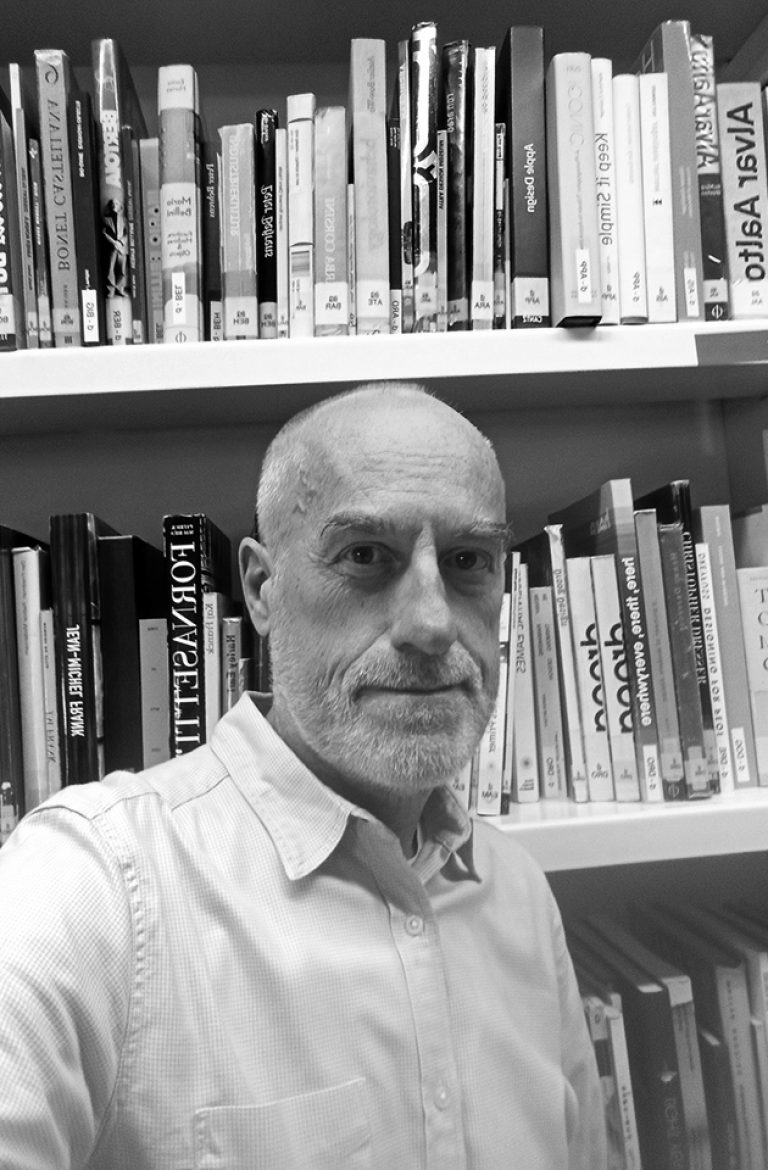
In the Bookworm sessions we will explore iconic magazines and books that capture the spirit of the era in which they were created. The material comes from Elisava’s library collections, especially from its Reserve Fund, which contains publications that, due to their design, constitute a journey through the best of the past and present of modern graphics applied to the field of editorial design.
The Bookworm sessions are guided by Andreu Jansà, librarian and curator of the Enric Bricall Reserve Fund.
We will place the publications in their context and try to define what makes them relevant in the history of editorial design in the 20th and 21st centuries. The direct contact with the books and magazines that we will see in each session will allow us to experience the printed document from a material point of view: binding, paper, lay out, illustrations, typography. We will also be able to assess the adequacy between form and content.


Wed, Feb 4, 2026
Showcase

Andreu Llos, LLOS&
Design-focused website development
Based on a showcase of web projects developed in collaboration with design studios, we will analyze how design decisions directly influence development, animations, interactions, and the final result. We will look at real examples of handoffs, what information is key to smooth development, and what mistakes lead to rework, unnecessary feedback, or deviations from the original design.
Andreu Llos is the founder and director of LLOS&. After more than a decade working with design studios, he manages web projects where design, technology, and process must be aligned from the outset. His role focuses on defining technical criteria, supporting creative teams, and ensuring that visual proposals translate into solid digital products that are faithful to the design.

© Arnau Rovira Vidal
LLOS& is a web development studio based in Barcelona, specializing in digital projects with a strong focus on design. The studio works closely with creative teams to develop custom websites, working with different stacks (from WordPress to headless architectures with Nuxt) and paying special attention to the front-end, animations, interactions, and the robustness of the final result.
Jan 26—30, 2026
Workshop

David Galar, Thru
Motion Systems
Only for MVD students
We are witnessing a new way of consuming information as today’s digital media presents as the new information container. If we look at this from a graphic design point of view, we could say that we are in front of new ways of communication.
In this workshop we will study the possibilities offered by these new media and we will learn to adapt what we want to communicate via an optimal format for digital media.
Animated graphic systems consist of developing the audiovisual behavior of a brand through a creative concept that uses motion as the main axis of communication.
We will develop an animated graphic system that reflects the values behind a brand and will develop them into digital media communication.

David Galar is a graphic designer specialized in motion design. Graduated in Graphic Design and postgraduate in Motion graphics by Idep Barcelona and Diploma in Marketing and Business Management by ESIC and Skema Business School. He worked at Mucho studio where he developed, mainly, identity projects. From 2015 to 2018 he worked as a freelance, in 2019 he founded the Gimmewings studio and later, in 2022 he founded the Motion Design studio Thru.
Thru is a motion design studio that specializes in using animation and interaction to communicate concepts through movement.


Wed, Jan 28, 2026
Graphic — Elisava lectures
7.30 pm — Sala Aleix Carrió
Open to the public

Delphine Volkaert, Base Design
Designing for the living web
Designing for the living web
What if the web wasn’t a place we design for but a medium we design with?
A space that listens, responds, remembers, and occasionally drifts off script.
What happens when digital experiences carry presence and intent? When identity shifts in real time? And how can that change the way we perceive a brand today?
This talk offers a moment to pause – a reminder that the web is not static, but alive, restless, and open to endless possibilities.

Delphine Volkaert is a Senior Digital Designer at Base Design Brussels. After graduating from La Cambre and broadening her perspective through an exchange at EINA in Barcelona, she has spent ten years exploring how brands behave and evolve online. Her work begins with clear, conceptual ideas that she develops into responsive and dynamic digital systems. She is driven by the openness of the digital realm – a space where identity can constantly shift, reinvent itself, and move beyond fixed forms.
Base Design is an international network of creative studios. A company of cultures working across Brussels, New York, Geneva, Melbourne, Saigon, and our Digital studio.
We’re independent by nature and connected by choice. Each studio is rooted in its own city and culture, yet linked by shared curiosity, craft, and values. Together we work across strategy, design, and technology to create ideas that move with the world – clear, meaningful, and built to last.
Founded in the early ’90s, Base continues to evolve through collaboration. Today, the group is led by partners across all studios, shaping a model that grows through difference rather than duplication.
Wed, Jan 21, 2026
Case studies

Xavier Lienas, Bakoom
Narrative-driven design
Only for MVD students
The talk will take the audience on a journey through the evolution of a design studio, highlighting a narrative-driven approach to design and its impact on graphic solutions. The talk breaks down selected projects to reveal how storytelling guides creative choices from concept to final outcome.
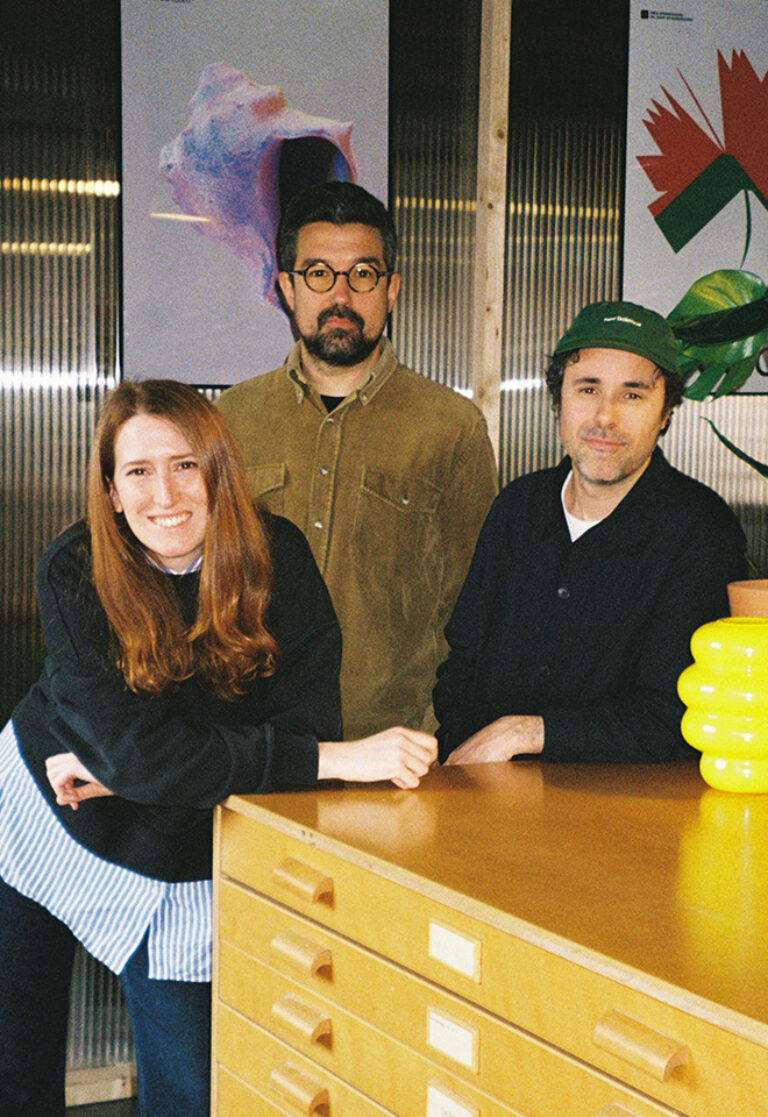
Xavier Lienas is a graphic designer and creative director with more than 15 years of experience. After some years working as a designer for agencies & studios, in 2014, he
co-founded BAKOOM, where he develops identities, campaigns, and communication projects for a wide range of brands, companies, and institutions. In addition, he is the
co-founder of Latent Festival and he combines his professional practice with teaching at design universities, where he lectures on design and creative project direction.
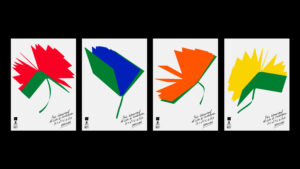
We are Bakoom, a graphic design studio where we approach each project as a unique narrative. Guided by a strong conceptual mindset, we combine strategy, storytelling, and bold aesthetics to create visual identities and graphic solutions with clarity and character.
Our work has been recognized with ADG Laus and European Design Awards, consolidating a career that combines concept, emotion, and visual strategy. We are also the founders and directors of Latent Festival, an event dedicated to emerging talent in design and creativity.



Wed, Jan 21, 2026
Bookworm

Awarded books
Only for MED students
In this first session we will try to find out what makes a well-designed book and what factors determine excellence in editorial design. We will look at recent examples of award-winning publications from the Most Beautiful Swiss Books,Best Book Design From All Over The World and the LAUS Awards. By browsing through the books we will be able to feel their material presence and examine the elements that make them up: binding, paper, composition, typography and the fit between form and content. Moreover, through the verdict of these prestigious prizes awarded by specialists, we will be able to analyse current trends in editorial design. Each student will be able to express their opinion and choose their own favorites according to his or her own sensibility.
In the Bookworm sessions we will explore iconic magazines and books that capture the spirit of the era in which they were created. The material comes from Elisava’s library collections, especially from its Reserve Fund, which contains publications that, due to their design, constitute a journey through the best of the past and present of modern graphics applied to the field of editorial design.
The Bookworm sessions are guided by Andreu Jansà, librarian and curator of the Enric Bricall Reserve Fund.
We will place the publications in their context and try to define what makes them relevant in the history of editorial design in the 20th and 21st centuries. The direct contact with the books and magazines that we will see in each session will allow us to experience the printed document from a material point of view: binding, paper, lay out, illustrations, typography. We will also be able to assess the adequacy between form and content.


Wed, Dec 17, 2025
showcase

Marc Torrell, Usted
I don’t write very well
Only for MVD students
In this session, I will share the stories and the behind-the-scenes details of some of the projects I have participated in throughout my career from a strategy and verbal identity perspective. The goal is to showcase the key aspects of my work and the impact it has on the design and visual creation processes of the teams I collaborate with.
It’s going to be mostly about words, but please don’t panic, I’ll be showing some images too.

Marc Torrell
I’ve loved writing since I was a kid. As I grew older, I wrote less. The novels and poems I once dreamed of writing turned into headlines, simple concepts, and brand names. I graduated in Advertising and Audiovisual Communication, worked for large international agencies and dinosaur clients, and later discovered the meaning of design through collaborations with studios like Mucho, Hey, Lo Siento, Querida, and Pràctica. In 2013, I co-founded Usted with my friend and partner, Martí Pujolàs.
We consider Usted a hybrid between a traditional advertising agency and a design studio. The focus, whatever the project is, is always the same: strategic thinking, concept with longevity and carefully crafted art direction. We work straight with clients or collaborate with fellow studios in conceptualization and verbal identity tasks for clients of all sizes and markets.


Wed, Dec 10, 2025
masters’ talks
19:30 h — Event at DHub
Open to the public

Ronan Bouroullec
Day After Day: Rencontre with Ronan Bouroullec
Day After Day
Despite not always being entirely comfortable with the label “designer,” Ronan Bouroullec is undeniably among the most prolific and admired practitioners working today. For more than three decades, his Paris atelier—led with his brother Erwan until 2023—has produced a remarkable series of “singular objects,” often in collaboration with leading design manufacturers such as Alessi, Artek, and Vitra. In a special conversation with journalist Anne Quito, Bouroullec reflects on the arc of his career and explains how his drawing practice has remained a central pillar of his life and work. Vignettes from his latest monograph, Ronan Bouroullec: Day After Day (Phaidon, 2023) will be a highlight of the evening.

© Marion Berrin
Born in Quimper, Brittany, Ronan Bouroullec is a celebrated artist and designer based in Paris. His studio, formerly led with his younger brother Erwan, has collaborated with some of the world’s most prestigious design companies, including Artek, Alessi, Cappellini, Galerie Kreo, Hay, Kartell, Kvadrat, Magis, Mattiazzi, Mutina, and Vitra. Also a prolific artist, his drawings have been exhibited in museums and galleries worldwide, including the Centre Pompidou in Paris, the Museum of Modern Art in New York, and the Victoria and Albert Museum in London.
Ronan Bouroullec’s studio, founded 30 years ago, is based in Paris and comprises a team of six assistants.


Wed, Nov 26, 2025
graphic.elisava lectures
7.30 pm — Sala Aleix Carrió
Open to the public

Anja Kaiser
Undisciplined Toolkit
The undisciplined toolkit speaks of forgotten and ‘messy’ stories, introducing a wide range of unconventional surfaces and strategies to bridge the gap between autonomous and commissioned work. Tools shape the way we point and wipe, but they also reflect what we crush and what we tackle. This lecture explores the urge to push the boundaries of tools and move beyond purely pragmatic functions—touching on bureaucratic creativity, role-playing, and alternative narratives. To work undisciplined means to navigate chaos, drifting between knowledge and unknowing.

©Simone C. Niquille
Since 2011, Anja Kaiser has been working independently, engaging in various collaborations with other graphic designers and programmers. Until March 2023, she held the interim Professorship for Typography at the Academy of Fine Arts Leipzig. 2017, she received the INFORM Award from the Gallery of Contemporary Art Leipzig, recognizing conceptual design practices. In 2020, Le Signe – Centre National du Graphisme in Chaumont dedicated a comprehensive exhibition to her work. In 2021, together with Rebecca Stephany, she co-edited the “Glossary of Undisciplined Design,” published by Spector Books.
Anja Kaiser is a graphic designer and artist working across cultural and subcultural contexts. Her practice engages with the appropriation of resistant media, and undisciplined methods. She explores alternative narratives and porous tools within graphic design. Her work investigates the thresholds between graphic design, art, and music. Since 2018, she has been responsible, together with Jim Kühnel, for the visual concept of the Rewire Festival. She also occasionally builds furniture—such as tables for the Study Rooms at the Bauhaus Dessau—or hosts sound art events as part of a collective.


Nov 17 — 21, 2025
workshop

Patrick Thomas
H2O
Only for MED students
Water holds deep cultural, historical, and environmental significance in Barcelona. It has shaped the city’s identity, economy, and urban landscape for centuries. The sea has long connected Barcelona to trade, migration, and cultural exchange, while fountains, beaches, and promenades highlight its presence in daily life. Following decades of drought and the emergence of annual flooding as the new normal, water will play an increasingly critical role in the city’s / region’s / country’s / continent’s / planet’s future.
During the five-day workshop, participants will choose a subject related to the topic and produce a 12–16 page DIN A4 publication documenting their thoughts using three print techniques.
The aim of the workshop is to develop participants’ observational, research, editing, writing, layout and publishing skills.
Subject matter may be historic, contemporary or speculative.

Patrick Thomas is a graphic artist, author and educator. He studied at Central Saint Martins and the Royal College of Art in London before relocating to Barcelona in 1991.
He currently lives and works in Berlin. He has exhibited his limited-edition silkscreens across five continents, where many are now held in private and public collections.
Since October 2013 he is a professor at Staatlichen Akademie der Bildenden Künste Stuttgart. He is a member of Alliance Graphique.


Wed, Nov 19, 2025
masterclass

Gabriel Ventura
Copy pop: new narratives in contemporary music
Only for MVD students
Copy pop: new narratives in contemporary music
In this session, we will explore how a number of musicians from different eras and styles have created narratives that bring meaning and complexity to their albums. When did music shift from a collection of songs to the “concept album” and why? What is the purpose of these narratives? How do they expand the story a record tells? And why does an album need stories to accompany it?

@ Lluís Tudela
Gabriel Ventura (Granollers, 1988) is a poet. He holds a degree in Humanities and a Master’s in Literary, Art and Thought Studies from Pompeu Fabra University (UPF). His work explores poetry, performance, and moving image as creative media. His books include W (2017), Notes for an Eye Fire (2020) —which inspired a homonymous exhibition at MACBA—, The Portuguese Night (2021) —a shooting diary for a film by Albert Serra—, and The Best of Impossible Worlds (2025). He works at the intersection of poetry and other arts, collaborating with visual artists, filmmakers, and musicians such as Rosa Tharrats, Albert Serra and Rosalía. He is currently the director of POESIA i + festival and lecturer at BAU.
Gabriel Ventura’s creative journey often begins with poetry, extending into action, pedagogy, research and video. In his approach, literature serves as a powerful tool to foster emotional connections in an era marked by hyper-information and global dispersion. Ventura views his texts as enigmatic and independent entities with the potential to reshape the reality that envelops them. His work reflects a holistic exploration of the arts, using poetry as a starting point to engage with diverse disciplines and mediums, ultimately contributing to a transformative and interconnected creative landscape.


