Events are an integral part of the master programs: from workshops with guests professors to lectures series with relevant practitioners.
Wed, Oct 21, 2026
Graphic — Elisava lectures
7.30 pm — Sala Aleix Carrió
Open to the public

Luisa Milani, La Tigre
An illustrated alphabet of vibrant matters
An illustrated alphabet of vibrant matters
La Tigre looks at graphic design as a living material: shapes that breathe, colours that vibrate, signs that shift between the abstract and the figurative. The talk composes an illustrated alphabet of the qualities that guide the studio’s work, from synthesis to colour, from research to play. A journey through forms and words, where visual language becomes a playground and every element, however small, has something to say.
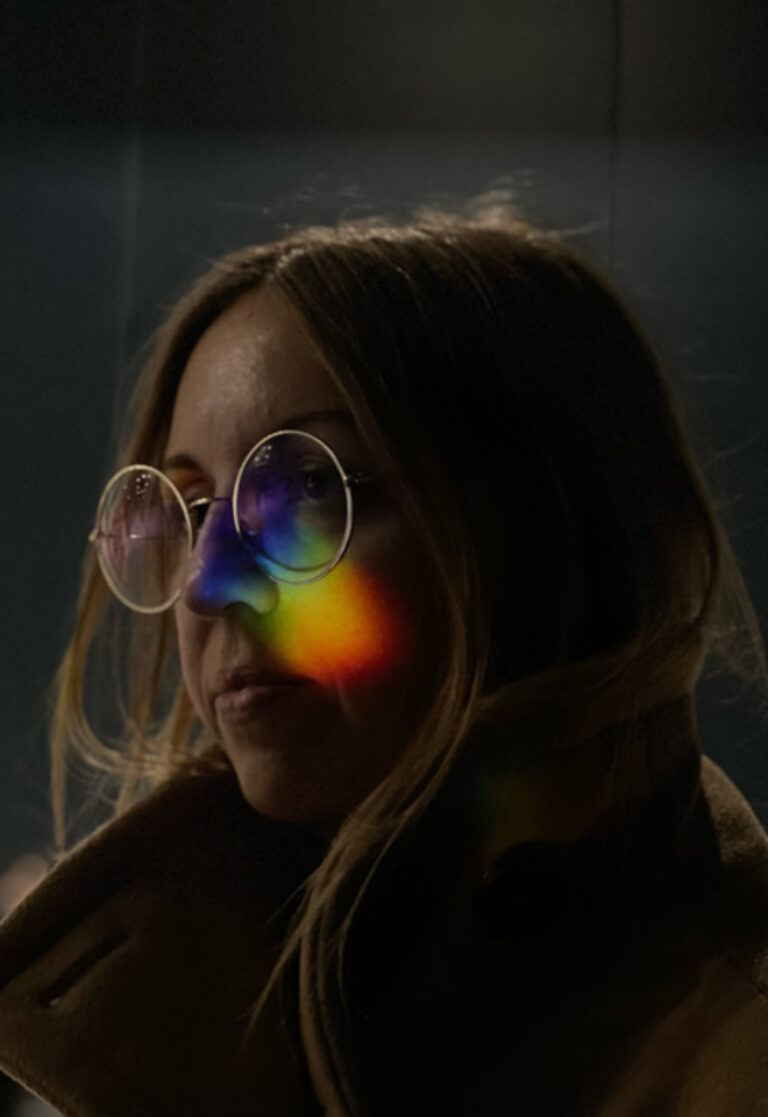
Luisa Milani is the art director and co-founder of the independent graphic design studio LaTigre. She studied at Politecnico di Milano and, a few years later, in 2009, founded the studio. Alongside her practice, she has spent several years teaching. Always in search of the sublime in color and form, her design approach is solid and concrete, yet spontaneous—free from constraints or creative limits. She draws inspiration from everything around her, making intuition a core aspect of her practice. A long-time yoga practitioner, she brings the same balance and awareness to her creative work, leaving room for serendipity, her motto.
La Tigre is a graphic design studio founded and directed by Luisa Milani and Walter Molteni, members of AGI (Alliance Graphique Internationale). Since 2009, the studio has been developing multiform visual languages in which formal research is driven by synthesis and a vibrant use of color, where the boundary between the abstract and the figurative at times becomes blurred. It collaborates with international entities such as Apple, Bitossi Home, Living and Abitare – Corriere della Sera, Max Mara, The New York Times, Phaidon, and Wired USA. Alongside commissioned projects, the studio conducts experimental research across various media.


Wed, Nov 4, 2026
Masters’ Talks
7.30 pm — Event at DHub
Open to the public

Izaskun Chinchilla
Los barrios del buen vivir: A Perspective from Tentative Design
Los barrios del buen vivir: A Perspective from Tentative Design
What if designers made fewer mistakes if they stopped trying to get it right the first time? Neighborhoods of Good Living explore a city understood not as a finished object, but as a living laboratory: spaces that are tested, inhabited, evaluated, and transformed. The lecture will explore the work of Izaskun Chinchilla Architects and the book Neighborhoods of Good Living to ask what happens when design abandons certainty and embraces hypothesis, experimentation, and adaptation. A perspective from tentative design to conceive of well-being as something experienced collectively.

Izaskun Chinchilla, a professor at the Bartlett School of Architecture, University College London (UCL), and an honorary fellow of the Royal Institute of British Architects (RIBA), integrates ecology, care, and participation into her practice, research, and teaching. Her work promotes more equitable and sustainable cities. She combines design, critical thinking, and cultural knowledge to promote an architecture that is educational, cooperative, and oriented toward the common good. She is the author of La ciudad de los cuidados (Catarata, 2021) and Los barrios del buen vivir (Catarata, 2026).
Izaskun Chinchilla Architects is a group of architects led by Izaskun Chinchilla that brings together interdisciplinary teams for each project. Their work focuses on optimizing the environmental performance of architecture, public space, facilities, art, and cultural products through innovation. Public engagement and social participation are pillars of their practice, which promotes collaboration in the construction of shared spaces and community-based decision-making regarding the use, location, and characteristics of the facilities they design.


past events
Nov 10 — 14, 2025
workshop

Prof Dr Martin Lorenz, TwoPoints.Net
Systemic Type Design
Only for MVD students
Systemic Type Design
We live in a (new) golden age of systemic type design. New technologies and easy to use software leveled the playfield for emerging designers and gave them the chance to experiment with new ideas. The world of display fonts has witnessed a lot of new impulses in the last years. Type has become more flexible, variable and kinetic as ever, adjusting efficiently and effectively to new communication channels.
Systemic Type Design is more than designing fonts. A type system is an efficient design tool that helps designers to design. If done well, the act of writing is the act of designing without the need to further layout the text. In this course we will develop an experimental type system that almost automatically generates fantastic design applications.

Martin Lorenz could well have become a chef, comic book artist, or architect, had it not been for an internship at the Müller + Volkmann design studio. Lorenz studied Graphic Design at the Darmstadt University of Applied Sciences and at the Royal Academy of Art (KABK) in The Hague. After working for four years at the Hort studio, he moved to Barcelona to found TwoPoints.Net with Lupi Asensio and completed his Master’s and PhD in Design Research at the University of Barcelona. Lorenz has been teaching at Elisava since 2006 and still enjoys cooking.


Wed, Nov 12, 2025
masters’ talks
7.30 pm — Event at DHub
Open to the public

Dries Depoorter
Surveillance art, dying phones, and fake likes
Surveillance art, dying phones, and fake likes
In this engaging talk, Dries Depoorter delves into his world of his art, blending the boundaries between technology and creativity. Attendees will be taken on a journey through Depoorter’s recent and upcoming projects, offering insights into the conceptual and technical processes behind his works. Dries will showcase live demonstrations of his art in the form of giving away likes or followers. This lecture offers a unique opportunity to learn more about the projects that have brought him worldwide recognition.

Belgian creative technologist and artist Dries Depoorter, based in Ghent, creates thought-provoking work about technology, surveillance, AI and social media in a playful way that makes people laugh while delivering serious messages in an accessible way. His projects explore digital culture that can inspire marketers: privacy challenges, artificial intelligence applications, surveillance and authentic social media projects.
With his unique background in electronics and digital innovation, Dries has become a voice for forward-thinking brands and marketing professionals looking to navigate today’s complex digital landscape. His artistic approach can directly inspire brands to think differently and develop original marketing concepts that stand out. Through his work, Dries demonstrates how combining creativity with technological insight creates viral moments.
His award-winning “Die With Me” app, accessible only when a user’s phone battery drops below 5%, demonstrates how scarcity and unique user experiences can create powerful engagement. On Black Friday, he doubles the price of his app instead of offering discounts, showing brands how breaking marketing rules can create attention.
In his viral project “The Follower” Dries leverages open cameras and AI to reveal the reality behind curated Instagram moments—offering marketers an unfiltered look at consumer behavior and content creation.
Meanwhile, ”The Flemish Scrollers” uses AI to automatically identify politicians using smartphones during parliamentary sessions, highlighting how technology can create accountability and transparency in public spaces.
Dries has exhibited at prestigious venues including the Barbican in London, Art Basel, Mutek Festival in Montreal,ZKM, Bozar, WIRED and Ars Electronica.


Wed, Nov 5, 2025
masterclass

Juli Groshaus, Vandals
Turning Understanding into Opportunities
Only for MVD students
Turning Understanding into Opportunities
This session marks a shift — from exploring and questioning to articulating what we’ve truly understood. After framing your problem, it’s time to bring it all together and show where it leads.
You’ll present your understanding of the problem: the context it lives in, who it affects, and why it matters. But more importantly, you’ll show how it opens space for design — through a clear, grounded “How Might We” statement.
Through peer feedback and shared reflection, you’ll learn to see your own work from new perspectives, to challenge assumptions, and to find strength in diverse viewpoints.

Juli Groshaus is a Business Designer and Design Strategist at Vandals. He is passionate about turning everyday decisions into clear metrics that enable the evaluation of processes, facilitate key conversations, and ensure that strategic decisions are based on an approach that considers people, the business, and the system as a whole.
Vandals is a Strategy Consultancy that turns vision into value by bridging research, design and business to refine direction, shape what matters, and drive momentum. They go beyond building strategies by unlocking bold decisions, sharpening thinking and guiding transformation from insight to action. The goal? To move businesses forward by challenging assumptions, connecting clarity with execution and supporting teams see where they are, where they could go and how to get there.


Wed, Oct 29, 2025
graphic.elisava lectures
7.30 pm — Sala Aleix Carrió
Open to the pubic

Kris De Decker, Low-tech Magazine
High-tech problems, obsolete technologies, and low-tech solutions
High-tech problems, obsolete technologies, and low-tech solutions
This lecture underscores the potential of past and often forgotten technologies and how they can inform sustainable energy practices. Technology has become the idol of our society, but technological progress is—more often than not—aimed at solving problems caused by earlier technical inventions. Interesting possibilities arise when we combine old technology with new knowledge and new materials, or when we apply old concepts and traditional knowledge to modern technology. We discuss obsolete technologies and give examples of how they can inspire objects and ways of living that are both modern and sustainable.

Kris De Decker is the author of Low-tech Magazine, an online publication that refuses to assume that every problem has a high-tech solution. Since 2018, Low-tech Magazine runs on a self-hosted, solar powered server, and since 2019 it is also available in print. De Decker also wrote for the Demand Centre at Lancaster University (UK), which researches energy demand in relation to social practices, and is the co-founder of the Human Power Plant, an art project that investigates the possibilities of human power production in a modern society. Before the creation of Low-tech Magazine in 2007, he was reporting on cutting-edge science and technology as a freelance journalist for newspapers and magazines. He was born in Belgium and lives in Spain.
I studied journalism and worked as a journalist, but nowadays my writing is between journalism, academic writing, and the essay. I love researching and do it very thoroughly. I believe in quality rather than quantity: Low-tech Magazine doesn’t publish often but many articles remain popular for many years. Around 2016 I also started to work with designers and other collaborators to make objects that reflect the approach of the magazine: finding inspiration in the past and trying to steer technological development into a different direction. I believe in the power of community: building things together, combining different skills.


Wed, Oct 22, 2025
case studies

Nicolás Cevallos, Centro
Design Atmosphere
Only for MVD students
How do you Design Atmosphere?
Can you imagine a place, the feeling of being inside it? The smell, the temperature, the tension or the calm that holds the air together? Maybe it reminds you of somewhere you’ve been before. Maybe you want to stay, or maybe you never want to feel that way again.
A brand narrative in practice is often a collection of words and fragments, an amorphous vision that’s meant to be felt, not easily read or summarized. When we speak about building a “vibe,” we’re really talking about arranging all the elements inside a fictional room to create a specific mood.
But which kind of atmosphere do you want to create?
A tightly defined one, something perfectly controlled, can feel precise, or it can feel alienating. Sometimes, the most interesting spaces are those that hold tension: that make you question, linger, think. In other cases, the atmosphere invites comfort; it feels familiar, like something that could be ours.
In this session, we will explore the different corners from which you can start building an atmosphere, and how using it as a mindset can help you create interesting and complex worlds people want to be in.

I describe myself best by admitting that I’m curious, have a questionable sense of humor, struggle to keep my attention for long, and have an obsession with getting obsessed. I’m drawn to contradictions and often find myself most comfortable in the in-betweens.
My fascination with images led me to become a graphic designer, while my tendency to question everything pushed me toward strategic thinking. Balancing these two energies has allowed me to collaborate on unique projects with studios, brands, and individuals alike.
Previously I’ve worked for brands like: Nomad Coffee, Pull&Bear, Adidas, Bershka, Amazon Music Es, Estrella Galicia, ELISAVA, TOUS, VICIO. And collaborated with: Querida, ESCOLA, Mañana, Socis Club, Gallery Studios, Folch Studio.
Today (16/10/25) (16:05) CENTRO is a fictional strategy and creative consultancy practice run by Nicolás Cevallos. We offer tailor-made solutions for projects that need a balance between strategic thinking and creative vision, turning insights into ideas.
We’re interested in understanding the relationship between people and commerce. We study the future of culture and its imminent cannibalization. We care about art. We build relationships with individuals, collectives, and brands, and develop strategies for survival in a sea of sameness and boredom.


Wed, Oct 15, 2025
masterclass

Clara Rodés, Codea
Architecting creative work
Only for MVD students
Architecting creative work
This masterclass explores how a project evolves from being just a good idea into a proposal with direction, coherence, and purpose. Through practical frameworks and exercises, you’ll gain a method you can actually use, adapt, and make your own to transform scattered ideas into living systems . The kind of work that doesn’t just look good, but feels coherent, soulful, and capable of having the impact you envisioned.
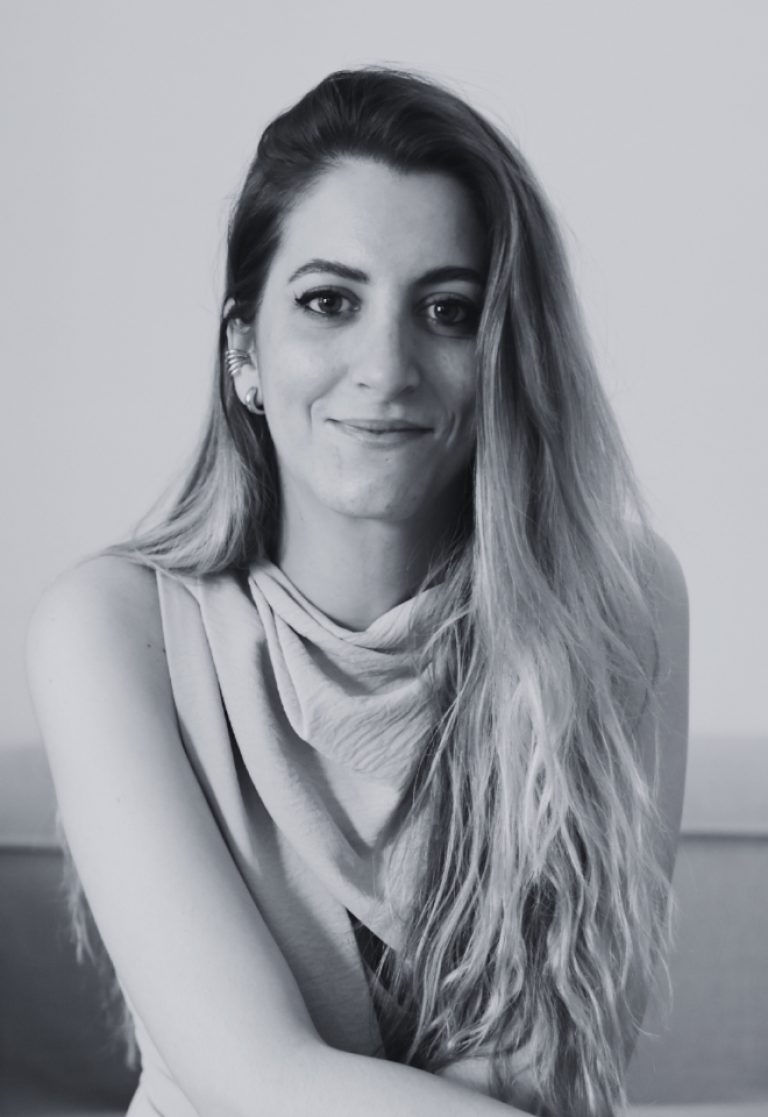
Clara Rodés is Head of Strategy at Codea, where she bridges strategy and creative direction to help brands and institutions build work with intent. Based in Barcelona, she also teaches at Elisava University, helping students think critically about their work and connect strategic thinking with creative systems that live meaningfully in culture.
Codea is a creative company specialising in creative direction, design, and production.
Based between Barcelona and London, we work at the intersection of concept and craft, merging creative direction, design, and high-end production across film and photo into a single, cohesive process. Our work identifies conventions to defy them, delivering work that hits hard while looking sharp. We believe traditional advertising is obsolete; no one wants to be interrupted by soulless messaging. It’s been said our work reflects the pulse of culture, we like to say we take our own jokes seriously.


Wed, Oct 8, 2025
masterclass

Valentina Marun, Danae Lois & Juli Groshaus, Vandals
Framing Challenges with Strategic Clarity
Only for MDV students
Projects or companies don’t fail for lack of ideas, most of them fail because they solve problems no one really had in the first place. In this Masterclass, we’ll explore how to tell the difference between noise and the sparks that can ignite real change.
We’ll give you the lenses to spot problems that are real, relevant, and worth solving. Through live examples and business design tools, you’ll learn how to separate symptoms from causes and size the magnitude of a challenge. Because the right problem doesn’t just lead to a solution: it opens the door to transformation.
You’ll walk away with a mindset to approach problems with sharper eyes, a clearer sense of where to explore further and a way of thinking you can take into the real world.
Valentina Marun, Danae Lois Gomez & Juli Groshaus, are Business Designers and Design Strategists at Vandals, a Strategy Consultancy that turns vision into value by bridging research, design and business to refine direction, shape what matters, and drive momentum. They go beyond building strategies by unlocking bold decisions, sharpening thinking and guiding transformation from insight to action. The goal? To move businesses forward by challenging assumptions, connecting clarity with execution and supporting teams see where they are, where they could go and how to get there.
Wed, May 21, 2025
bookworm

Emigre magazine
Only for MED students
Published between 1984 and 2005, Emigre was the first magazine specialising in typography to grasp the need for a change in graphic design in the digital era. In its pages appeared the representatives of a new sensibility that challenged the modern canon with typographic experiments that fragmented composition and challenged the legibility of texts. The magazine was a shock in the world of graphics at the end of the 20th century and represented the fracture between the old analogue generation, formed in the spirit of modernism, and the new post-modern generation that was beginning to develop in a digital environment. Its pages fostered debate in the fields of the profession and academia, endowing the practice of graphic design with a solid theoretical discourse.
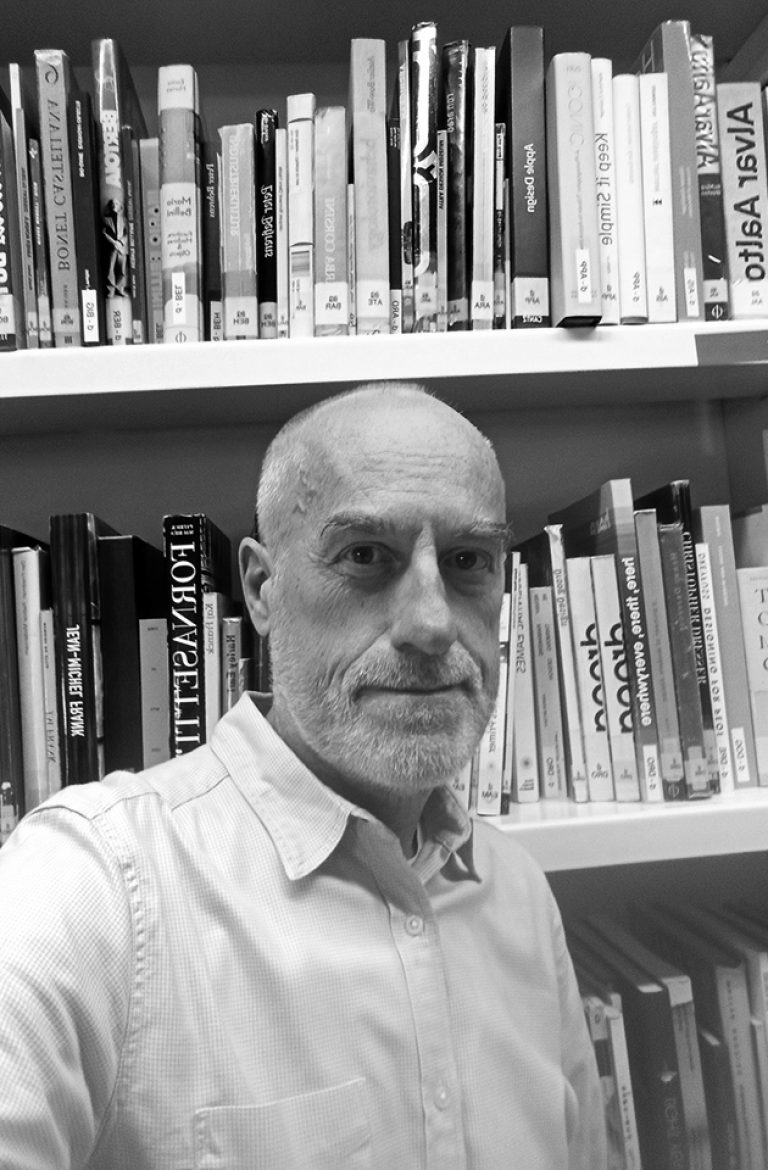
In the Bookworm sessions we will explore iconic magazines and books that capture the spirit of the era in which they were created. The material comes from Elisava’s library collections, especially from its Reserve Fund, which contains publications that, due to their design, constitute a journey through the best of the past and present of modern graphics applied to the field of editorial design.
The Bookworm sessions are guided by Andreu Jansà, librarian and curator of the Enric Bricall Reserve Fund.
We will place the publications in their context and try to define what makes them relevant in the history of editorial design in the 20th and 21st centuries. The direct contact with the books and magazines that we will see in each session will allow us to experience the printed document from a material point of view: binding, paper, lay out, illustrations, typography. We will also be able to assess the adequacy between form and content.


Wed, May 14, 2025
masters’ talks
7.30 pm — Event at DHub
Open to the public

Rob Giampietro, Notion
20 Years in Design
20 Years in Design
Across nonprofit and for profit, startups and scale, on boards and in residence, in print and with AI, as a writer, designer, teacher, and leader — Rob’s career has spanned a wide range of projects at the intersection of design, culture, and technology. This talk will share some recent work from Notion as well as work from Google and MoMA, connected in their uses of strategic inquiry, brand-focused storytelling, and multidisciplinary human-centered design to convey unique stories and experience to global audiences.
Rob Giampietro is a designer based in New York, where he is Head of Creative at Notion, a productivity tool celebrated by Forbes’ “AI 50” list in 2024. Active across worlds of design, art, and technology, Rob has held creative leadership roles at Google (Material Design, Research & Machine Intelligence, Search/Assistant) and MoMA, where he was Director of Design during the museum’s historic 2019 expansion.
Rob taught for over a decade in RISD’s MFA Graphic Design program and has served as VP of AIGA/NY. In 2024, he was a jury chair for AIGA’s 100th Annual 50 Books 50 Covers awards. A graduate of Yale, Rob has had fellowships at MacDowell and the American Academy in Rome, along with recognition from the National Design Awards for his work at Project Projects. Rob has been an Advisor to the Aspen Ideas Festival and is a trustee and board member of the Aperture Foundation.

Notion is the connected workspace that allows teams and individuals to easily share documents, take notes, manage projects, and organize knowledge—all in one place. Users can create and customize beautiful documents, roadmaps, knowledge bases, and more, helping them work smarter and faster.
es.


May 5 — 9, 2025
workshop
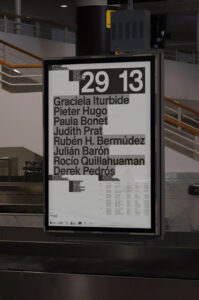
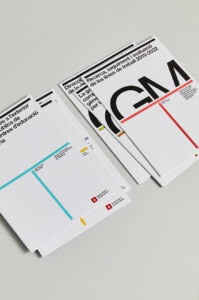
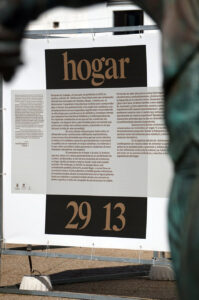
Jorge León & Mikel Romero, León Romero
A Future in Symbols:
Redefining Global Architecture Through Its Flag
Only for MVD students
In a constantly changing world, architecture faces the challenge of representing, inhabiting, and shaping diverse realities on a global scale.
This workshop proposes an experimental exercise: the design of flags for the International Union of Architects (UIA), the organization that brings together architects from all continents under a shared vision of the built future.
The flag, as a symbol, concentrates the identity of a community.
Its power lies in its ability to synthesize values, territories, and aspirations into an essential graphic language.
Although their exact origin is unknown, flags have accompanied civilizations since ancient times, establishing themselves as an essential language to express identity, belonging, and shared aspirations.
The exercise consists of redesigning the flag of the International Union of Architects (UIA), reinterpreting its identity through a contemporary lens.
The new design must move entirely away from the current UIA flag, aiming instead to construct a symbol that reflects the diversity, sustainability, and future of architecture on a global scale.
The exercise will begin by merging three reference points that will serve as the foundation for the development of the flag:
1. Architectural movements
2. Geographies and climates
3. UIA core values
LEÓN ROMERO is a Barcelona-based visual communication studio founded by Jorge León and Mikel Romero. The studio approaches projects through creative direction and visual design, delivering bold and functional solutions in both cultural and commercial fields, while seamlessly merging the physical and digital worlds in a cohesive manner.
Driven by typographic design, LEÓN ROMERO offers a wide array of services, including visual identity, graphic campaigns, editorial and web design, packaging, and art direction. Maintaining strong relationships with a vibrant network of photographers, illustrators, editors, and copywriters, the studio delivers projects of all sizes.
Wed, Apr 30, 2025
graphic.elisava lectures
7.30 pm — Sala Aleix Carrió
Open to the public

Michelle Phillips, Studio Yukiko
Maintaining the “Creative” in “Creative Industry”
The leap between being a design student at university, exploring and practicing creativity every day and learning how to apply all that creative expression I had developed as a student, felt like trying to jump across a canyon when I got my first job. That was 16 years ago. Today I still grapple with the tension between “creative” and “industry” only now I see the challenges that once daunted me as opportunities to grow and thrive. I’ll be taking a deep dive on the lessons I’ve learned from my meandering journey from student to studio, sharing projects and processes that have got me here, the joy of collaboration and letting go of your ego and the importance of finding inspiration outside of the “industry”.

Michelle Phillips studied graphic design at the University of Brighton in England. In 2010 she moved to Berlin and made music videos before co founding Studio Yukiko, a Berlin-based design and creative agency.
Michelle is also a founding member and Art Director of Flaneur Magazine and Sofa Magazine and has been on the jury for TDC new york and D&AD awards.
Studio Yukiko was co-founded by Michelle Phillips and Johannes Conrad in 2012, a Berlin-based creative agency specialising in creative direction, art direction, brand strategy, concept generation and graphic design for commercial, cultural and indie clients alike.
The studio also runs it’s own projects, such as Flaneur and Sofa Magazine. With these research projects Yukiko continually experiments with contemporary forms of visual storytelling and fosters a deeper understanding of the audiences with which its projects engage.


Wed, Apr 10, 2025
case studies

Cris Moya y Álvaro Ferrer, Odd Spaces
Between Authenticity and Viability: Designing in the Tension
Only for MVD students
The Odd Approach — Navigating the balance between bold creative visions and real-world constraints.
Case Studies — Exploring key projects through:
Concept — Keeping authenticity while ensuring functionality.
Production — Materializing ideas within technical and sustainable limits.
Execution — Adapting without losing identity.
Key Takeaways — Turning tension into a creative advantage
Cris Moya designs and manages spaces and events, from renovations to brand activations at festivals. With a background in Advertising, Cultural Management, and Spatial Design, she blends research, design, and marketing. After directing festivals like Offf Barcelona and 4YFN, she founded Detour in 2016, later leading This is Odd. Now, at Odd Spaces, she works mixing emotion and function to bring brand identities to life.
Álvaro Ferrer is a Barcelona-based architect focused on thoughtful, simple, and effective designs that integrate physical, natural, and cultural contexts. He believes in the respectful coexistence of buildings and their surroundings, balancing contemporary solutions with tradition. His work spans residential projects, public spaces, exhibitions, museography, landscape, playgrounds, and ephemeral architecture.
a.
Odd is a studio that designs and produces ephemeral and permanent spaces from Barcelona. We explore where cultural production, design, communications, and architecture meet, blending diverse perspectives to craft solutions that spark meaningful change in our environment.


