Events are an integral part of the master programs: from workshops with guests professors to lectures series with relevant practitioners.
Wed, Oct 21, 2026
Graphic — Elisava lectures
7.30 pm — Sala Aleix Carrió
Open to the public

Luisa Milani, La Tigre
An illustrated alphabet of vibrant matters
An illustrated alphabet of vibrant matters
La Tigre looks at graphic design as a living material: shapes that breathe, colours that vibrate, signs that shift between the abstract and the figurative. The talk composes an illustrated alphabet of the qualities that guide the studio’s work, from synthesis to colour, from research to play. A journey through forms and words, where visual language becomes a playground and every element, however small, has something to say.
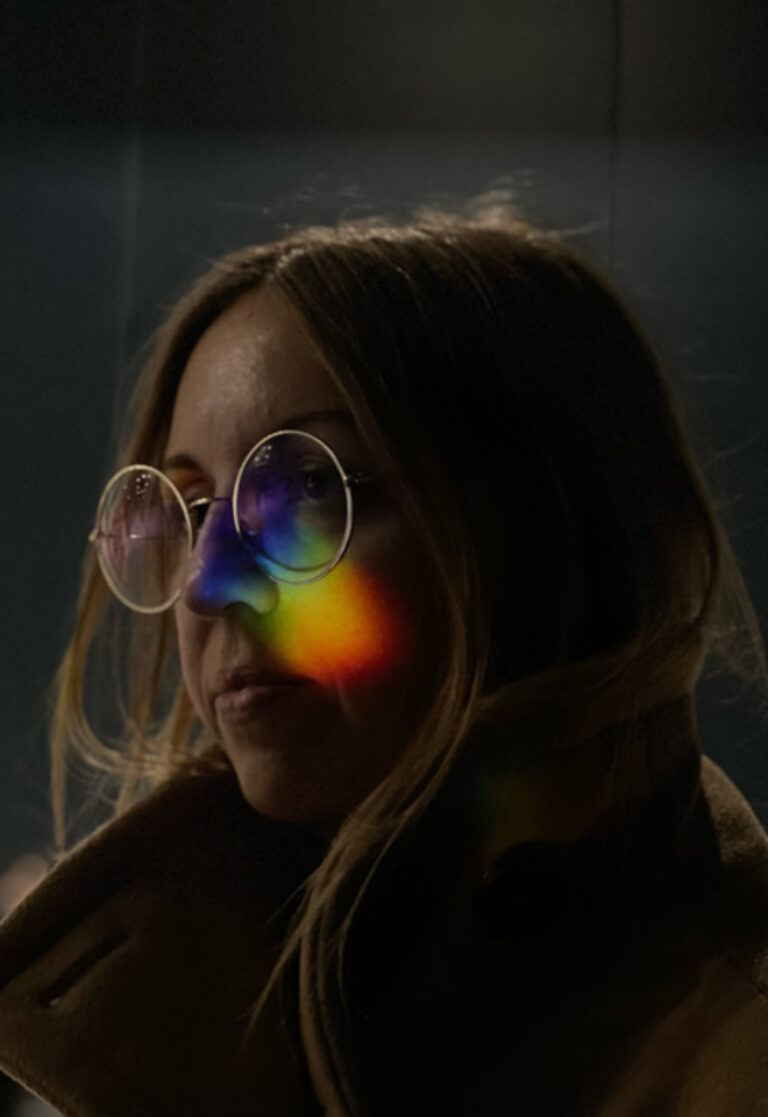
Luisa Milani is the art director and co-founder of the independent graphic design studio LaTigre. She studied at Politecnico di Milano and, a few years later, in 2009, founded the studio. Alongside her practice, she has spent several years teaching. Always in search of the sublime in color and form, her design approach is solid and concrete, yet spontaneous—free from constraints or creative limits. She draws inspiration from everything around her, making intuition a core aspect of her practice. A long-time yoga practitioner, she brings the same balance and awareness to her creative work, leaving room for serendipity, her motto.
La Tigre is a graphic design studio founded and directed by Luisa Milani and Walter Molteni, members of AGI (Alliance Graphique Internationale). Since 2009, the studio has been developing multiform visual languages in which formal research is driven by synthesis and a vibrant use of color, where the boundary between the abstract and the figurative at times becomes blurred. It collaborates with international entities such as Apple, Bitossi Home, Living and Abitare – Corriere della Sera, Max Mara, The New York Times, Phaidon, and Wired USA. Alongside commissioned projects, the studio conducts experimental research across various media.


Wed, Nov 4, 2026
Masters’ Talks
7.30 pm — Event at DHub
Open to the public

Izaskun Chinchilla
Los barrios del buen vivir: A Perspective from Tentative Design
Los barrios del buen vivir: A Perspective from Tentative Design
What if designers made fewer mistakes if they stopped trying to get it right the first time? Neighborhoods of Good Living explore a city understood not as a finished object, but as a living laboratory: spaces that are tested, inhabited, evaluated, and transformed. The lecture will explore the work of Izaskun Chinchilla Architects and the book Neighborhoods of Good Living to ask what happens when design abandons certainty and embraces hypothesis, experimentation, and adaptation. A perspective from tentative design to conceive of well-being as something experienced collectively.

Izaskun Chinchilla, a professor at the Bartlett School of Architecture, University College London (UCL), and an honorary fellow of the Royal Institute of British Architects (RIBA), integrates ecology, care, and participation into her practice, research, and teaching. Her work promotes more equitable and sustainable cities. She combines design, critical thinking, and cultural knowledge to promote an architecture that is educational, cooperative, and oriented toward the common good. She is the author of La ciudad de los cuidados (Catarata, 2021) and Los barrios del buen vivir (Catarata, 2026).
Izaskun Chinchilla Architects is a group of architects led by Izaskun Chinchilla that brings together interdisciplinary teams for each project. Their work focuses on optimizing the environmental performance of architecture, public space, facilities, art, and cultural products through innovation. Public engagement and social participation are pillars of their practice, which promotes collaboration in the construction of shared spaces and community-based decision-making regarding the use, location, and characteristics of the facilities they design.


past events
Wed, Apr 9, 2025
bookworm

Dot Dot Dot magazine
Only for MED students
Dot Dot Dot Dot represented a paradigm shift in the sector of magazines dedicated to graphics and visual culture. Published between 2000 and 2010, it promoted a more experimental and critical editorial design. Over the course of 20 issues, it contributed to enriching the discourse on graphic design, demonstrating that it was profoundly connected with other disciplines and aspects of the cultural sphere. In this way, the designer ceased to be exclusively at the service of commercial interests and became an author and researcher willing to question reality and propose alternative aspects of culture. In the magazine, the popular coexists with the erudite and the sublime with the anodyne in a dense amalgam that is often disconcerting but intellectually powerful.
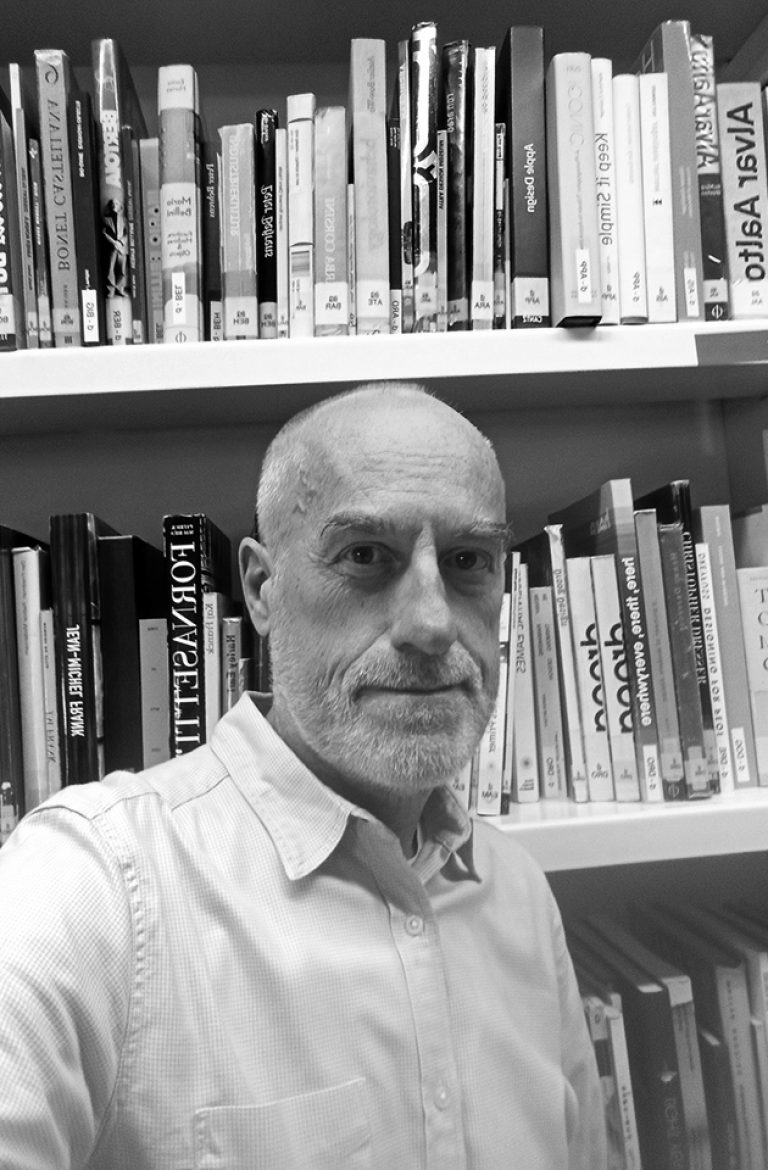
In the Bookworm sessions we will explore iconic magazines and books that capture the spirit of the era in which they were created. The material comes from Elisava’s library collections, especially from its Reserve Fund, which contains publications that, due to their design, constitute a journey through the best of the past and present of modern graphics applied to the field of editorial design.
The Bookworm sessions are guided by Andreu Jansà, librarian and curator of the Enric Bricall Reserve Fund.
We will place the publications in their context and try to define what makes them relevant in the history of editorial design in the 20th and 21st centuries. The direct contact with the books and magazines that we will see in each session will allow us to experience the printed document from a material point of view: binding, paper, lay out, illustrations, typography. We will also be able to assess the adequacy between form and content.


Wed, Apr 2, 2025
case studies

Lucía Herrero & Christian Rodríguez, APN
Some projects, from design to development
We’ll walk through some of our projects and how we’ve worked on them, from design to development. APN is focused on collaboration; we work with a lot of different clients, studios, and designers, which makes each project completely different, with its own set of challenges, collaborators, needs, and structure. Whether we’re building a website from scratch, working with an established identity, or collaborating with other design studios, each project brings something new. Throughout this talk, we’ll show the different stages we go through.

After studying graphic design at Elisava, Christian worked at design studios such as Deutsche und Japaner and Naranjo-Etxeberria. In 2018, he co-founded Carter Studio, a Madrid-based graphic design studio. After nearly three years, he left Carter to start APN, aiming to focus more on the digital side, with a particular emphasis on web design.
Lucía studied fashion design in Madrid and worked for several independent clothing brands before spending three years as a fashion designer at Inditex. During this time, she learned how to code and developed a strong interest in graphic design, which led her to leave her job and join APN.
APN is a creative studio focused on design and web development. We offer a wide range of services including branding, graphic design and digital production. Our work spans across various sectors, collaborating with cultural institutions, fashion brands, independent creatives and commercial enterprises.


Wed, Mar 26, 2025
graphic.elisava lectures
7.30 pm — Sala Aleix Carrió
Open to the public

Vera van de Seyp
Computational Craft
Computational Craft
Next to offering an insight into Vera’s work, this talk dives into creating motion through craft and computation. Vera shows how the tactility of weaving, knitting, and other tangible crafts can extend to the digital realm.
.

Vera van de Seyp is a computational designer and educator based in NYC. Her work explores generative design tools, computational typography, and using artificial intelligence for design. Vera recently completed a Research Assistantship with the Future Sketches group at MIT Media Lab, and studied at KABK and Leiden University.
Vera van de Seyp has collaborated with clients like WIRED, Serpentine Galleries London, and Google Arts and Culture. She also teaches and gives workshops and lectures to inspire creatives to make (and code) their own design tools. She is a member of Alliance Graphique Internationale (AGI). Projects include playful websites, generative language installations, perpetually morphing typefaces, typographic tools, creative coding symposia, and textiles made with a hacked knitting machine.

Mar 17 — 21, 2025
workshop

Jon Uriarte
Photobook
Only for MED students
Introduction in the world of the photobook from its foundations, history and current situation.
Students will acquire knowledge about their conception and work process developing a project with an author. Narrative, rhythm and sequence when the main content is image.
Jon Uriarte studied photography at the Institut d’Estudis Fotogràfics de Catalunya and at the International Center of Photography in New York, as well as a master’s degree in Artistic Projects and Theories from PhotoEspaña and the Universidad Europea de Madrid. He has exhibited in various art centers and galleries, both in collective and individual shows, among which are La Casa Encendida in Madrid, the Koldo Mitxelena in Donostia, Studio 304 in New York, the HBC center in Berlin and the Sala d’Art Jove in Barcelona.
He was the founder of Widephoto, an independent platform dedicated to curating and activities around contemporary photography. In addition, he conceptualized and coordinated for 3 years DONE, the project on reflection and visual creation promoted by Foto Colectania. He currently lives in San Sebastián, from where he combines the curatorship of The Photographers’ Gallery digital programs with the curatorship of the Getxophoto International Image Festival.


Mar 17 — 21, 2025
workshop

Ana Criado
Main Title Sequence for Film
Only for MVD students
Five-day workshop learning how to create a Main Title Sequence for film.
In this workshop, we will learn the art behind creating a main title sequence for a movie step by step.
We will put the weight of the workshop on the critical importance of a solid concept, the understanding of motion to tell a story, and how to use our graphic design knowledge to create a 9-frame storyboard.

Ana Criado is an Emmy-nominated Graphic Designer and Creative Director based in California and Valencia. Known for her exceptional work in developing outstanding main title sequences for film and television. With +20 years of experience in graphic design, corporate identity, communication, and motion graphic design.
Over the past 12 years, Ana has collaborated with some of the most prestigious studios in Hollywood, creating captivating title sequences for notable productions such as Star Trek: Discovery, Star Trek: Picard, American Horror Story, Godzilla, also created graphic works for The 89th Oscars Ceremony, Apple, Nike, T-Mobile, IBM, among others.


Wed, Mar 19, 2025
bookworm

Irma Boom books
Only for MED students
Irma Boom is one of the most influential contemporary book designers, known for her innovative and experimental approach to editorial design. Boom challenges conventions and forces the reader to interact with the book in a different way, reconsidering its function and structure. She works closely with the authors and publishers of the books she designs, influencing not only the aesthetics but also the visual narrative and content. Her work has led to a revaluation of the book as a physical object, an unbeatable experience compared to e-books. We will see some of her most important books, such as the one dedicated to the textile artist Sheila Hicks, the invisible book about Chanel or the tiny catalogues devoted to her own work.
In the Bookworm sessions we will explore iconic magazines and books that capture the spirit of the era in which they were created. The material comes from Elisava’s library collections, especially from its Reserve Fund, which contains publications that, due to their design, constitute a journey through the best of the past and present of modern graphics applied to the field of editorial design.
The Bookworm sessions are guided by Andreu Jansà, librarian and curator of the Enric Bricall Reserve Fund.
We will place the publications in their context and try to define what makes them relevant in the history of editorial design in the 20th and 21st centuries. The direct contact with the books and magazines that we will see in each session will allow us to experience the printed document from a material point of view: binding, paper, lay out, illustrations, typography. We will also be able to assess the adequacy between form and content.


We, Mar 19, 2025
masters’ talks
7.30 pm — Event at DHub
Open to the public

Michael Hansmeyer
Tools of Imagination
Today, we can fabricate anything. Digital fabrication now functions at both the micro and macro scales, combining multiple materials, and using different materialization processes. Complexity and customization are no longer impediments in design.
While we can fabricate anything, design arguably appears confined by our instruments of design: we can only design what we can directly represent. If one looks at 3D-printed artifacts, there is oftentimes a discrepancy between the wonder of technology, and the conventionalism of design. We appear unable to exploit the new freedom that digital fabrication offers us. In short: we can currently fabricate more than we can design.
What is needed is a new type of design instrument. We need tools for search and exploration, rather than simply control and execution. As of yet, we have countless tools to increase our efficiency and precision. Why not also create tools that serve as our muse, that inspire us and help us to be creative? Tools to draw the undrawable, and to imagine the unimaginable.
What we stand to gain are entirely new spatial and haptic experiences. A playful design that stimulates the senses, elicits curiosity, and invites interaction. A design environment that simultaneously allows control and surprise, and that embraces and celebrates the unforeseen.

© Jacek Poremba
Michael Hansmeyer is an architect and programmer who writes algorithms to generate and fabricate architectural form. Recent work includes the design of a 3D printed concrete tower in the Swiss alps, an installation of a forest of columns at Grand Palais in Paris, and the fabrication of a muqarna for Mori Art Museum in Tokyo. Michael taught architecture as visiting professor at the Academy of Fine Arts in Vienna and at Southeast University in Nanjing, and as a lecturer at the CAAD group at ETH Zurich. He previously worked for Herzog & de Meuron architects, and holds an architecture degree from Columbia University.


Wed, Mar 5, 2025
showcase

Marc Castellví, Abuela
Getting by with little
Only for MVD students
In this showcase I will review different projects and experiences that have to do with things that make us happy at the studio. Usually related with creating and thinking with as fewer ingredients as posible. Also about rethinking why are we doing what we do and regenrating the motivation about our profession.
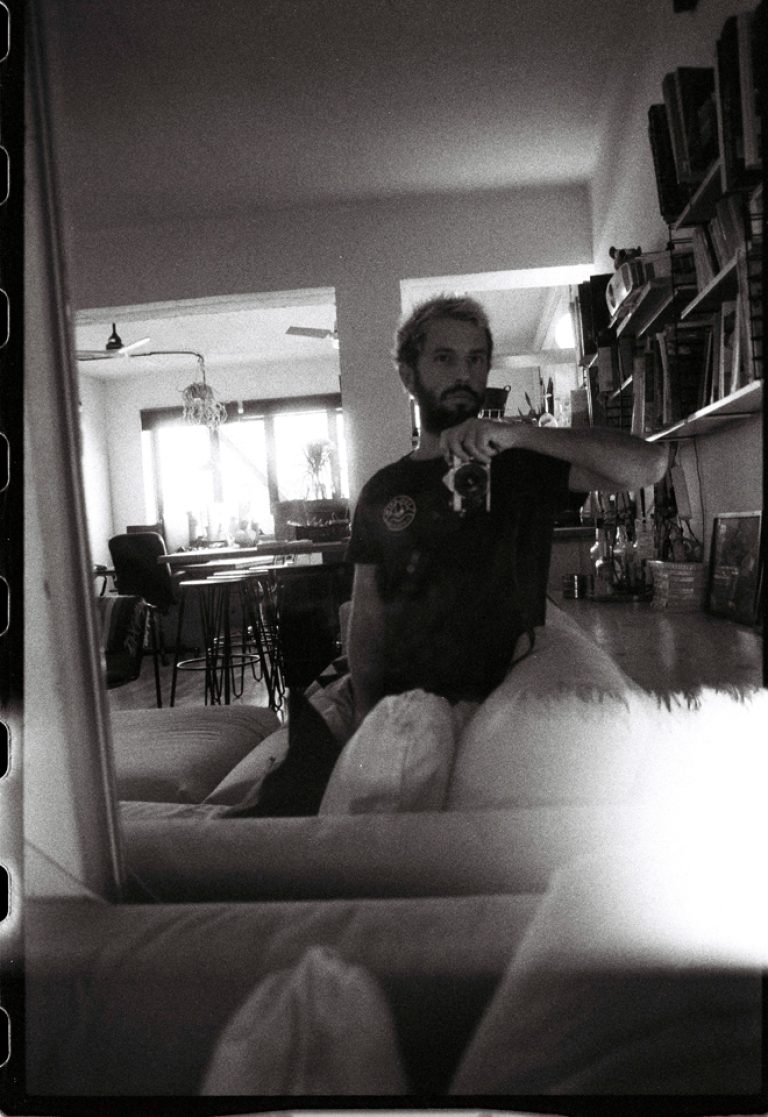
Marc Castellví (Barcelona, 1989) is a motion designer and director. He has co-founded projects such as No Más de Mamá (2012), Outro Studio (2014), and Abuela (2020-present). At Abuela, he specializes in visual narratives, helping clients shape their stories, define a unique visual language, and explore new production languages and formats.
Abuela is a Barcelona-based studio formed by creative directors Kevin Sabariego & Marc Castellví.
Specializing in visual narratives, we help our clients write down their story, create a unique visual language and produce it by any means.
We welcome projects with a flexible, versatile and open-minded approach.
Nobody will talk about you like your Abuela.
Wed, Feb 26, 2025
graphic.elisava lectures
7.30 pm — Sala Aleix Carrió
Open to the public

Bram Broerse & Maurits Wouters, Studio Airport
Storytelling on the Intersection of Film and Graphic Design
Studio Airport works at the intersection of graphic design and film, showcasing a decade of storytelling across various formats, including print publications, feature films, and interactive documentaries. During the lecture we’ll explore what storytelling can mean to New York City’s largest public cemetery but also to the San Quentin prison on the West Coast. We’ll learn about the development of a brand for bio-based materials and the publication of a magazine featuring ecology, design, and science for the London Design Museum.
The studio gives an insight in their design approach and how the team works on larger and small scale projects with the same dedication to detail and embracing artistry, craft and innovation to all aspects of their work. Most of their projects have become in-depth mechanisms of storytelling balancing between the editorial and artistic worlds.

Gravitating around the expressions of art, culture, ecology, and science Studio Airport redefines the relationship between graphic design and film by composing moments into experiences. The studio engages in commissioned projects as well as self-initiated endeavors, always guided by an artistic sensibility.
Founded in 2011 by Bram Broerse and Maurits Wouters, Studio Airport comprises a tight-knit team of creatives supported by a network of specialists. Over the past decade, Studio Airport has garnered national and international acclaim for its work with Emergence Magazine, SeeAllThis, Normal Phenomena of Life, the Hart Island Project, Slowness, and Sapiens Magazine, earning numerous awards amongst European Agency of the year 2024. Next to the studio they’re also tutors at the master department of Information Design at the Design Academy Eindhoven.


Feb 17 — 21, 2025
interdisciplinary workshops

Luna Maurer
Manifesto for the imperfect human — Friction Circus—
Only of master students
[A tool] emphasising that what makes us human — our imperfections
As designers, entrepreneurs and architects of digital culture we feel the urge to refocus how we deal with our digital futures. Technology tries to create seamless experiences, even out all our wrinkles. AI is suggesting us a smooth and predictable future, chatGPT is writing us perfect texts, spelling mistakes getting extinct. This is an investigation in friction and human messiness – imperfection, and how we can revive it. The imperfect human manifesto is a call for resistance and thought of how we can use technology in the opposite way.

Luna Maurer is a mixed media designer, artist, lecturer and author with a focus on digital technologies’ impact on daily life. She explores human characteristics through installations, performances, web experiences, and films. She co-founded studio Moniker, known for participatory and web-based projects, and co-authored the influential manifesto Conditional Design. Currently, she’s redefining perspectives on digital technology and co-authored the Designing Friction manifesto, advocating friction in digital culture.


Feb 17 — 21, 2025
interdisciplinary workshops

Tereza Ruller, The Rodina
The Hazard Spaces
Only for master students
Designing a playful experience with critical board games
Games are a reflection of societal values, aspirations, and struggles—making them powerful tools for critical engagement. This workshop provides an opportunity to develop design skills while tackling contemporary issues through playfulness, storytelling, and interaction. Participants will gain hands-on experience in integrating game mechanics, visual communication, and narrativity into an engaging design project in the form of a board game.
By the end of the workshop, we aim to inspire participants to recognize the potential of game design as an apparatus for activism. We want them to see games not only as entertainment but as powerful tools for discussion, proposing alternatives, and encouraging collective reimagination of the world we live in.
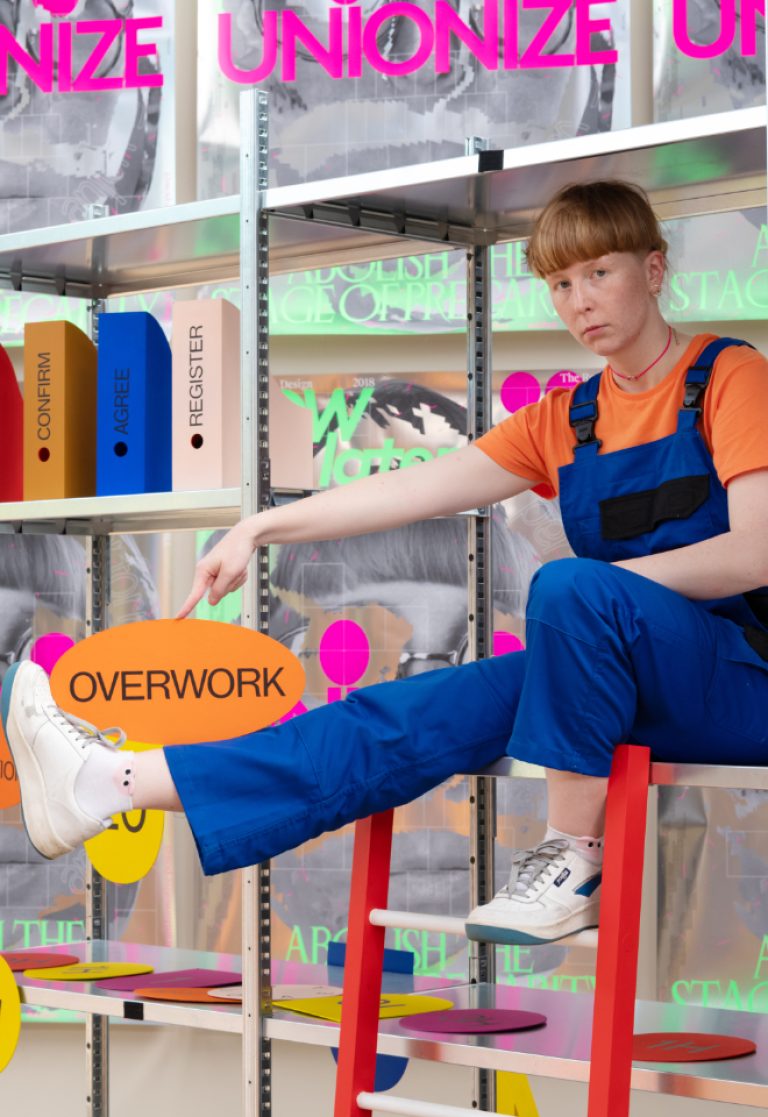
Tereza Ruller (she/her) identifies as a mother, a communication designer, and an educator. In her practice
—The Rodina— she investigates the performative and critical approach toward communication design. Her transdisciplinary approach emphasizes the power of playfulness, active spectatorship, and relations between human and nonhuman actors. Ruller’s work thrives in the cultural context, weaving together participatory events, spatial installations, virtual environments, and visual identities.
Engaging with the ecological and social issues of our time, she seeks to foster collective reimagination and to embrace the interdependence that defines our shared world. Tereza Ruller is a professor of Communication Design and Digital Practices at HfG Karlsruhe and Critical Narratives tutor at Design Academy Eindhoven.


Feb 17 — 21, 2025
interdisciplinary workshops

Kaave Pour, 21st Europe
Shaping Societies Through Design
Only for master students
Explore how to better apply design and storytelling to shape strategy, systems, and public conversations.
The way we imagine the future shapes how it unfolds. From the worlds of film, media, and entertainment, we’ve seen how visions of the future can shift expectations and inspire action. Design plays a similar role today — not just creating functional solutions, but visualizing paths forward that feel real, relatable, and within reach.
This workshop gives students the opportunity to contribute to this process. By working within the context of a high-speed train, students will create visual narratives that transform broad societal ambitions — like connected infrastructure, collective well-being, and sustainable growth — into clear, actionable ideas. By providing clear parameters for creative exploration, the course encourages deeper thinking, sharper design concepts, and more refined outcomes.

Kaave Pour is a creative entrepreneur and the founder of several ventures focused on reimagining the future through design, policy, and collaboration. Previously, he was the co-founder, CEO, and Creative Director of SPACE10, the acclaimed R&D lab known for its pioneering design explorations in partnership with IKEA, Apple, and MIT.
Kaave also leads Sun-Sun, a venture focused on rethinking the home through thoughtful design and technology. His work spans design, culture, and innovation, with a focus on ideas that create new possibilities for how we live, work, and connect. As Chair of the Danish Design Awards, he advocates for design as a way to create thoughtful, tangible impact on how we live and interact with the world.


