Events are an integral part of the master programs: from workshops with guests professors to lectures series with relevant practitioners.
Wed, Oct 21, 2026
Graphic — Elisava lectures
7.30 pm — Sala Aleix Carrió
Open to the public

Luisa Milani, La Tigre
An illustrated alphabet of vibrant matters
An illustrated alphabet of vibrant matters
La Tigre looks at graphic design as a living material: shapes that breathe, colours that vibrate, signs that shift between the abstract and the figurative. The talk composes an illustrated alphabet of the qualities that guide the studio’s work, from synthesis to colour, from research to play. A journey through forms and words, where visual language becomes a playground and every element, however small, has something to say.
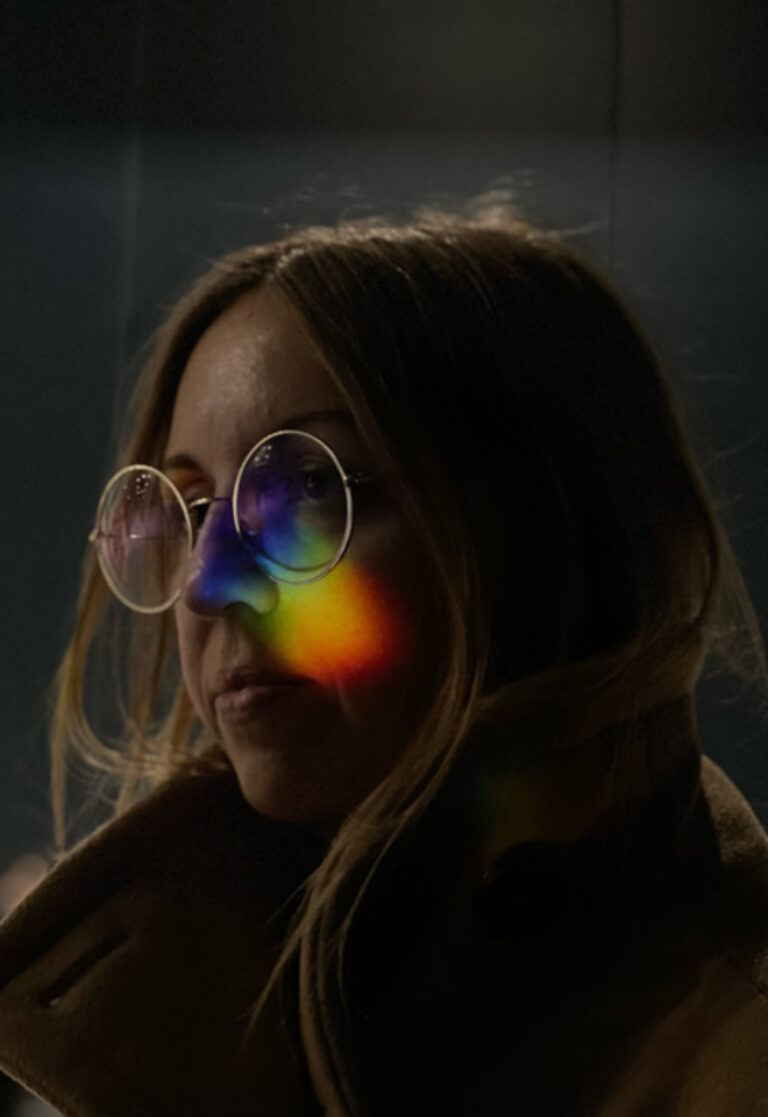
Luisa Milani is the art director and co-founder of the independent graphic design studio LaTigre. She studied at Politecnico di Milano and, a few years later, in 2009, founded the studio. Alongside her practice, she has spent several years teaching. Always in search of the sublime in color and form, her design approach is solid and concrete, yet spontaneous—free from constraints or creative limits. She draws inspiration from everything around her, making intuition a core aspect of her practice. A long-time yoga practitioner, she brings the same balance and awareness to her creative work, leaving room for serendipity, her motto.
La Tigre is a graphic design studio founded and directed by Luisa Milani and Walter Molteni, members of AGI (Alliance Graphique Internationale). Since 2009, the studio has been developing multiform visual languages in which formal research is driven by synthesis and a vibrant use of color, where the boundary between the abstract and the figurative at times becomes blurred. It collaborates with international entities such as Apple, Bitossi Home, Living and Abitare – Corriere della Sera, Max Mara, The New York Times, Phaidon, and Wired USA. Alongside commissioned projects, the studio conducts experimental research across various media.


Wed, Nov 4, 2026
Masters’ Talks
7.30 pm — Event at DHub
Open to the public

Izaskun Chinchilla
Los barrios del buen vivir: A Perspective from Tentative Design
Los barrios del buen vivir: A Perspective from Tentative Design
What if designers made fewer mistakes if they stopped trying to get it right the first time? Neighborhoods of Good Living explore a city understood not as a finished object, but as a living laboratory: spaces that are tested, inhabited, evaluated, and transformed. The lecture will explore the work of Izaskun Chinchilla Architects and the book Neighborhoods of Good Living to ask what happens when design abandons certainty and embraces hypothesis, experimentation, and adaptation. A perspective from tentative design to conceive of well-being as something experienced collectively.

Izaskun Chinchilla, a professor at the Bartlett School of Architecture, University College London (UCL), and an honorary fellow of the Royal Institute of British Architects (RIBA), integrates ecology, care, and participation into her practice, research, and teaching. Her work promotes more equitable and sustainable cities. She combines design, critical thinking, and cultural knowledge to promote an architecture that is educational, cooperative, and oriented toward the common good. She is the author of La ciudad de los cuidados (Catarata, 2021) and Los barrios del buen vivir (Catarata, 2026).
Izaskun Chinchilla Architects is a group of architects led by Izaskun Chinchilla that brings together interdisciplinary teams for each project. Their work focuses on optimizing the environmental performance of architecture, public space, facilities, art, and cultural products through innovation. Public engagement and social participation are pillars of their practice, which promotes collaboration in the construction of shared spaces and community-based decision-making regarding the use, location, and characteristics of the facilities they design.


past events
Wed, Feb 12, 2025
masters’ talks
7.30 pm — Event at DHub
Open to the public

Sougwen 愫君 Chung, Scilicet
Seeing Double – Bridging Dualities with Relational Intelligence
Where does “AI” end and “we” begin? Artist and researcher Sougwen Chung’s ever-evolving work in human and machine collaboration builds upon a decade-long international journey. Starting with a simple line, the process has led to interdisciplinary insights, philosophical inquiry, and technological invention through pioneering artistic practice. Intertwining perspectives in art and science, Chung’s practice envisions alternative futures for the relationship of humans and machines. “Embracing contradictions in art and research can pave the way to a third path, inspired by tradition and the development of new hybridities,” Chung says.

Sougwen 愫君 Chung is a Chinese-Canadian artist and (re)searcher based in London. Chung’s work explores the mark-made-by-hand and the mark-made-by-machine as an approach to understanding the dynamics of humans and systems. Chung is a former research fellow at MIT’s Media Lab and a pioneer in the field of human-machine collaboration. Sougwen’s work MEMORY is part of the permanent collection of the Victoria and Albert Museum, and is the first AI model to be collected by a major institution. Recently, Chung was recognized as a Cultural Leader at the World Economic Forum, one of four recipients of the TIME100 Impact award, and named one of TIME’s 100 Most Influential People in AI.
Scilicet is a studio exploring collaboration; engaging modes of sensing and mark-making between the human and machine, organic and synthetic, and improvisational and computational.
Founded by artist and researcher Sougwen Chung, Scilicet pioneers interdisciplinary collaboration between artists and robotic technologies, with a focus on experimentation, invention, and care.
By engaging technology not as a tool but as a collaborator, Scilicet develops configurations of human and machine beyond automation. We explore these ideas through installations, performances, experiences, and artefacts.


Jan 27 — 31, 2025
workshop

Daniel Wenzel, 26A1
Procedural Type Design
Only for MVD students
Five day workshop learning Procedural Thinking and how to develop systems instead of one-off solutions. This course is combining Type Design, Design Processes and Flexible Systems.It does not require any particular software knowledge or experience. The students will learn procedural workflows and develop flexible design systems.
The aim of the workshop is to introduce fundamentals of a procedural design workflow and to apply procedural thinking to develop letterforms and font systems.
Participants will be tasked to come up with processes and systems to create letters and fonts.This course is conceived as a crash course for students interested in acquiring processes and skills to incorporate Procedural Thinking into their workflows in a fun and creative way. This course should spark curiosity and open up new avenues of investigation.

Daniel Wenzel is a German designer and creative technologist based in New York. Specializing in typography and generative processes, he balances at the intersection of art, design, and technology.
He has been part of DIA Studio for seven years and currently operates independently. Throughout his career, he has contributed to projects that utilize procedural thinking for the benefit of coherent systems and technological advancement. He has worked for internationally renowned clients including Apple, Google, Louis Vuitton, MoMA, Nike and The New York Times. His work has been featured in publications and exhibitions worldwide and recognized with awards such as Young Guns 22.
In addition to his professional practice, Daniel teaches at the Pratt Institute and Cooper Union in New York. Previously, he has taught the Master Visual Design, Typography program at ELISAVA in Barcelona, given workshops at HEAD Genève and HS Mainz, and lectured at KABK, Weltformat, TDC Inscript, and the MIT Media Lab, among others.


Wed, Jan 29, 2025
graphic.elisava lectures
6.30 pm — Sala Aleix Carrió
Open to the public

Daniel Wenzel, 26A1
Procedural Typography
Procedural Typography Designing programmes and systems for typographic expression.
Exploring the role of tools in the design process and their influence on aesthetics, efficiency, and scalability—from mastering industry standards, learning new tools as part of a project’s problem solving efforts, misusing or making your own tools, to the influence of AI and its assistive potential.
Providing insights into procedural thinking applied to typography and other design disciplines, emphasizing the development of coherent and flexible visual systems and encouraging a methodical yet creative approach to design challenges.
Daniel Wenzel is a German designer and creative technologist based in New York. Specializing in typography and generative processes, he balances at the intersection of art, design, and technology.
He has been part of DIA Studio for seven years and currently operates independently. Throughout his career, he has contributed to projects that utilize procedural thinking for the benefit of coherent systems and technological advancement. He has worked for internationally renowned clients including Apple, Google, Louis Vuitton, MoMA, Nike and The New York Times. His work has been featured in publications and exhibitions worldwide and recognized with awards such as Young Guns 22.
In addition to his professional practice, Daniel teaches at the Pratt Institute and Cooper Union in New York. Previously, he has taught the Master Visual Design, Typography program at ELISAVA in Barcelona, given workshops at HEAD Genève and HS Mainz, and lectured at KABK, Weltformat, TDC Inscript, and the MIT Media Lab, among others.
26A1® is an independent type foundry, established in 2022. Our approach is experimental, expressive and with the intent to challenge conventions.
We strive to create typefaces beyond aesthetics but for functionality and innovation. By leveraging technology, we aim to bridge the gap between classical type design and the possibilities of the future.
Our research is about challenging the boundaries of type design. We are searching for a realm where form follows function, where ambition drives innovation, and where the intersection of art, design, and technology becomes a canvas for positive transformation.
We aim to create software to advance the field of design—tools that streamline the design process or offer new frameworks, that open up new vistas of design possibilities. By making these tools accessible, we intend to empower a broader spectrum of designers to innovate and challenge the status quo. While we are driven to make a direct impact through our own work, we also recognize the exponential potential of equipping others with innovative tools, allowing them to effect change in their own unique ways.

Wed, Jan 29, 2025
graphic.elisava lectures
8 pm — Sala Aleix Carrió
Open to the public

Serge Rompza, NODE Berlin Oslo
Loose Associations
Loose Associations explores key moments of NODE’s 22-year journey through the people, ideas, and projects that defined it. Using associative connections, the presentation highlights how collaborations and experiences interlink, building on one another to shape a dynamic practice. NODE invites you to discover how everything—and everyone—is interconnected in their creative process.

Serge Rompza graduated from the Gerrit Rietveld Academie in Amsterdam and co-founded the graphic design studio NODE in 2003 with his Norwegian partner Anders Hofgaard. Operating between Berlin and Oslo, NODE collaborates with clients like OMA, Diller Scofidio + Renfro, MIT (ACT) and Hermès.
Since 2004, Serge has been actively teaching at universities worldwide, fostering a new generation of designers. He has a long-standing connection with Elisava.
NODE is a Berlin- and Oslo-based design studio founded in 2003 by Anders Hofgaard and Serge Rompza. The studio works collaboratively across various media for a diverse range of clients from individuals to institutions, focusing on print, identity, exhibition and interactive work. Besides studio projects, NODE gives lectures and holds workshops at art & design academies.


Nov 20, 2024 → Jan 23, 2025
exhibition
Sala Àgora
Open to the public

NORM, TRIANGULATIONS
Two triangles sharing a side on a given grid
The grid has 4 x 4 coordinate points.
The points are alphabetised from A to P, from left to right, top to bottom.
The grid has 16 points.
The grid allows 120 connections of 2 points.
eg.
A to B,C,D,E,F,G,H,I,J,K,L,M,N,O,P (15)
B to C,D,E,F,G,H,I,J,K,L,M,N,O,P (14)
C to D,E,F,G,H,I,J,K,L,M,N,O,P (13)
etc.
The grid allows 560 connections of 3 points.
eg.
A–B to C,D,E,F,G,H,I,J,K,L,M,N,O,P (14)
A–C to D,E,F,G,H,I,J,K,L,M,N,O,P (13)
A–D to E,F,G,H,I,J,K,L,M,N,O,P (12)
etc.
41 combinations with a surface of zero are removed.
The remaining 519 are all the triangles possible on this grid.
For each of these 519 triangles, all the triangles they share a side with are added.
eg.
For the triangle A–B–C (for the sides containing A): A–B–C and A–B–C
side A–B to A–B to C,D,E,F,G,H,I,J,K,L,M,N,O,P (14)
side A–C to A–C to C,D,E,F,G,H,I,J,K,L,M,N,O,P (14)
Combinations containing a surface of zero are removed.
Initial triangles and added triangles are distinguished by color, colors do overprint.
Triangles sharing three sides, are part of triangles sharing one side.
These appear twice in a visually identical form, one of them is removed.
There are 12,981 combinations of 2 triangles, sharing 1 side, on a grid of 4 by 4 points.
In geometry, a triangulation is the division of a shape into triangles. In psychology, it is the practice of one person introducing a third person into their relationship in order to maintain control. We may be closer to the second point, though we are introducing a second triangle in order to lose control. It is a simple arrangement, the interaction of the two triangles creates instantly shapes of great dynamism that mock the basic right-angled system. All combinations are similar, all combinations are different, all beautiful and perfect in their complex simplicity and graphic clarity. It was impossible to resist to see them all.


Wed, Jan 22, 2025
showcase

David Vera, Vera Tamayo
Suburban Design
Only for MVD students
In this showcase I will review my career and that of Vera Tamayo, explaining how my partner Daniel Tamayo and I met and how, project after project, we defined our way of understanding design and the evolution of the creative process of our studio over the years. I will also talk about Monthly, the project that helps us communicate and define the character of the studio through its visual imagery. Finally, I will explain in depth some of our most representative projects, ranging from editorial design to brand identities and campaigns.

David Vera I was born in 1991 in Barberà del Vallès, a suburban city where also I grew up. From there I started to build my visual imaginary, ranging from Streetsharks, to Blade Runner, through Denis Rodman, Camarón de la Isla or Jean Paul Gaultier. In 2014 I graduated as a graphic designer at ESDI (Ramon Llull) and in 2019 I co-founded the Vera Tamayo design studio, of which I am now Creative Director. I have always enjoyed communication and I try to discover it in everyday conversations, but also writing, teaching, designing, boxing, in therapy and also in meditation. Since 2021 I also teach at ESDI (Ramon Llull). I love Northern Exposure.
Vera Tamayo is a graphic design studio based in Barcelona, founded in 2019 by Daniel Tamayo and me. The studio specializes in timeless design that adapts to the unique character of each brand. Our main goal is to ensure clients feel confident and deeply connected to the proposals. To achieve this, our team works closely with clients to find differential concepts that define the brand and create coherent discourses that give meaning to form.


Wed, Jan 22, 2025
bookworm

Joost Grootens books
Only for MED students
Joost Grootens is a Dutch graphic designer known for his innovative approach to book design, especially in the field of atlases and reference works. His publications are characterised by an ability to present complex information in an accessible and visually appealing way, promoting the idea that design should serve content and not compete with it. He uses infographics, graphs and maps to simplify and organise large amounts of data aimed primarily at scientific and academic audiences, providing them with an intuitive visual navigation that allows them to explore the book in a non-linear way. We will see several examples of his work that demonstrate that such books can be functional and beautiful at the same time. Grootens knows how to find beauty in information and poetry in data.
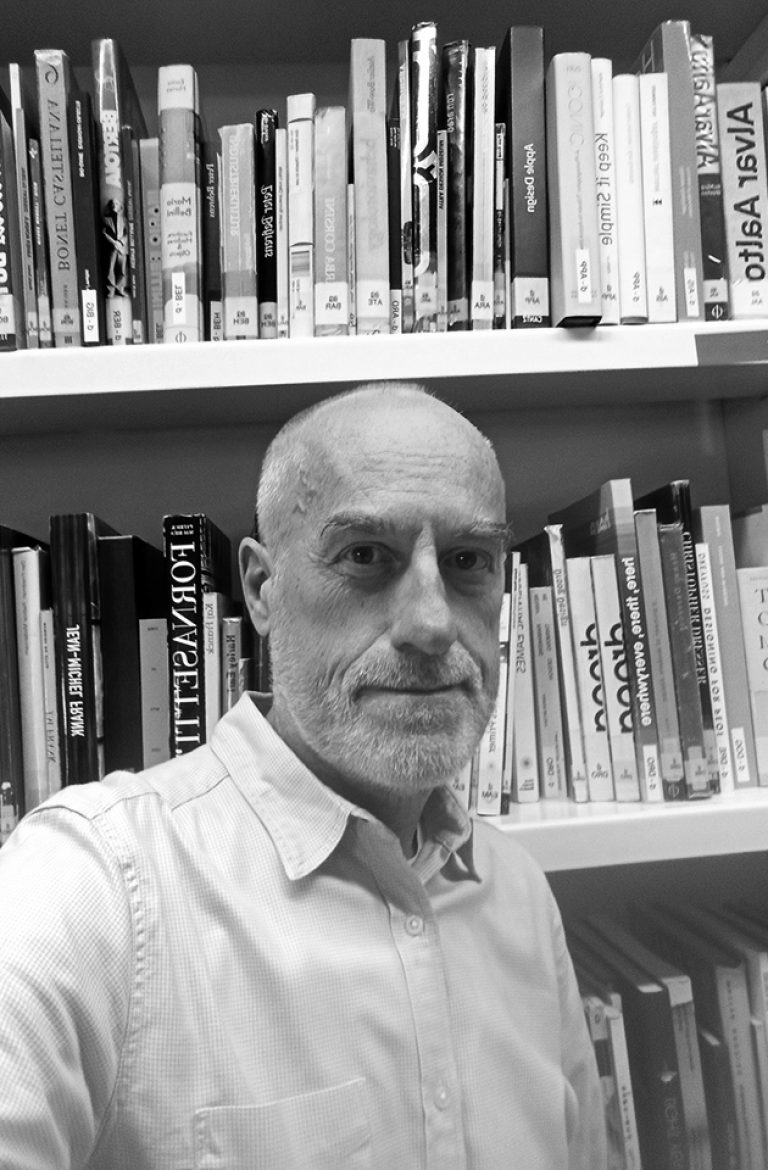
In the Bookworm sessions we will explore iconic magazines and books that capture the spirit of the era in which they were created. The material comes from Elisava’s library collections, especially from its Reserve Fund, which contains publications that, due to their design, constitute a journey through the best of the past and present of modern graphics applied to the field of editorial design.
The Bookworm sessions are guided by Andreu Jansà, librarian and curator of the Enric Bricall Reserve Fund.
We will place the publications in their context and try to define what makes them relevant in the history of editorial design in the 20th and 21st centuries. The direct contact with the books and magazines that we will see in each session will allow us to experience the printed document from a material point of view: binding, paper, lay out, illustrations, typography. We will also be able to assess the adequacy between form and content.


Wed, Jan 15, 2025
masters’ talks
7.30 pm — Event at DHub
Open to the public

Llisa Demetrios, Eames Institute of Infinite Curiosity
What can we learn from Ray & Charles Eames that might apply to the challenges we face today?
What can we learn from Ray & Charles Eames that might apply to the challenges we face today?
Ray & Charles Eames demonstrated—time and time again—design’s unique ability to address disparate clients’ needs, while finding ways to improve quality of life for all. What can we as designers and creatives learn from the Eameses that might apply to the challenges we face today?

Llisa Demetrios is the youngest granddaughter of iconic designers Charles & Ray Eames. She began her archiving career at the Mies van der Rohe Archive at MoMA in New York, and has since dedicated herself to extending her grandparents’ most important gifts to the world: their infinite curiosity and iterative design process. Her personal mission is to equip everyone with lessons of Charles & Ray so that anyone can use design to solve problems at all scales. Today, as Chief Curator at the Eames Institute, Llisa continues to share learnings from her legacy through exhibitions, events, and public tours at the new public space in Richmond.
Llisa Demetrios has spent decades caring for the Eames Collection and curating the Eames Ranch, initially alongside her mother, Lucia Eames, and now as Chief Curator alongside the Eames Institute of Infinite Curiosity team. Llisa loves welcoming guests, be they Eames aficionados or people entirely unfamiliar with design. Before the advent of the Institute, Llisa facilitated loans for “The World of Charles & Ray Eames” exhibition that started at the Barbican Centre in England in 2015 and continued to Sweden, Portugal, Belgium, Germany, Michigan, and the Oakland Museum of California in February 2019. She is also a founding and current member of the Eames Foundation Board of Directors, which oversees the historic Eames House in Los Angeles, and also a shareholder of the Eames Office.
Eames Institute of Infinite Curiosity
The overarching goal of the Eames Institute of Infinite Curiosity is to unpack the way that Ray & Charles Eames worked, the way they infused their designs and lives with curiosity and discovery at every turn to solve problems at any scale. “We don’t do ‘art’ – we solve problems,” said Charles. Then he added “How do we get from where we are to where we want to be?” They demonstrated—time and time again—design’s unique ability to address disparate clients’ needs, while finding ways to improve quality of life for all.
Being able to share the legacy of Ray and Charles in this way, to showcase their incredible process and wide-angled vision of design, is the dream of a lifetime. Their boundless curiosity and relentless pursuit of solving problems in furniture, film, exhibits, architecture, and textiles is in the name of the Institute. The Institute aspires to be a home for curious problem-solvers, both on-line and on-land. I hope the Institute’s efforts will help people find inspiration for solving problems in their own world.


Wed, Dec 18, 2024
graphic.elisava lectures
7:30 pm — Sala Aleix Carrió
Open to the public

Laurenz Brunner, Source Type
In 2022 Brunner launched Source Type, a platform for typographic research and visual literacy. Through Source Type he has published Rapid (2022), Karl (2022), and Reform (2023). Additionally he is a member of the Swiss type foundry Lineto where he published Akkurat (2004), Circular (2014) and Bradford (2018).
Brunner previously taught graphic design at the Rietveld Academie and has been a guest critic at Yale School of Arts, US; Werkplaats Typografie, NL and ECAL, CH. He has twice received the Swiss Federal Design Award (2006, 2012), as well as several distinctions from The Most Beautiful Swiss Books, The Best Dutch Book Designs and The Best Books from all over the World.


Wed, Nov 27, 2024
bookworm

Nest magazine
Only for MED students
Published between 1997 and 2004, Nest revolutionised the approach to interior design and decoration with its innovative and unconventional approach. The magazine focused on interiors that told personal stories and explored the concept of ‘home’ in creative and sometimes quirky ways. Its pages included a variety of contexts that provided insight into a wide range of lifestyles and how a person’s environment reflects their identity. It pioneered the use of unconventional printing and graphic design techniques including the use of different paper textures, unusual inserts, cut-outs and unique formats that transformed the experience of reading the magazine into something interactive. Ironic and sophisticated, Nest challenged the notion of good taste prevalent in standard decorating magazines.
In the Bookworm sessions we will explore iconic magazines and books that capture the spirit of the era in which they were created. The material comes from Elisava’s library collections, especially from its Reserve Fund, which contains publications that, due to their design, constitute a journey through the best of the past and present of modern graphics applied to the field of editorial design.
The Bookworm sessions are guided by Andreu Jansà, librarian and curator of the Enric Bricall Reserve Fund.
We will place the publications in their context and try to define what makes them relevant in the history of editorial design in the 20th and 21st centuries. The direct contact with the books and magazines that we will see in each session will allow us to experience the printed document from a material point of view: binding, paper, lay out, illustrations, typography. We will also be able to assess the adequacy between form and content.


Fri, nov 22, 2024
workshop

Alberto Feijóo
Club Collage
Only for MED students
A “club” is a physical place where people share interests, experiences and stories about a territory and/or reality. The Club Collage is a collective experience in which we ask ourselves how we live and interpret the images that surround us daily, making collages using images from my archive. Thinking of a participatory proposal, my intention with this workshop/club is to put in common my creative process, adapting a role of mediator of a work made by multiple hands. In this case, the students made a series of pieces taking as a starting point the geometric shapes of traffic signs together with common elements of diverse urban spaces.

Alberto Feijóo (Alicante, 1985) is a collector, accumulator, apprentice and visual artist interested in the field of photography and its relationship with other disciplines such as collage, installation or design.
He holds a degree in Communication from the University of Alicante in 2009 and a postgraduate degree in Contemporary Photography; Practices and Philosophies from the University of Arts London.
His work has been exhibited individually at the IVAM (Centro Julio González) in Valencia, Sala Kursala of the University of Cadiz and in the galleries Luis Adelantado and Punto in Valencia.
He has also participated in group exhibitions at Centro Conde Duque Madrid, LABoral Centro de Arte de Gijón, Centro Cívico Can Felipa in Barcelona, Sala Canal de Isabel II in Madrid, Sala de Arte Joven Comunidad de Madrid, ARCO 23, Fotomuseum Winterthur or The Photographers’ Gallery in London.
As a teacher he has conducted workshops and educational activities in IVAM Valencia, CCCC Valencia, Tate Modern in London, among others.
In 2021 he started the project “Club Collage” in multiple environments such as museums, galleries, prisons or schools.


Wed, Nov 20, 2024
graphic.elisava lectures
7.30 pm — Sala Aleix Carrió
Open to the public
Dimitri Bruni & Manuel Krebs, NORM
Mirror, Mirror on the Wall
NORM discusses their installation TRIANGULATION (on view in the Elisava project space) and places it in the context of their book trilogy ‘NORM: Introduction, The Things, Dimension of Two.’
Further on, NORM will talk about: their love-hate relationship with digital tools, the tension between intuition and combinatorics, the struggle for a common visual language, the ongoing seduction of fonts, the end of grid systems, good and bad and ugly commissions, the value of printed matter and the poetry of precision.
© Jason Klimatsas
Dimitri Bruni and Manuel Krebs studied graphic design at the School of Applied Arts in Biel-Bienne. They established the graphic design studio NORM in Zurich in 1999. In 2005 Ludovic Varone joined the studio. They are based in Zurich.
NORM focuses on designing and publishing books and typefaces. Book design includes self-commissioned research in the field of type and graphic design, the most relevant being ‘Norm: Dimension of Two’ (2020), ‘NORM: The Things’ (2002), and ‘Norm: Introduction’ (2000). Commissions include collaborations with galleries, museums (MoMA, Tate Modern; Louvre; Centre Pompidou; Museum for Gestaltung Zurich), and artists (Arthur Jafa, Fischli & Weiss, Shirana Shahbazi, Simon Starling).
Examples of typedesign include the ‘Simple’ typeface for Cologne/Bonn airport, the corporate typeface for Omega watches, the typeface ‘Replica,’ the corporate typeface for Swatch, and the recent typeface ‘Riforma’ and ‘Riforma-Mono’ (2018, 2024).
In 2020, NORM presented the solo exhibition ‘It’s not complicated’ at the Museum of Design in Zurich, in 2024, ‘Disorder is more probable than order’ at Grafill, Oslo.


