Events are an integral part of the master programs: from workshops with guests professors to lectures series with relevant practitioners.
Wed, Oct 21, 2026
Graphic — Elisava lectures
7.30 pm — Sala Aleix Carrió
Open to the public

Luisa Milani, La Tigre
An illustrated alphabet of vibrant matters
An illustrated alphabet of vibrant matters
La Tigre looks at graphic design as a living material: shapes that breathe, colours that vibrate, signs that shift between the abstract and the figurative. The talk composes an illustrated alphabet of the qualities that guide the studio’s work, from synthesis to colour, from research to play. A journey through forms and words, where visual language becomes a playground and every element, however small, has something to say.
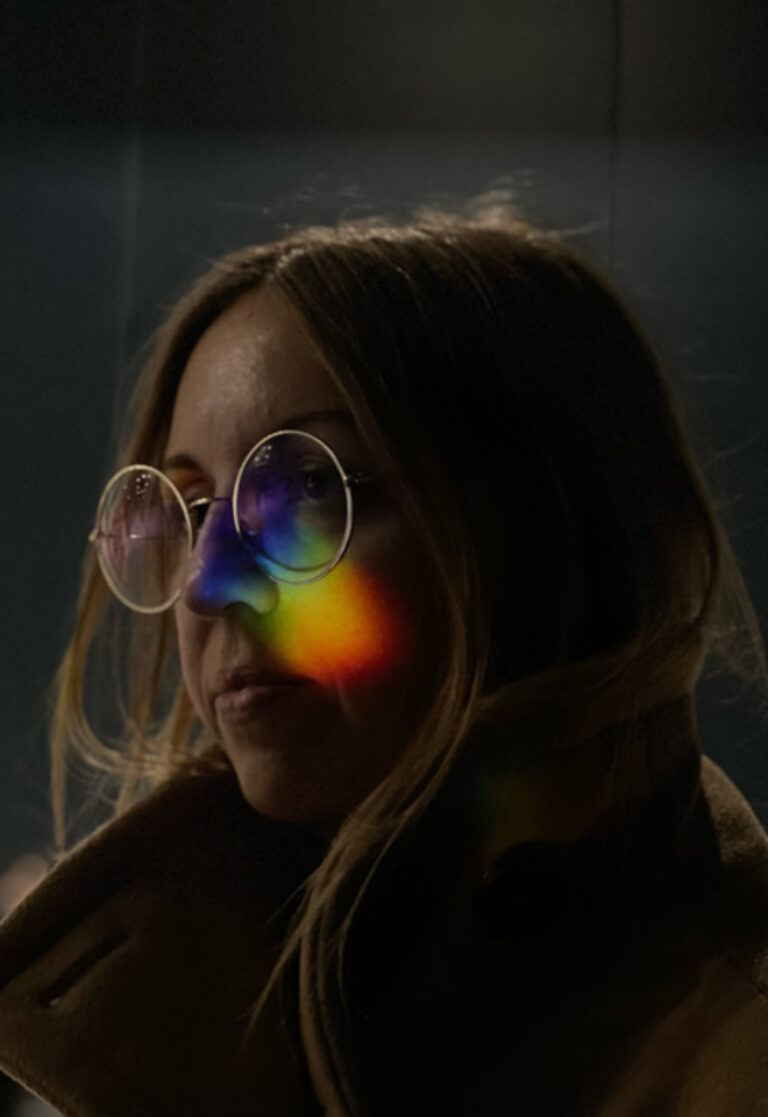
Luisa Milani is the art director and co-founder of the independent graphic design studio LaTigre. She studied at Politecnico di Milano and, a few years later, in 2009, founded the studio. Alongside her practice, she has spent several years teaching. Always in search of the sublime in color and form, her design approach is solid and concrete, yet spontaneous—free from constraints or creative limits. She draws inspiration from everything around her, making intuition a core aspect of her practice. A long-time yoga practitioner, she brings the same balance and awareness to her creative work, leaving room for serendipity, her motto.
La Tigre is a graphic design studio founded and directed by Luisa Milani and Walter Molteni, members of AGI (Alliance Graphique Internationale). Since 2009, the studio has been developing multiform visual languages in which formal research is driven by synthesis and a vibrant use of color, where the boundary between the abstract and the figurative at times becomes blurred. It collaborates with international entities such as Apple, Bitossi Home, Living and Abitare – Corriere della Sera, Max Mara, The New York Times, Phaidon, and Wired USA. Alongside commissioned projects, the studio conducts experimental research across various media.


Wed, Nov 4, 2026
Masters’ Talks
7.30 pm — Event at DHub
Open to the public

Izaskun Chinchilla
Los barrios del buen vivir: A Perspective from Tentative Design
Los barrios del buen vivir: A Perspective from Tentative Design
What if designers made fewer mistakes if they stopped trying to get it right the first time? Neighborhoods of Good Living explore a city understood not as a finished object, but as a living laboratory: spaces that are tested, inhabited, evaluated, and transformed. The lecture will explore the work of Izaskun Chinchilla Architects and the book Neighborhoods of Good Living to ask what happens when design abandons certainty and embraces hypothesis, experimentation, and adaptation. A perspective from tentative design to conceive of well-being as something experienced collectively.

Izaskun Chinchilla, a professor at the Bartlett School of Architecture, University College London (UCL), and an honorary fellow of the Royal Institute of British Architects (RIBA), integrates ecology, care, and participation into her practice, research, and teaching. Her work promotes more equitable and sustainable cities. She combines design, critical thinking, and cultural knowledge to promote an architecture that is educational, cooperative, and oriented toward the common good. She is the author of La ciudad de los cuidados (Catarata, 2021) and Los barrios del buen vivir (Catarata, 2026).
Izaskun Chinchilla Architects is a group of architects led by Izaskun Chinchilla that brings together interdisciplinary teams for each project. Their work focuses on optimizing the environmental performance of architecture, public space, facilities, art, and cultural products through innovation. Public engagement and social participation are pillars of their practice, which promotes collaboration in the construction of shared spaces and community-based decision-making regarding the use, location, and characteristics of the facilities they design.


past events
Wed, Mar 11, 2026
Masterclass

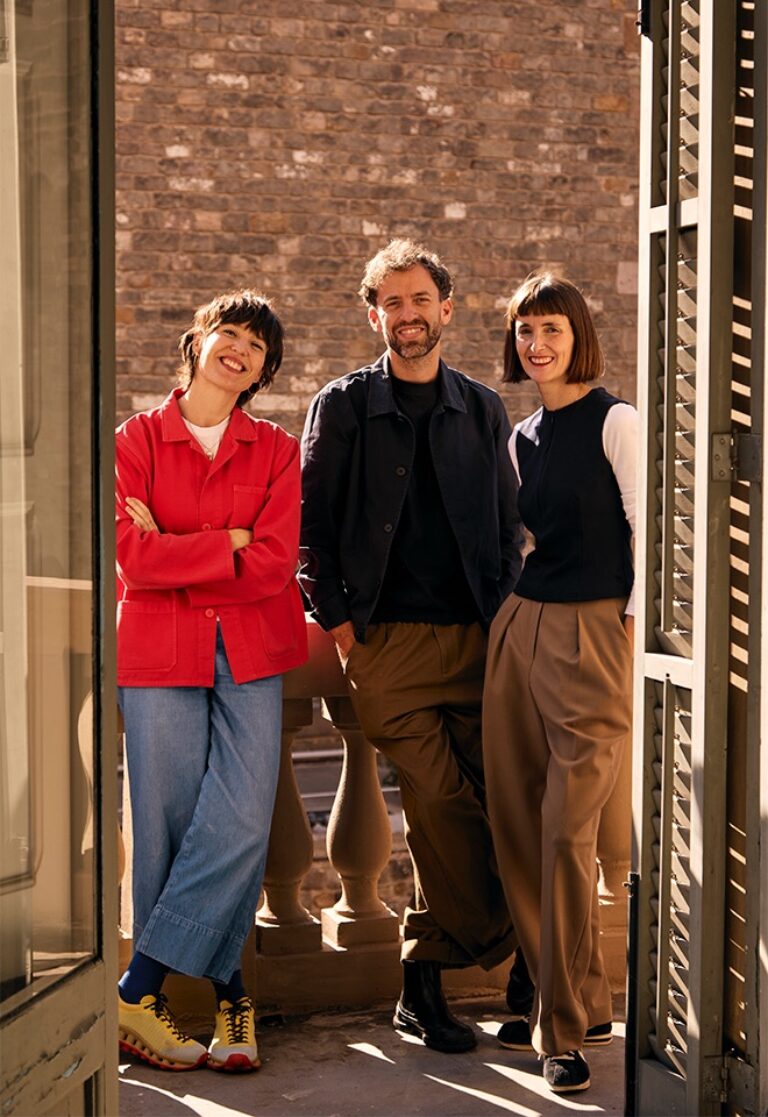
María Fabuel, Pedro Lipovetzky & Elisenda Muns, Gracias Grecia
Beyond walls: The renaissance of exhibition environments
Only for MVD students
Beyond walls: The renaissance of exhibition environments
What do a Balenciaga runway show, an MWC stand, and the latest Miró exhibition have in common? More than it might seem. Each of them tells a story through the design of an experience. Through historical and contemporary case studies and references, we will explore exhibition design as an expanding field that moves beyond the museum space. Through scenography, lighting, sound, and technology, stories are transformed into immersive experiences that are navigated, shared, and felt.
© Eva Carasol
At Gracias Grecia, we understand the exhibition environment as a space for encounter: emotional — through art, design, scenography, lighting, and participation — and intellectual, connected to content, knowledge, and debate. We are interested in that intersection between experience and thought, between collective expression and critical positioning. This is where our skills and our way of working converge.
Throughout our trajectory, we have developed projects in diverse formats: from the design of a 2,500 m² museum in Barcelona’s Port Vell to exhibitions at institutions such as CaixaForum and the Triennale di Milano, as well as experimental installations and hybrid formats that combine digital arts, theatre, and exhibition experience.
In a context of information overload, polarization, and constant technological transformation, we need environments where knowledge is not only transmitted, but collectively experienced and questioned. Exhibition design responds to this need by bringing together thought, form, critique, and emotion.


Wed, Mar 11, 2026
Bookworm

Three Contemporary Magazines, 1
Only for MED students
In the current landscape of editorial design, Emergence, Bill, and Inque represent three unique approaches to the magazine as a cultural object. Emergence Magazine, created by Studio Airport, combines narrative and photography in a slow, sensory experience. Bill, edited and designed by Julia Peeters, is a distinctive photography yearbook that proposes a “visual reading” of the articles without the distraction of text. Meanwhile, Inque, spearheaded by Matt Willey, is a literary magazine with impeccable design that invites leisurely reading. Together, these publications demonstrate how contemporary editorial design transcends its informative function to become a physical experience, an ideological stance, and a formal exploration.
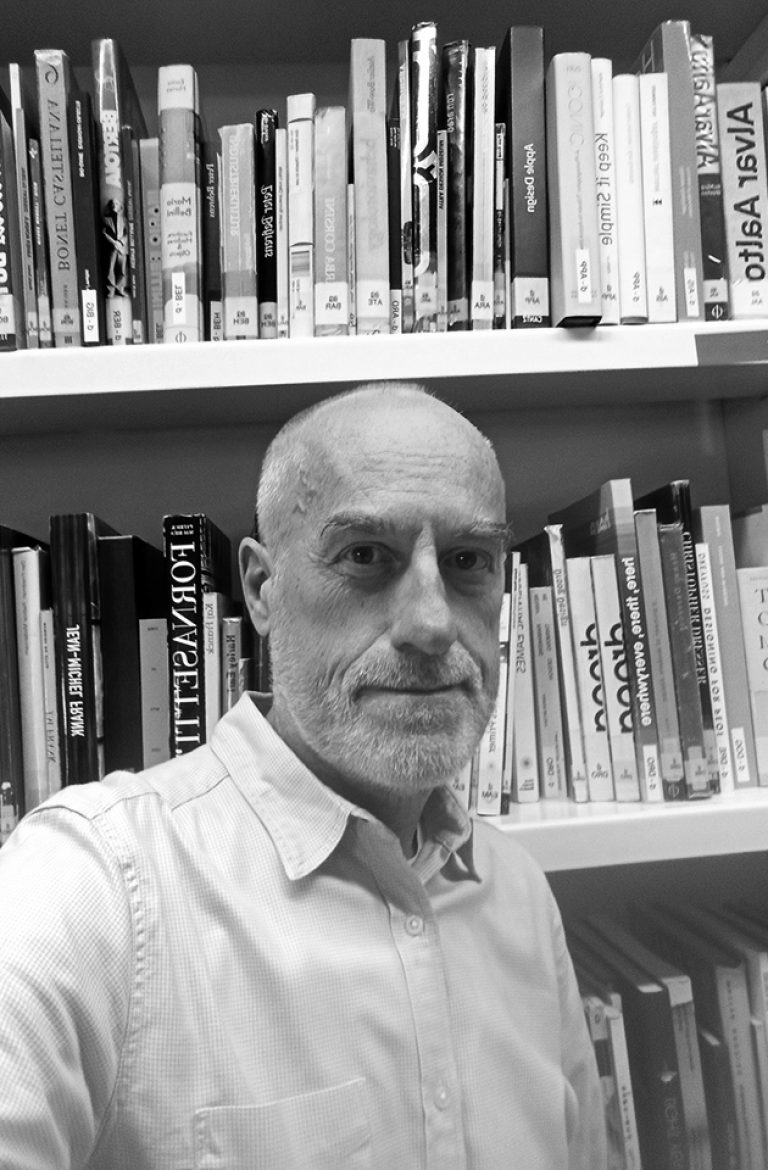
In the Bookworm sessions we will explore iconic magazines and books that capture the spirit of the era in which they were created. The material comes from Elisava’s library collections, especially from its Reserve Fund, which contains publications that, due to their design, constitute a journey through the best of the past and present of modern graphics applied to the field of editorial design.
The Bookworm sessions are guided by Andreu Jansà, librarian and curator of the Enric Bricall Reserve Fund.
We will place the publications in their context and try to define what makes them relevant in the history of editorial design in the 20th and 21st centuries. The direct contact with the books and magazines that we will see in each session will allow us to experience the printed document from a material point of view: binding, paper, lay out, illustrations, typography. We will also be able to assess the adequacy between form and content.


Wed, Mar 4, 2026
Bookworm

Three pioneering magazines, 1990-2010
Only for MED students
We will explore three magazines that pioneered a new way of understanding editorial design: Colors (1991-1995), Nest (1997-2004), and Dot, dot, dot (2000-2010). These publications represented an innovative approach in both concept and style. Colors, designed by Tibor Kalman, challenged the conventions of corporate strategy with a provocative mix of images and text. Nest, edited and designed by Joseph Holtzman, offered an ironic and sophisticated vision that questioned the notion of good taste prevalent in mainstream interior design magazines. Dot, dot, dot was a unique magazine on graphic design and visual culture founded by Peter Bilak that contributed to enriching the discourse around graphic design, demonstrating that it was deeply connected to other disciplines and aspects of the cultural sphere.
In the Bookworm sessions we will explore iconic magazines and books that capture the spirit of the era in which they were created. The material comes from Elisava’s library collections, especially from its Reserve Fund, which contains publications that, due to their design, constitute a journey through the best of the past and present of modern graphics applied to the field of editorial design.
The Bookworm sessions are guided by Andreu Jansà, librarian and curator of the Enric Bricall Reserve Fund.
We will place the publications in their context and try to define what makes them relevant in the history of editorial design in the 20th and 21st centuries. The direct contact with the books and magazines that we will see in each session will allow us to experience the printed document from a material point of view: binding, paper, lay out, illustrations, typography. We will also be able to assess the adequacy between form and content.


Wed, Mar 4, 2026
Showcase

Pol Pérez, Studiopol
Proof of concept
Only for MVD students
Proof of concept
From detail to the general, or from the general to the detail; from concept to form, or from aesthetics to the idea; from the material to the graphic, or vice versa.
There are various ways to design: all of them valid, but each with its own advantages and disadvantages. In this showcase, we will discuss different ways of working, supported visually by some of the studio’s editorial and physical projects.
Pol Pérez is a graphic designer living and working in Barcelona. He graduated from Elisava in 2010 and, after working at several studios and agencies in the city – such as Bendita Gloria, Avanti Avanti and Folch Studio – he co-founded Affaire together with Josep Román. After spending a year working at the agency …,staat in Amsterdam, he resumed his independent practice in 2020 through Studiopol.
He combines his professional practice with teaching at Elisava, where he has taught editorial design and visual identity projects in the Master’s programmes in Editorial Design, Photography and Visual Identity.
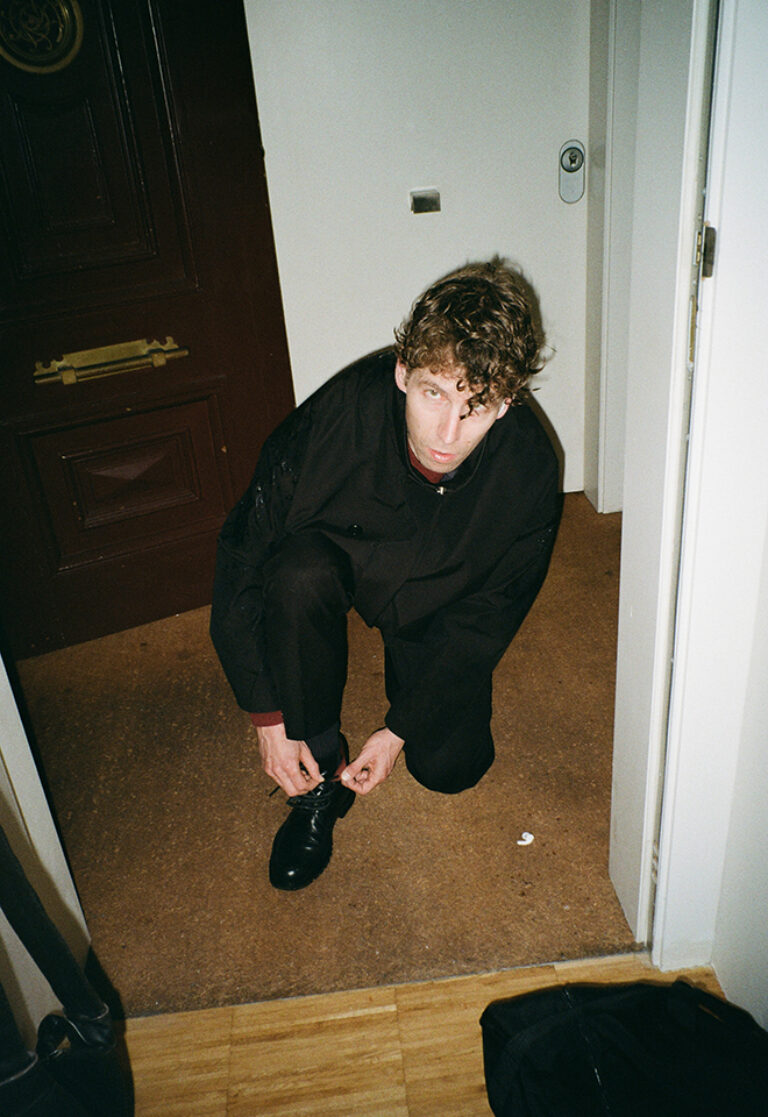
Studiopol (Claudia Agusto, Daniel de Fortuny and Pol Pérez) develops projects in editorial, web and exhibition design, as well as visual identity and communication. The studio is characterized by a restrained approach and by a practice that prioritizes narrative and meaning over stylistic trends. From this standpoint, each commission is approached through a solid conceptual framework and a high level of technical rigor.


Wed, Feb 25, 2026
Bookworm

Irma Boom books
Only for MED students
Irma Boom is one of the most influential contemporary book designers, known for her innovative and experimental approach to editorial design. Boom challenges conventions and forces the reader to interact with the book in a different way, reconsidering its function and structure. She works closely with the authors and publishers of the books she designs, influencing not only the aesthetics but also the visual narrative and content. Her work has led to a revaluation of the book as a physical object, an unbeatable experience compared to e-books. We will see some of her most important books, such as the one dedicated to the textile artist Sheila Hicks, the invisible book about Chanel or the tiny catalogues devoted to her own work.
In the Bookworm sessions we will explore iconic magazines and books that capture the spirit of the era in which they were created. The material comes from Elisava’s library collections, especially from its Reserve Fund, which contains publications that, due to their design, constitute a journey through the best of the past and present of modern graphics applied to the field of editorial design.
The Bookworm sessions are guided by Andreu Jansà, librarian and curator of the Enric Bricall Reserve Fund.
We will place the publications in their context and try to define what makes them relevant in the history of editorial design in the 20th and 21st centuries. The direct contact with the books and magazines that we will see in each session will allow us to experience the printed document from a material point of view: binding, paper, lay out, illustrations, typography. We will also be able to assess the adequacy between form and content.


Wed, Feb 25, 2026
Graphic — Elisava lectures
7.30 pm — Sala Aleix Carrió
Open to the public

Piero Di Biase, Formula Type
Expert beginners
Expert beginners
In some fields, coding for instance, an “expert beginner” is often seen negatively: as someone who has no real skills but behaves like a professional. To me, however, the term “expert beginner” sounds like a playful oxymoron. I see an expert beginner as someone who has gained enough experience to handle everyday tasks confidently, while still exploring the deeper aspects of their field. This is exactly how I feel about my journey into type design: confident in handling what I know, yet aware that there is always more to learn every day.
Piero Di Biase is a graphic and type designer. He trained in the graphic arts sector and then became a graphic designer. After collaborating with various design agencies, in 2011 he co–founded Think Work Observe, where he worked for national and international clients until 2022, when he launched Formula Type, an independent digital foundry that produces and distributes retail and custom fonts. Since 2017, he has been a member of the Alliance Graphique Internationale (AGI).

© Andrea Arduini
Formula Type is a digital type foundry started in the wettest region in Italy. Formula is a potion blended especially for those who will drink it; Formula is a chemical equation that leads to a result. This playful yet precise idea captures the dual soul of Formula Type. Its past was graphic design, and its present is type design, but there’s no real separation between the past and the present. Our fonts are crafted with a flexible designer eye and in the fifteen years since our first releases they have evolved freely through experimentation. Our approach is that of expert beginners, always welcoming new partnerships and projects.


Feb 16 — 20, 2026
MIWW workshop
Masters’ Interdisciplinary Workshops Week

Tereza Ruller, The Rodina
The Synthesized Self
Open to all Master’s students
Crafting Personal Narratives through AI and Sound
Inspired by Donna Haraway’s A Cyborg Manifesto, this workshop explores the intersection of human creativity and artificial intelligence through inclusive music-making. Participants use generative music AI to transform personal text prompts and lyrics into complete songs, without needing musical experience. The process emphasizes self-expression, identity, and storytelling. The experience extends into visual creation, as participants design simple animated posters or videos that reflect the themes, emotions, and keywords of their AI-generated songs.
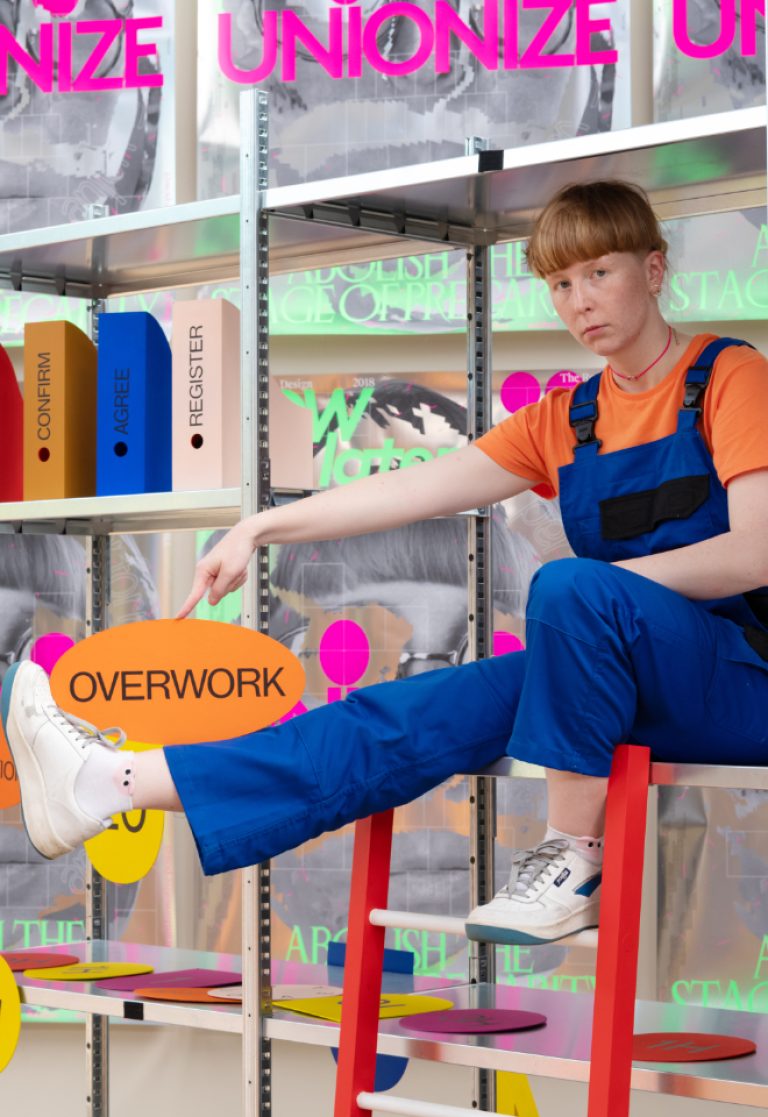
Tereza Ruller (she/her) identifies as a mother, a communication designer, and an educator. Her studio, The Rodina, explores the spatial and interactive possibilities of virtual and hybrid environments as spaces for new thoughts and aesthetics that emerge from the intersection of culture and technology.
Through her independent practice and PhDArts research at Leiden University, she examines performative and critical approaches to communication design, emphasizing playfulness, participation, and relationality. By addressing ecological and social crises—she seeks to develop collective shifts in perspective.
Ruller teaches as Professor of Digital Communication Design at HfG Karlsruhe and as a Critical Narratives tutor at Design Academy Eindhoven, nurturing contemporary design practices that encourage thinking-through-making and explore ways to engage with technology, society, and the environment.


Feb 16 — 20, 2026
MIWW workshop
Masters’ Interdisciplinary Workshops Week

Pedro Barquin & Anna Diaz, Hamill Industries
AI experimentation
Open to all Master’s students
An exploration of creative processes & custom workflows using visual algorithms
The workshop presents Hamill Industries’ experimental approach to visual creation, moving beyond purely digital tools toward self-built devices, practical effects, and hands-on experimentation. Drawing from everyday materials, natural observation, and the dialogue between analogue and digital technologies, their practice spans diverse tools such as 1980s consoles, oscilloscopes, pigments, light, and artificial intelligence. Through case studies and behind-the-scenes documentation, the seminar reveals an open, trial-and-error methodology rooted in an artisanal mindset and focused on building custom tools and processes.
With a strong emphasis on recent AI-based work, the seminar invites participants to treat generative AI as a flexible creative engine rather than a black box. Using open-source platforms like ComfyUI and self-constructed datasets, participants explore the creation of a “visual atlas of impossible bodies,” seeking beauty in error and deviation from standard aesthetics. The goal is to foster creative agency, DIY learning, and personal aesthetic exploration at the intersection of the real and the algorithmic.

Hamill Industries (the artistic duo of Pablo Barquin and Anna Diaz) craft films, installations, and stage productions. With the physical world as inspiration, not only the virtual sphere is re-imagined, but so is reality. Straddling the line between inventors and illusionists, their projects are always highly sensory pieces, regardless of the final medium. Their work explores the expanded visual, committed to questioning and blurring boundaries between digital and tangible realms. Transmedia flexibility is facilitated by extensive workshop research, developing state-of-the-art tools. Their pioneering vision around the use of technology earned the trust of collaborators and institutions, including the San Francisco Ballet (with Tamara Rojo) Floating Points, CCCB or Caixaforum among many others.


Feb 16 — 20, 2026
MIWW workshop
Masters’ Interdisciplinary Workshops Week

Kris De Decker, Low-tech Magazine
Design within limits
Open to all Master’s students
How to Build Small-scale Autonomous Power Systems
This workshop introduces students to designing and building small-scale, autonomous renewable energy systems and devices that run on them. It focuses on hands-on skills such as constructing solar power installations, creating solar-powered heating appliances, and modifying commercial products to operate on low-voltage solar electricity. A key principle is avoiding batteries, which are often the least sustainable part of energy systems, by designing appliances and power setups that can function directly with variable solar input.
Beyond technical skills, the workshop promotes a bottom-up approach to renewable energy design. Instead of scaling renewable systems to support energy-intensive, fossil-fuel-based lifestyles, students learn to align energy demand with locally available and intermittent power sources. This mindset emphasizes designing within limits and engages with broader issues such as climate change, energy resilience and security, consumerism, e-waste, the right to repair, and circular, sustainable design practices.

Kris De Decker is the author of Low-tech Magazine, which challenges the idea that every problem requires a high-tech solution. Since 2018, the magazine runs on a solar-powered server and has been in print since 2019. He has published research on energy demand at Lancaster University and co-founded Human Power Plant, exploring human energy use. Since 2016, he has collaborated on designing objects inspired by the past to guide technology toward more sustainable directions.


Feb 16 — 20, 2026
MIWW workshop
Masters’ Interdisciplinary Workshops Week

Elaine Lopez, Parsons School of Design NYC
Bound Together
Open to all Master’s students
Collective Bookmaking Through Dialogue, Connection, and Risograph Printing
Bound Together is an interactive, dialog-based workshop that uses conversation and Risograph bookmaking as tools for connection, reflection, and collective meaning-making. Created in response to transactional modes of communication, it invites participants to slow down, listen deeply, and engage one another as whole people rather than roles or titles. Through paired dialogue and hands-on making, the workshop emphasizes presence, care, and shared experience.
Grounded in psychologist Arthur Aron’s research on intimacy and informed by dialogical art practices and thinkers such as David Bohm and James Baldwin, the workshop combines structured questions with collage, Risograph printing, and binding. Participants print pages reflecting their conversations and assemble them into a collaborative book. Rather than prioritizing polish or productivity, Bound Together values experimentation, attentive listening, and the radical act of making together.

Elaine Lopez is a Cuban American designer, researcher, and educator whose work uses print, self-publishing, and participatory workshops to explore cultural identity, memory, diaspora, and U.S.–Cuba relations. Centered on collaboration and pedagogy, she frames publishing as a political, relational act. She is Assistant Professor of Communication Design at Parsons and runs LoPress Press, collaborating with institutions and exhibiting, lecturing, and leading workshops internationally.


Feb 16 — 20, 2026
MIWW workshop
Masters’ Interdisciplinary Workshops Week

Stephanie Rodriguez & Ricardo Lynch
Garden of Light, Movement & Sound
Open to all Master’s students
An AI + Arduino Creative Technology Experience for Artists
In this 4-day workshop, artists collaborate with AI and Arduino to craft reactive plants that glow, move, and sing — forming a shared Garden of Light, Movement & Sound. This hands-on workshop invites participants to explore creative human–machine collaboration through the design and construction of a living plant prototype.
Working in small groups, participants will create a sculptural plant that responds to human presence using light, sound, and movement. Each plant will be built on a shared physical framework and will include 3D-printed structural components, ensuring coherence while leaving room for creative expression. The workshop is designed for beginners—no prior experience in programming or electronics is required.
Participants will learn how AI can be used as a creative partner through “vibe coding,” helping to shape each plant’s personality, behavior, color palette, and narrative. By the end of the session, all creations come together to form a collective interactive garden, bringing to life the concept of human–machine co-creation. Participants will leave with a practical understanding of AI-assisted creativity, basic interactive design principles, and a tangible experience of collaborative making.
Stephanie Rodriguez is a leader and educator working at the intersection of technology and human experience. With a background in mechatronics engineering and a master’s degree in intelligent interactive systems, her work centers on human-centered and ethical AI. She has led and contributed to projects in robotics and artificial intelligence across multiple organizations, with experience in social robotics, generative AI, computer vision, data science, and emotion-inspired robotic systems.

Ricardo Lynch is a Digital Interaction Designer and engineer passionate about technology, politics, and education. Experienced in manufacturing, electronics, and digital products with societal value, currently focused on product design and development at Futurity Systems. Former Deputy Director at Exploratec UDD, bridging technology with design and engineering students, consulting on projects. Professor for interaction, robotics, and prototyping workshops at UDD and OAS Dlab Global.


Feb 16 — 20, 2026
MIWW workshop
Masters’ Interdisciplinary Workshops Week

Germán León & Regina Dos Santos
AI Entrepreneurship & Vibe Coding
Open to all Master’s students
Building Human-Centered AI Products
This intensive four-day workshop introduces participants to the ASPIC Framework, a practical, human-centered methodology for building AI products that truly matter. Rather than starting with technology, this workshop teaches participants to begin with empathy: identifying real user pain, designing trustworthy AI interactions, and building sustainable AI businesses. The framework stands for: Attract, Segment, Personalize, Interact, and Convert. Participants will walk away with a working prototype of an AI product, validated by real users, and a clear go-to-market strategy.
By the end of this workshop, participants will be able to: Discover real user pain through structured interviews, Define AI value aligned with measurable business outcomes, Design trustworthy AI interfaces using the Five Moments of AI, Develop working AI MVP using no-code/low-code tools, Test through feedback loops and user validation, Grow using the Bullseye Framework for focused strategy, Monetize with pricing models designed for AI products, Build Responsibly with ethics, privacy, and trust as foundations.
Vibe coding is the art of building AI products with personality and intention. It moves beyond mechanical automation to create AI systems that feel intelligent, responsive, and genuinely helpful. Through careful design of prompts, interfaces, and feedback loops, participants learn to craft AI products that don’t just function,they resonate. Key vibe coding techniques include: Prompt craftsmanship, Personality design, Micro-interactions, Trust signals, and Feedback systems.
Germán León is a futurist, AI and UX expert, entrepreneur, and advisor. He is the founder and CEO of Helvetica Digital and founder of Gestoos, a computer vision startup acquired by Preact. With a master’s degree in Interaction Design from Umeå University and training in AI Design at MIT, he has led innovation at Oblong Europe and Vodafone Group. He currently directs master’s programs in AI and UX at Elisava. In this practical workshop, his goal is to provide students with clear and applicable tools to develop and bring their own projects to fruition.

Regina Dos Santos is a UX/UI designer and front-end developer focused on user-centered digital products. Her hybrid profile blends design, technology, and strategy, linking concept to execution. She covers full UX/UI processes—research, flows, IA, prototyping, interface design, and testing—guided by clarity, usability, and visual consistency. As a front-end developer, she works in the Google Cloud ecosystem, using Firebase, cloud services, and APIs to build scalable, production-ready apps. She collaborates with multidisciplinary teams, bridging design and technology with a product-driven, experimental mindset. In the workshop, Regina presents a practical approach combining UX, UI, code, and AI.


