Events are an integral part of the master programs: from workshops with guests professors to lectures series with relevant practitioners.
Wed, Apr 8, 2026
Graphic — Elisava lectures
7.30 pm — Sala Aleix Carrió
Open to the public

Bart de Baets
Paperclips
Paperclips
In his lecture, graphic designer Bart de Baets will show a large variety of works and elaborate more on the ways they find their form and are realized eventually. Although Bart’s practice is mostly spent working at the studio in Amsterdam, it is alternated by a parttime teaching position at the Royal Academy in The Hague, where he works with the first year students and the ones graduating. The way he teaches and cooks up his assignments is inspired by transforming everyday observations (at times obsessions) into educational exercises. The students are triggered to think of formal executions that evoke solutions close to Bart’s own practice visualizing abilities and editorial voice.
Although appearing less frequently today, Bart’s body of work’s been known to feature self initiated publications, such as Success and Uncertainty (together with Sandra Kassenaar), Dark and Stormy (together with Rustan Söderling), and Tabrat, a zine from 2022 in which de Baets confesses to be a tab hoarder (phone only, the browser tabs on his laptop are opened briefly and closed again efficiently) and shares them here with us in the charming A4-sized publication. His editorial assets have not been forlorn, and are frequently demonstrated more so in his collaborative works for artbook shop Page Not Found and exhibition space Nest (both are located in the city of The Hague). The talk at Elisava will prominently feature all of these works—and more—and provide insights into the developments of these designs by showing sketches, references and many inspirations.

Graphic designer Bart de Baets (1979, Knokke, BE) is based in Amsterdam. His design for the Sandberg Institute’s temporary master programme The Radical Cut Up was nominated for a Dutch Design Award. As a result, PostNL commissioned De Baets to design a series of stamps titled ‘Talk to the Hand’. With Sandra Kassenaar he designed the exhibition, campaign and catalogue for ‘Circulate’, an exhibition on photographic art acquisitions at the Stedelijk Museum Amsterdam. The two also design the graphic identity of Kunstmuseum Bochum. He designed ‘On the Necessity of Gardening: An ABC of Art, Botany and Cultivation’ (2021), which was published parallel to ‘The Botanical Revolution’, an exhibition at the Centraal Museum, Utrecht. That year, the Stiftung Buchkunst awarded the book with the highest prize in the category Best Book Design from all over the World. A second title in that series, Mothering Myths, an ABC of Art, Birth and Care was released in May of 2025, for which he collaborated once again with editors Laurie Cluitmans and Heske ten Cate. He holds a part-time teaching position at the Graphic Design department of the Royal Academy of Art in The Hague, and he has taught at the Gerrit Rietveld Academie in Amsterdam for fifteen years.
Being educated by notorious wild collaborator Will Holder, the radical typographic thinkers of Experimental Jetset and conceptual makers like Linda van Deursen, triggered Bart de Baets to think like an editor early in his graphic design studies, making zines with and for his peers, or whipping up catchy writings to go with his posters and projects. His design skills were fed ferociously when working with Maureen Mooren and Daniel van der Velden (now Metahaven) whose interest in art inspired him. For them, that always seemed to come first, then design. For the pages of Archis (an architecture magazine–now Volume), the layouts of existing periodical publications were used to give form to the magazine’s content, and Bart was taught to study their characteristics and so became an excellent copycat.
Over the years de Baets’ body of work has developed immensely mostly so by certain significant collaborations. A few early memorable ones have been those with Melanie Bonajo and Frank Koolen, two (then) Amsterdam-based artists not much older than himself and whose practice inspired an idea on which to work together, and which, in a way, kicked off de Baets’ career. The likes of Rustan Söderling and Sandra Kassenaar are of similar influence and remain crucial design partners; both are good friends to this day. Their influence on some self initiated works, such as Dark and Stormy and Success and Uncertainty is essential for de Baets’ current design approach and visual language. Kassenaar and de Baets nowadays share a studio and work together as designers regularly.
His designs are rooted heavily in a kind of conceptual thinking, and his abilities to think along editorially with commissioners has given Bart’s body of work an outspoken character. His work is distinctively playful and seemingly intuitive, giving the impression that the designs could be made quickly or hand-made. Yet, each one of the designs is a carefully put-together composition made according to a bunch of guidelines and often uses typography or visuals referencing things “found” on the street. For years Bart’s been a teacher in graphic design often working with the first year students, introducing them to the job. Surrounded by other designers, skilled coders, letter drawers and colour wizards, his teaching encourages to explore what it’s like to make art and design in today’s environments by demonstrating personal fascinations.


Wed, May 27, 2026
Masters’ Talks
7.30 pm — Event at DHub
Open to the public

Jonas Janke, b+
Love me one time, two times … x times !
Love me one time, two times … x times !
The lecture is not a conventional showcase of selected projects from our daily practice, but rather aims to provide a broader insight into the network of actors in which b+ (bplus.xyz) operates, how we understand the contemporary way of an architectural practice and scope of work of an architect, and how we approach our projects—in short: who b+ is and how we work, what our values are, and what our understanding of our duties and responsibilities as architects is.
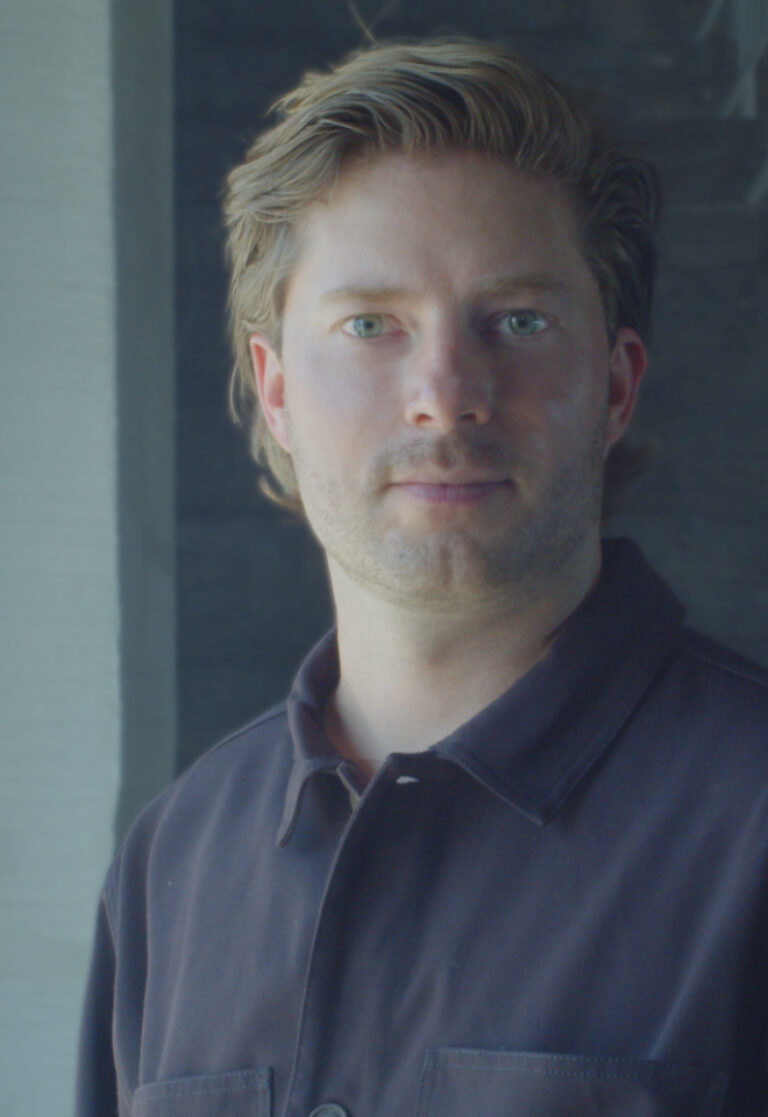
Jonas Janke (DE, 1991) is an architect and partner at bplus.xyz (Berlin). He has a diverse background in architecture, was trained as an architectural draughtsman before pursuing his studies in Hamburg, Stockholm, and Berlin. He gained valuable experience as a tutor and assistant in various departments including design & typologies, building construction, and structural design. He was part of the team 2038, the German Pavilion at 17th Venice Architecture Biennale 2021.
His early teaching experiences include guest studios at the University of Innsbruck (Austria) and Politecnico di Milano (Italy). He is regularly invited to give lectures and guest critiques at universities, cultural institutions, and public institutions. His focus is on new ecological construction materials and methods for adaptive reuse and renovation projects, seeking pragmatic and efficient technical and mechanical solutions that use material and construction thoughtfully.
bplus.xyz (b+) is a collaborative architecture practice (led by Arno Brandlhuber, Olaf Grawert, Jonas Janke and Roberta Jurčić) that operates at the intersection of theory and practice, using different media and formats. The practice seeks to engage with the contemporary challenges of our time, particularly those related to the social-ecological transformation of existing buildings, offering economically viable solutions.
b+ understands architecture as an open process, and views buildings as part of larger systems that require a systemic approach. The practice sees the given framework of existing buildings and legislation as an active design tool with the potential for transformation. Thus, b+ celebrates the potential of the existing built environment and aims to reveal and activate the latent potentials within.
b+ emphasizes working with different actors and stakeholders in project development. The practice values their knowledge and expertise and aims to create spaces for exchange and collaboration. b+ seeks to advance a new value system in architecture, one that places greater emphasis on collective responsibility, systemic thinking, and ecologically and economically viable solutions.
The current project in the field of political activism is the European citizens’ initiative HouseEurope! – HouseEurope! wants to create incentives that make renovation the new norm. This will boost the renovation market and give new value to what is already there. The goal is to preserve homes and communities, ensure a fairer and more local building industry, save energy and resources, and preserve our memories and stories.


past events
Wednesday,
October 20, 2021

Santi Fuster, Bendita Gloria
Showcase
“La langue est fasciste”
Two hours filled with semantics, politics and graphic design, appropriately illustrated with works by Bendita Gloria.
Santi Fuster
Graphic designer.
50% of Bendita Gloria.
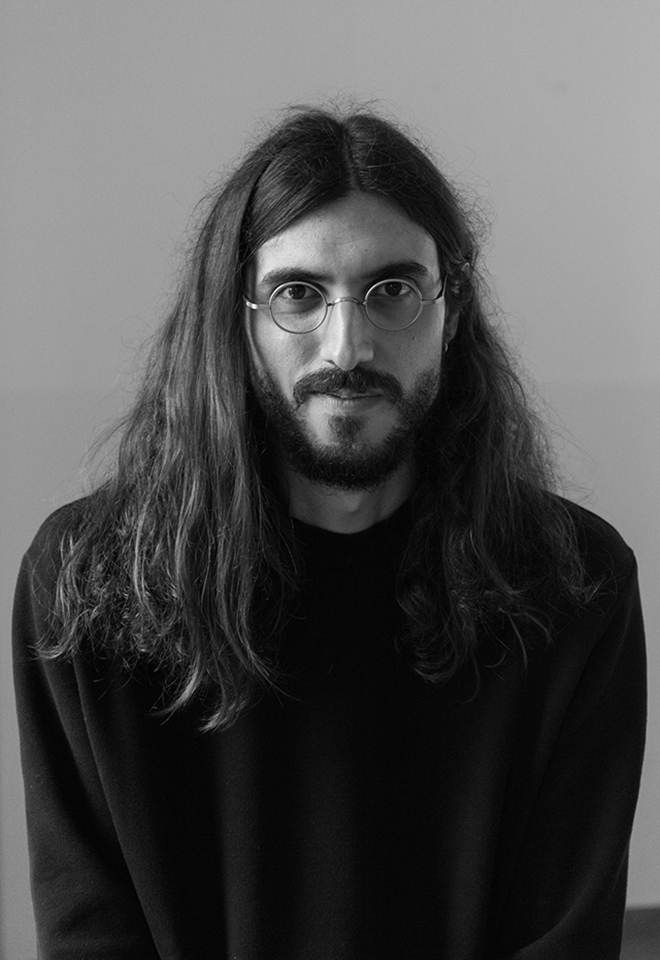
Bendita Gloria is a design studio founded by Alba Rosell and Santi Fuster. Focusing on identity and editorial projects, their work has won certain attention because of its particular conceptual approach. Since 2007, Bendita Gloria strives to turn their projects into interesting reading matter.


June 18 → 24, 2021

MADDhouse #3, Behind the fear
Exhibition
Maria Moreso
MUTUO
Méndez Núñez, 7
08003 Barcelona
Throughout our lives, women, or people with vaginas, will visit the gynecologist multiple times. The Public Health recommendation is to do it every 1-3 years, depending on individual circumstances, however, more than 50% of women will not follow this recommendation. It is not news that almost no woman likes going to the gynecologist. Unfortunately, feeling anxiety, fear, vulnerability, shame, and discomfort are part of the common experience of many women when visiting this specialist. But, why do we experience it this way?
The lack of sensitivity and empathy towards a patient in an extremely vulnerable position, the judgment, infantilization, paternalism, the lack of scientific advancement, misinformation, the taboo or normalization of female pain are some of the subtle forms of patriarchal violence that women suffer in relation to our intimate health. A violence that occurs in a medical context where, apparently, the values of care and attention prevail, and where precisely the opposite of violence is expected.
Gynecological violence affects half the population, it is a complex and systemic problem in which a multitude of factors intervene and in which we all participate more or less consciously. This exhibition seeks to detect and denormalize these situations as an indispensable first step for change.


June 11 → 18, 2021

MADDhouse #2, Body Builders
Exhibition
Carla de la Torre
MUTUO
Méndez Núñez, 7
08003 Barcelona
We live in a “fit” society, where gyms are temples of transformation towards a globalized stereotype. The cult of the body plans and controls our daily routines and ends up shaping our identity, fueling the fitness industry, which is only growing.
At the same time we are in the age of information, of data; it is said that having information is power, and we can apply it to this fitness paradigm as well. We design our body in gyms by entering data (15 repetitions of squats for 3 sets, 100 grams of rice…) para construir el cuerpo ideal and at the same time gain individual power. The beauty acaba siendo algo measured, weighed, equated, and compared.
The bodies that visualize this in the most extreme way are body-builders. Mass body, corporal and data body, representing a bodily ideal of power. We all see this social group as far from our reality, but the body-builders of the past are the fitness followers of the present.
Sport today has become a complex commercial, political and social activity, where the healthy body is confused with the aesthetic body, moulding the canons of beauty and our self-esteem at will. And the way we get entangled is by following these data rituals.


April 20 → June 11, 2021
Àgora Elisava

Óscar Germade, Job Title: Art Director
Exhibition
Job Title: Art Director.
About Vogue Spain 2017/2021.
Design, Typography & Photography.
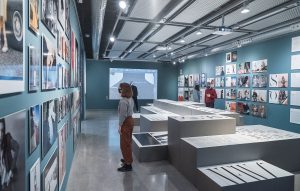
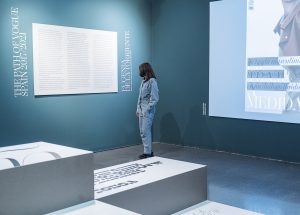
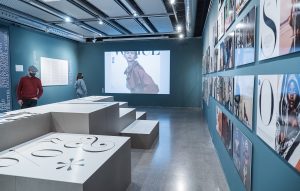
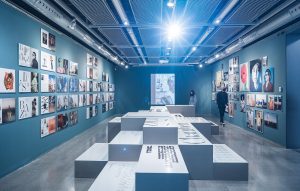
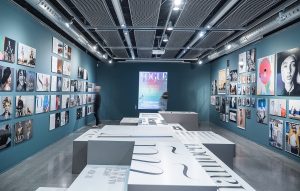
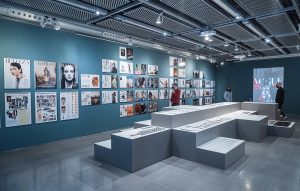
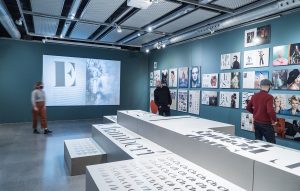
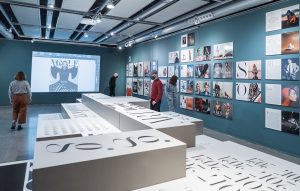
The exhibition traces the work as art director of Vogue Spain of Óscar Germade, between 2017 and 2021. The space is divided into four parts: Art Direction, linked to the visual part and design direction of the magazine. Covers, with a review of the work on covers of the last four years. “Making of”, where the design process of each part of the magazine is shown, from a technical and specific point of view.
Typography, with a purely visual retrospective of the design of Chamberí, ad-hoc typography designed by Íñigo Jerez for the magazine, which Eugenia de la Torriente, director of the magazine between January 2017 and December 2020, describes “Chamberí is a seemingly irreconcilable combination of rationality and exuberance. It starts from a very Cartesian skeleton, but has a final visual part of a more folkloric spirit, if it can be called that, thanks to a series of details that refer to Spanish tradition such as accents, crossbars and ascending curves. As it grows, it is playful, joyful and warm, and so far removed from its rational base that it is hard to recognize it.”
The sum of these spaces is a complete immersion in the work involved in the art direction of a fashion magazine today, with the complexity of inheriting the history of a masthead like Vogue, linked to figures of enormous transcendence such as Alexander Liberman: “art director of Vogue in the US and editorial director of Condé Nast, and who in his more than 50 years at the company laid the foundations of this masthead and many others. Liberman’s layouts were very simple because he made a very direct use of layout, with few flourishes in the text. In recent decades, the trend in fashion magazines has been precisely the opposite: many elements per page, shaped boxes…” (Eugenia de la Torriente).
This work of design and art direction is not only aware of the historical part but also of the complex moment in which the big publishing houses are living, adapted to a digital reality where they coexist with new visual proposals.
The tour ends with an extensive review of the Vogue covers of the last four years that, in an organic way, shows a definite evolution and a clear direction of the commitment to iconic covers, based on the image and memorable for the audience.





June 2 → 10, 2021

MADDhouse #1, Nationalities
Exhibition
Pedro Vallejo
MUTUO
Méndez Núñez, 7
08003 Barcelona
Nationalities are universal, they affect and surround every person in the world, they are really a vital factor in your personal development, and it’s something you don’t initially get to choose. While It may appear in the western world that we live in a globalized and free world, freedom and mobility can turn into a really individual process depending on what nationality you have.
By exploring the concept of nationalities as something imposed by globalized standards, this project seeks to reveal a critical perspective and explore in different ways the global inequalities we already think we know. As well as reveal the way the world is gonna process you and treat you in some cases –addressing it through a symbolic form of how we represent nationalities.
This exploration seeks to give a new perspective and spark a conversation regarding our identity and how we relate with one’s own nation and the world in general. As a society, the nationalities’ principles are forced and untouchable and there’s no space to question them, and can’t help but wonder if the world as we know it could exist if we revise flags, borders, international law and passports.


Wednesday,
June 9, 2021, 6.30 pm

Johannes Breyer, Dinamo
Open Lecture
Type Mystery Tunnel
Type Mistery Tunnel
About Dinamo variable way of working and the use of in-house design tools as a method to explore new aesthetics and the gestural potential of typefaces. We’ll look at what considerations influenced the making of their recent typefaces ABC Arizona or ABC Gravity, or bespoke projects for the SF Symphony, Goat, ON and Rimowa. For the business people amongst us we’ll take a glimpse into 1 year of collected sales statistics that lead to creating and offering a new model to license fonts, and try to fortune-tell where all of this might be going.
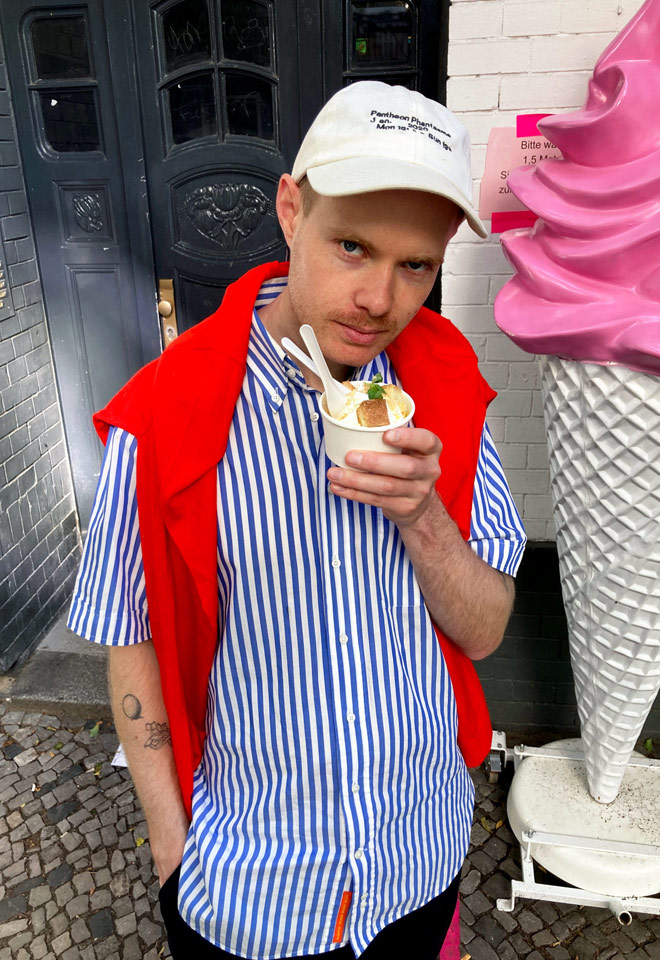
Johannes Breyer is a German / Chilean graphic designer based in Berlin. Se habla un poco Español. He studied in Zurich and worked for design studio NORM before graduating from the Gerrit Rietveld Academie in Amsterdam. Together with Fabian Harb, he is running the Swiss type design practice DINAMO.
Dinamo is a Swiss type design platform that offering retail and bespoke typefaces, design software, research, and consultancy. Founded in Basel we operate via a network of satellite members across the globe. Members of Dinamo are visiting teachers at various art academies and have been invited to give workshops and lectures at an international roster of educational institutions. Clients range from the 1 person-run cultural publisher to the International Olympic Committee. Dinamo won the Swiss Design Awards 2017, and are members of the AGI as of 2018.


Wednesday,
May 19, 2021
6.30pm

Óscar Germade, Job Title: Art Director
Open Lecture
Job Title: Art Director
Job Title: Art Director
In 2017, Vogue Spain took a new editorial direction that brought about a new art direction by the hand of Óscar Germade. This process is still alive today thanks to a project that gives as much importance to the image as to the type. A story in chapters of how, when and where one accepts the challenge of designing a magazine where everything has been said, written, heard, seen, criticized and praised. A visual review of Vogue’s relationship with design and art direction, of the dialogue between fashion and typography, of tradition and novelty.
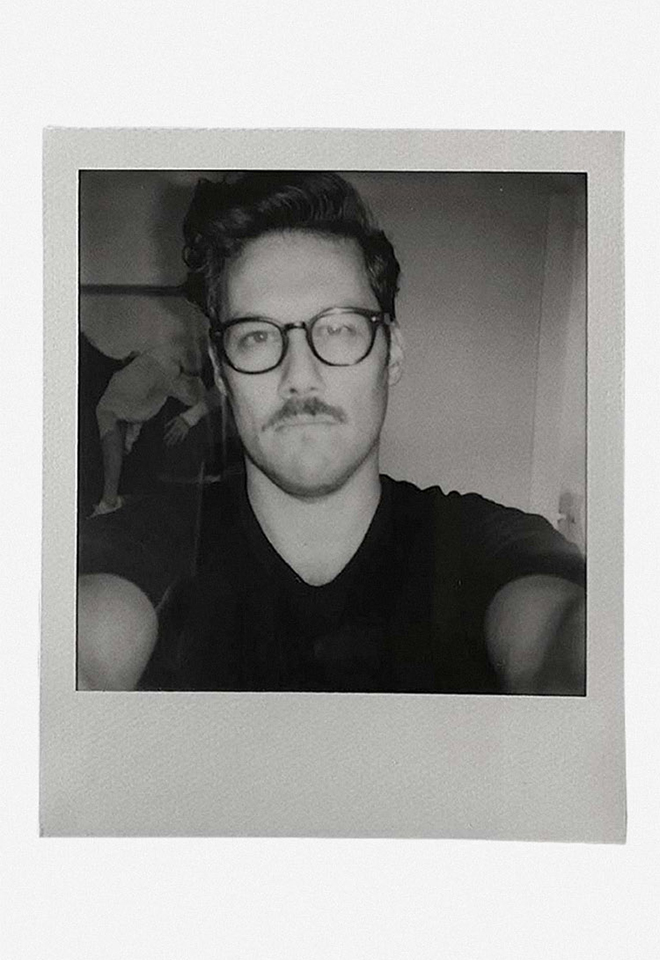
Óscar Germade
(A Coruña, 1983) founded Solo in 2011, a design studio specialized in brand identity and editorial design. This project allows him to venture into different cultural fields, such as fashion and the media. Perhaps the greatest strength of the project -from which he has collaborated with brands such as Simon Miller, Nike, Oysho and El País- is the precise and forceful use of typography and photography, combining digital and analog techniques.
In 2017, he takes over the art direction of Vogue Spain, a leading magazine in the national editorial market.
Throughout his professional career, he combines the work of design and art direction with various teaching activities: he has been a professor of editorial projects in the Master in editorial design at Elisava, he was thesis director and degree coordinator at IED Barcelona and, since 2020, he has been a professor of typography at IE School of Architecture and Design.


May 10 → 14, 2021

Raúl Goñi, Critical Design
Workshop
Critical Design
Only for MADD students
Critical Design
How can we be good designers without questioning the world we live in? We strongly believe in the great value of being critical, not in a destructive way but always trying to find the whys behind the certainties and through being obsessed with the constant research of a way to do it better.
Designers observe, adopt a stance, collaborate, engage, adapt, write and debate when creating proposals. Designers with critical thinking, looking for problems, at the service of society, satirical and provocative that makes us think about how the world could be. In this workshop we will work on the positioning of the future designer and his social role as a message issuer.

Raúl Goñi
Navarrese, designer and teacher, in that order. Trained as a graphic designer in Pamplona and Barcelona. Posterist by profession he is a founding member of FestadelGrafisme.org and the new TallersdelaFesta.org in Portbou, a transdisciplinary event that focuses on people and their relationship with design from a playful point of view and a cross-border condition. Teacher since 2006 specialized in Art Direction and in the development of Final Degree Projects in various schools.


May 3 → 7, 2021

Jon Uriarte, Photobook
Workshop
Photobook
Only for MED students
Photobook
Introduction in the world of the photobook from its foundations, history and current situation.
Students will acquire knowledge about their conception and work process developing a project with an author. Narrative, rhythm and sequence when the main content is image.
Jon Uriarte
He studied photography at the Institut d’Estudis Fotogràfics de Catalunya and at the International Center of Photography in New York, as well as a master’s degree in Artistic Projects and Theories from PhotoEspaña and the Universidad Europea de Madrid. He has exhibited in various art centers and galleries, both in collective and individual shows, among which are La Casa Encendida in Madrid, the Koldo Mitxelena in Donostia, Studio 304 in New York, the HBC center in Berlin and the Sala d’Art Jove in Barcelona.
He was the founder of Widephoto, an independent platform dedicated to curating and activities around contemporary photography. In addition, he conceptualized and coordinated for 3 years DONE, the project on reflection and visual creation promoted by Foto Colectania. He currently lives in London, from where he combines the curatorship of The Photographers’ Gallery digital programs with the curatorship of the Getxophoto International Image Festival.
Wednesday,
April 14, 2021
6.30 pm

Alvaro Dominguez, The New York Times, a Duck With Sunglasses and a Cucumber Walk Into a Bar
Open Lecture
The New York Times, a Duck With Sunglasses and a Cucumber Walk Into a Bar
The talks may or may not contain: starting a freelance career in the middle of a financial crisis. Reaching out to clients all over the world without previous contacts but with internet. Horses. Showing the budget of every project. Rainbows. The high and lows of an editorial illustration career. Dinosaurs. Establishing healthy habits. Cucumbers. Personal experiments. Two ducks with sunglasses playing tennis with chainsaws. Not knowing what I’m doing. Poodles.
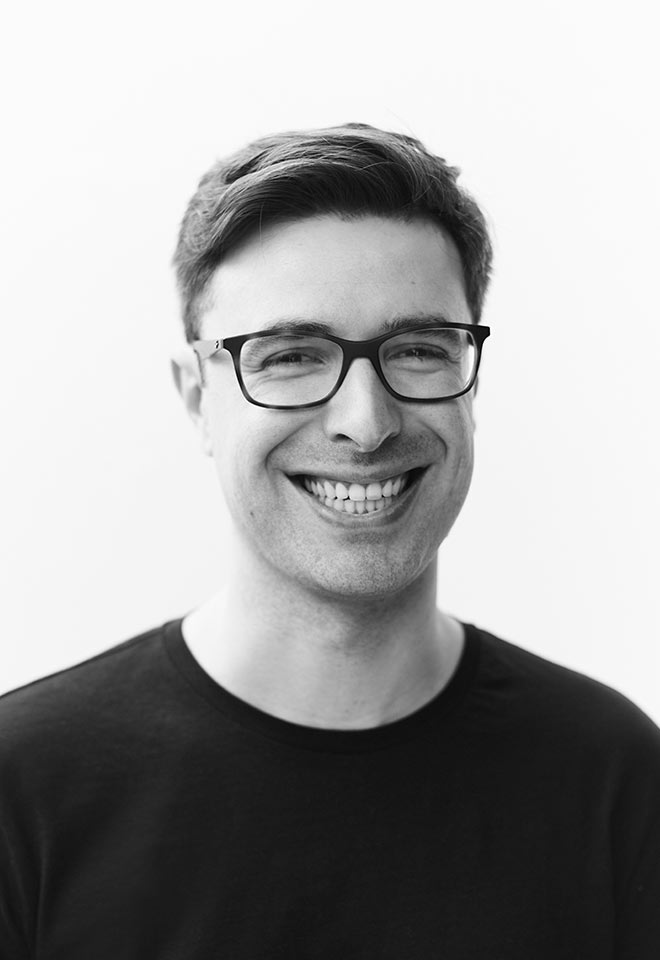
Alvaro Dominguez is an Ilustrator and graphic designer. He has collaborated with The New York Times, Apple, Showtime, Time Magazine y Wired among others. His work has been recognized by American illustration and The New York Times Most Notable Illustrations.


Wednesday,
March 24, 2021
6.30 pm

Nacho Padilla, Cities > Brands
Open Lecture
Cities > Brands
We will reflect on brand-cities and the externalities of this vision. We will see examples of all this through questions to be answered and paths pointed out, explored and to be explored. We will talk about how to cultivate the constancy of failure, about the differences between being a citizen and a client, about the peculiarities of working for the public sector, about not knowing what we do not know. We will look at what creative management can and cannot bring to a public administration.
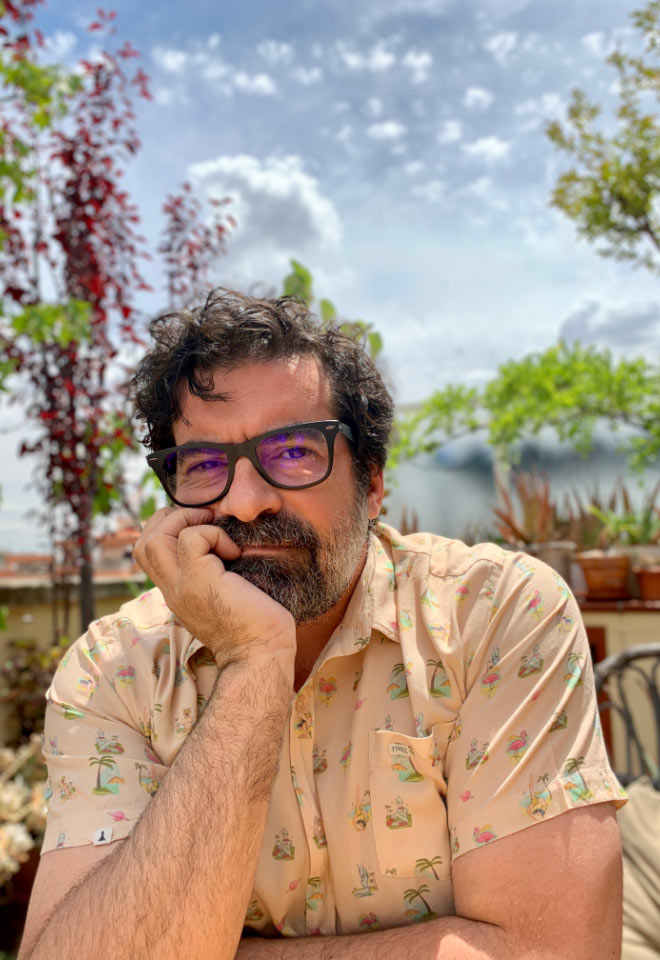
Nacho Padilla (Madrid, 1970) has a degree in advertising and PR from the UCM. He has worked as a copywriter at McCann Erickson and as creative director at Contrapunto BBDO. In 2010 he founded Viernes, a studio that applies creativity to projects in sustainable mobility, public administration, third sector, CSR and social economy and innovation. In 2016 he left Viernes to take over the creative direction of Madrid City Council. Since May 2020 he has been the creative director of Barcelona City Council.


March 8 → 12, 2021

Irene Pereyra, Anton & Irene
Masters’ Interdisciplinary Workshops
Barcelona 2.0
Open to all Master students
Barcelona 2.0
The aim of this workshop is to come up with a way that could improve Barcelona public life.
Each team will choose an existing item or service to improve—like for example trash collection, the metro, bicing, etc.
At the end of the week, each team will present their “upgraded Barcelona 2.0” idea. The final solution can be as realistic or fantastical as you would like it to be and can be presented and explained in the material or software of your choosing.
We will be getting to the solution by going through a variety of creative thinking exercises that will encourage participants to let their imaginations run wild by dreaming up the most unattainable, extreme, and impractical solutions you can think of in order to come up with a final solution. The goal of the workshop is to dig deep into how we come up with creative solutions, and understand the tools and processes available that are proven to tap into our creativity so you can apply these techniques to solve any kind of design problem you might encounter in the future.
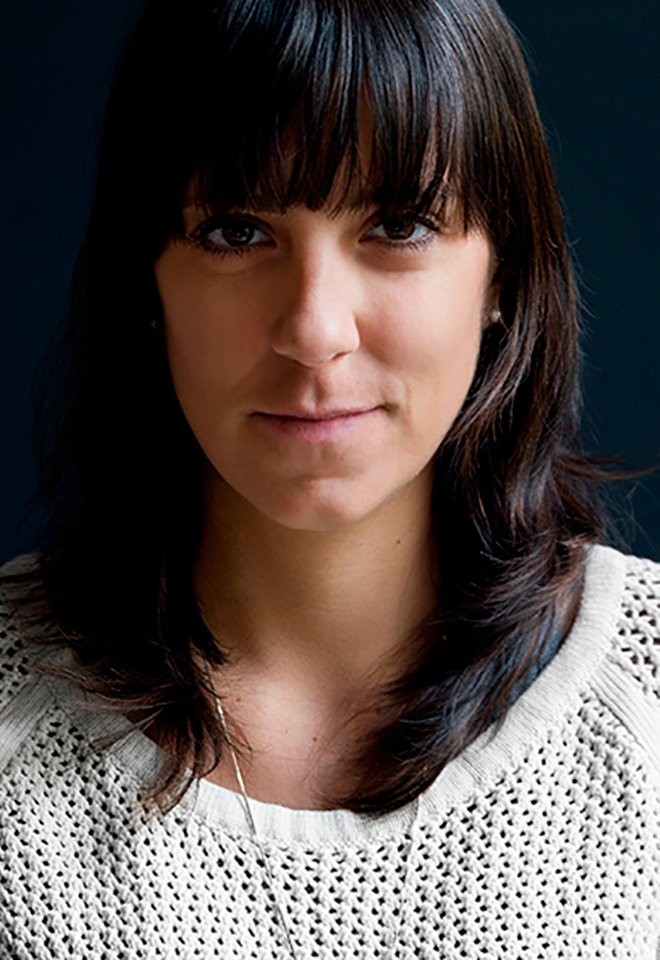
Irene Pereyra
Co-founder of the Brooklyn based design studio “Anton & Irene”. She has led the strategy and UX initiatives for relevant clients for both the web and cross-platform applications. Her work has been recognized by numerous awards.
Irene has been a guest speaker at numerous conferences such as OFFF and FITC, and has lectured at SVA in New York, Hyper Island in Stockholm, Harbour.Space in Barcelona, and the Design Academy in Eindhoven. Her personal projects have been shown around the world.