Events are an integral part of the master programs: from workshops with guests professors to lectures series with relevant practitioners.
Wed, Apr 8, 2026
Graphic — Elisava lectures
7.30 pm — Sala Aleix Carrió
Open to the public

Bart de Baets
Paperclips
Paperclips
In his lecture, graphic designer Bart de Baets will show a large variety of works and elaborate more on the ways they find their form and are realized eventually. Although Bart’s practice is mostly spent working at the studio in Amsterdam, it is alternated by a parttime teaching position at the Royal Academy in The Hague, where he works with the first year students and the ones graduating. The way he teaches and cooks up his assignments is inspired by transforming everyday observations (at times obsessions) into educational exercises. The students are triggered to think of formal executions that evoke solutions close to Bart’s own practice visualizing abilities and editorial voice.
Although appearing less frequently today, Bart’s body of work’s been known to feature self initiated publications, such as Success and Uncertainty (together with Sandra Kassenaar), Dark and Stormy (together with Rustan Söderling), and Tabrat, a zine from 2022 in which de Baets confesses to be a tab hoarder (phone only, the browser tabs on his laptop are opened briefly and closed again efficiently) and shares them here with us in the charming A4-sized publication. His editorial assets have not been forlorn, and are frequently demonstrated more so in his collaborative works for artbook shop Page Not Found and exhibition space Nest (both are located in the city of The Hague). The talk at Elisava will prominently feature all of these works—and more—and provide insights into the developments of these designs by showing sketches, references and many inspirations.

Graphic designer Bart de Baets (1979, Knokke, BE) is based in Amsterdam. His design for the Sandberg Institute’s temporary master programme The Radical Cut Up was nominated for a Dutch Design Award. As a result, PostNL commissioned De Baets to design a series of stamps titled ‘Talk to the Hand’. With Sandra Kassenaar he designed the exhibition, campaign and catalogue for ‘Circulate’, an exhibition on photographic art acquisitions at the Stedelijk Museum Amsterdam. The two also design the graphic identity of Kunstmuseum Bochum. He designed ‘On the Necessity of Gardening: An ABC of Art, Botany and Cultivation’ (2021), which was published parallel to ‘The Botanical Revolution’, an exhibition at the Centraal Museum, Utrecht. That year, the Stiftung Buchkunst awarded the book with the highest prize in the category Best Book Design from all over the World. A second title in that series, Mothering Myths, an ABC of Art, Birth and Care was released in May of 2025, for which he collaborated once again with editors Laurie Cluitmans and Heske ten Cate. He holds a part-time teaching position at the Graphic Design department of the Royal Academy of Art in The Hague, and he has taught at the Gerrit Rietveld Academie in Amsterdam for fifteen years.
Being educated by notorious wild collaborator Will Holder, the radical typographic thinkers of Experimental Jetset and conceptual makers like Linda van Deursen, triggered Bart de Baets to think like an editor early in his graphic design studies, making zines with and for his peers, or whipping up catchy writings to go with his posters and projects. His design skills were fed ferociously when working with Maureen Mooren and Daniel van der Velden (now Metahaven) whose interest in art inspired him. For them, that always seemed to come first, then design. For the pages of Archis (an architecture magazine–now Volume), the layouts of existing periodical publications were used to give form to the magazine’s content, and Bart was taught to study their characteristics and so became an excellent copycat.
Over the years de Baets’ body of work has developed immensely mostly so by certain significant collaborations. A few early memorable ones have been those with Melanie Bonajo and Frank Koolen, two (then) Amsterdam-based artists not much older than himself and whose practice inspired an idea on which to work together, and which, in a way, kicked off de Baets’ career. The likes of Rustan Söderling and Sandra Kassenaar are of similar influence and remain crucial design partners; both are good friends to this day. Their influence on some self initiated works, such as Dark and Stormy and Success and Uncertainty is essential for de Baets’ current design approach and visual language. Kassenaar and de Baets nowadays share a studio and work together as designers regularly.
His designs are rooted heavily in a kind of conceptual thinking, and his abilities to think along editorially with commissioners has given Bart’s body of work an outspoken character. His work is distinctively playful and seemingly intuitive, giving the impression that the designs could be made quickly or hand-made. Yet, each one of the designs is a carefully put-together composition made according to a bunch of guidelines and often uses typography or visuals referencing things “found” on the street. For years Bart’s been a teacher in graphic design often working with the first year students, introducing them to the job. Surrounded by other designers, skilled coders, letter drawers and colour wizards, his teaching encourages to explore what it’s like to make art and design in today’s environments by demonstrating personal fascinations.


Wed, May 27, 2026
Masters’ Talks
7.30 pm — Event at DHub
Open to the public

Jonas Janke, b+
Love me one time, two times … x times !
Love me one time, two times … x times !
The lecture is not a conventional showcase of selected projects from our daily practice, but rather aims to provide a broader insight into the network of actors in which b+ (bplus.xyz) operates, how we understand the contemporary way of an architectural practice and scope of work of an architect, and how we approach our projects—in short: who b+ is and how we work, what our values are, and what our understanding of our duties and responsibilities as architects is.
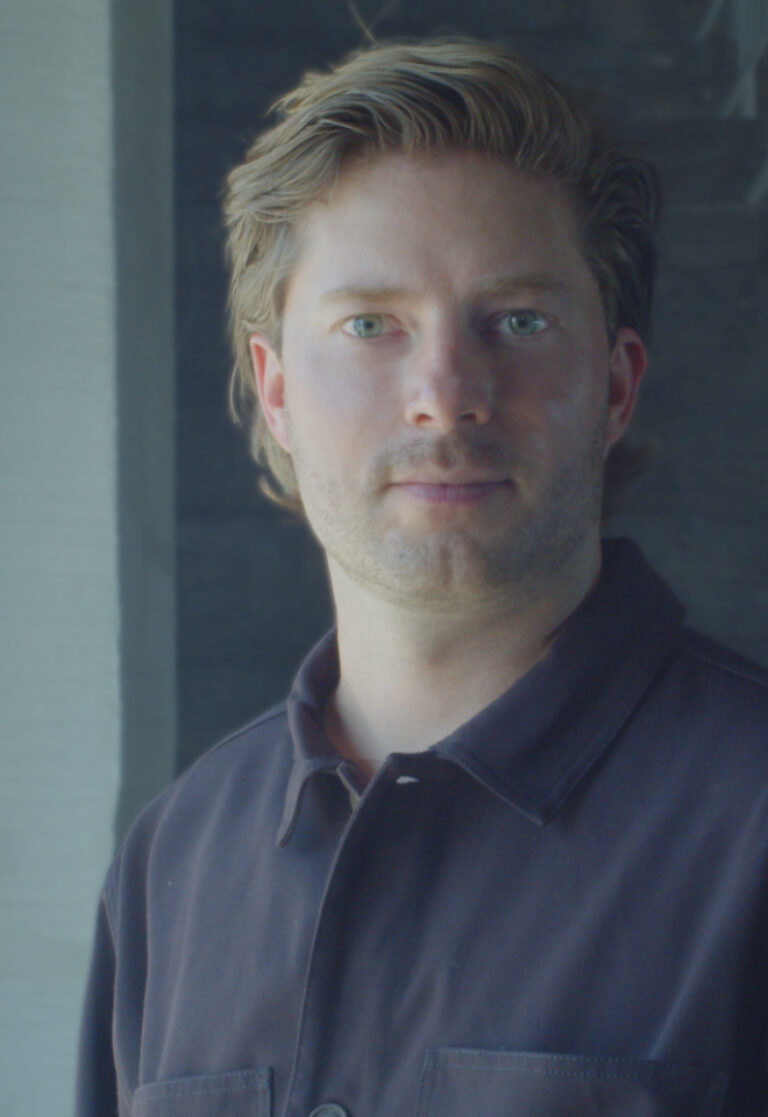
Jonas Janke (DE, 1991) is an architect and partner at bplus.xyz (Berlin). He has a diverse background in architecture, was trained as an architectural draughtsman before pursuing his studies in Hamburg, Stockholm, and Berlin. He gained valuable experience as a tutor and assistant in various departments including design & typologies, building construction, and structural design. He was part of the team 2038, the German Pavilion at 17th Venice Architecture Biennale 2021.
His early teaching experiences include guest studios at the University of Innsbruck (Austria) and Politecnico di Milano (Italy). He is regularly invited to give lectures and guest critiques at universities, cultural institutions, and public institutions. His focus is on new ecological construction materials and methods for adaptive reuse and renovation projects, seeking pragmatic and efficient technical and mechanical solutions that use material and construction thoughtfully.
bplus.xyz (b+) is a collaborative architecture practice (led by Arno Brandlhuber, Olaf Grawert, Jonas Janke and Roberta Jurčić) that operates at the intersection of theory and practice, using different media and formats. The practice seeks to engage with the contemporary challenges of our time, particularly those related to the social-ecological transformation of existing buildings, offering economically viable solutions.
b+ understands architecture as an open process, and views buildings as part of larger systems that require a systemic approach. The practice sees the given framework of existing buildings and legislation as an active design tool with the potential for transformation. Thus, b+ celebrates the potential of the existing built environment and aims to reveal and activate the latent potentials within.
b+ emphasizes working with different actors and stakeholders in project development. The practice values their knowledge and expertise and aims to create spaces for exchange and collaboration. b+ seeks to advance a new value system in architecture, one that places greater emphasis on collective responsibility, systemic thinking, and ecologically and economically viable solutions.
The current project in the field of political activism is the European citizens’ initiative HouseEurope! – HouseEurope! wants to create incentives that make renovation the new norm. This will boost the renovation market and give new value to what is already there. The goal is to preserve homes and communities, ensure a fairer and more local building industry, save energy and resources, and preserve our memories and stories.


past events
March 8 → 12, 2021

Martí Guixé, Seeds
Masters’ Interdisciplinary Workshops
Seeds
Seeds
The aim of the workshop is to develop strategies, objects or actions around the seed element and in relation to issues such as reforestation, gardening, conservation, politics and food.
To understand how design can be with nature and not only against nature.
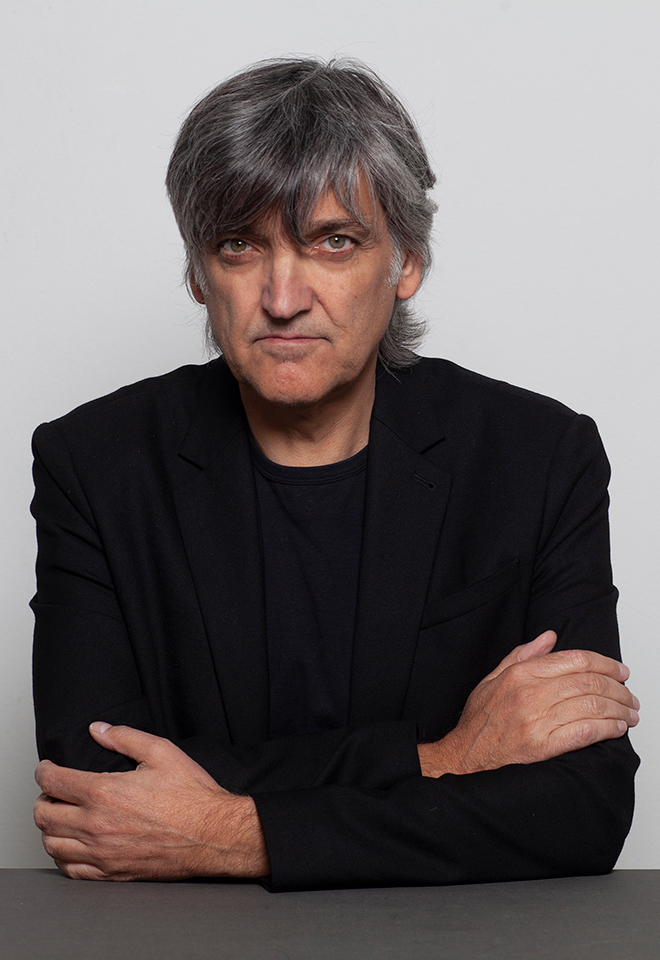
Martí Guixé comes from the background of every good designer, with an academic curriculum to his credit and work done with famous firms. But as revolutionaries today are born within the institutions that trained them, he revolutionizes design by working on living matter, that can be transformed and decomposed, hybridizing such areas as anthropology, humour, gastronomy, typography, the human sciences, exact sciences, performance, design.
He analyses situations, behaviour and gestures and proposes radically effective solutions with minimal ergonomics, liberated from the image of an idealized body where technocratic perspective tried to create the right form. As a visionary he transforms things with his eyes that observe them and invents the indispensable commodities of the twenty-first century.


February 24, 2021
On Irma Boom + Muriel Cooper
Bookworm
with Andreu Jansà
Only for MED students
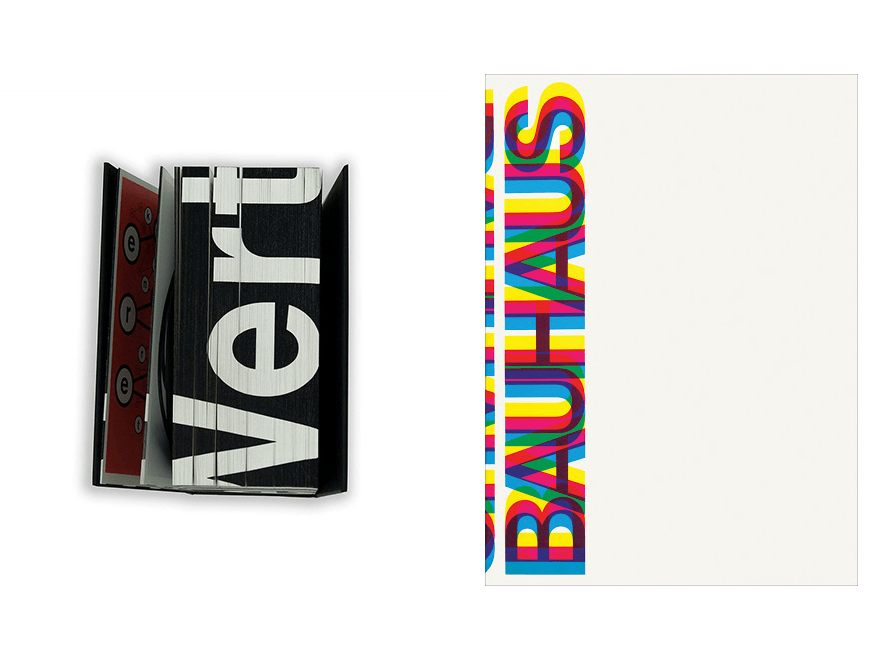
Irma Boom is considered the most relevant book designer of the moment. Many art centers and specialized publishers dispute the privilege of having one of their works. When she accepts an assignment, she demands total creative freedom, assuming the role of both the editor and the graphic designer.
Progressively, the work of Irma Boom has been assimilated to what we know as ‘artist’s books’, despite the fact that the designer rejects this typology.
Muriel Cooper (1925-1994) worked for four decades at the Massachusetts Institute of Technology as a graphic designer, teacher and researcher. She was art director at the Institute’s publishing house, the famous MIT Press, where she shaped numerous books essential to the history of contemporary art and architecture. In 1974 she founded the Visible Language Workshop, a think tank for new forms of graphic communication. Muriel Cooper was a pioneer in the transition from print to early explorations of digital typography.

Bookworm is a journey through books guided by Andreu Jansà, librarian and curator of the Enric Bricall Reserve Fund. Students will have the privilege of studying unique copies of the Elisava Library.
The objective of the Reserve Collection is to become a true universal history of modern graphic design applied to the publishing world. The books that make up the collection are documented in the main accounts of the history of 20th century graphic design.


February 17, 2021

On Robert Massin + Sister Corita
Bookworm
with Andreu Jansà
Only for MED students
The French graphic artist Robert Massin revolutionized the editorial design of the 1950s and 1960s with a series of books that have become iconic in the history of 20th century typography. In an era dominated by the austere Swiss graphic language, Massin combined the language of traditional graphic arts with highly innovative expressive elements. In his designs the word becomes visible based on graphic resources that intensify the meaning of the printed text.
Corita Kent, known as Sister Corita, was an unusual figure in the American graphic arts scene of the 1960s and 1970s. A Catholic nun and teacher at an art school in Los Angeles, Corita captured the spirit of her time in a graphic work that combined Christian spirituality and hippie philosophy with a Pop Art-influenced aesthetic. Corita Kent’s language was in tune with the artistic expression of her contemporaries, an art that exalted American popular culture and found beauty and transcendence in the prosaic elements of everyday life.
Bookworm is a journey through books guided by Andreu Jansà, librarian and curator of the Enric Bricall Reserve Fund. Students will have the privilege of studying unique copies of the Elisava Library.
The objective of the Reserve Collection is to become a true universal history of modern graphic design applied to the publishing world. The books that make up the collection are documented in the main accounts of the history of 20th century graphic design.


Wednesday,
February 10, 2021
6.30 pm
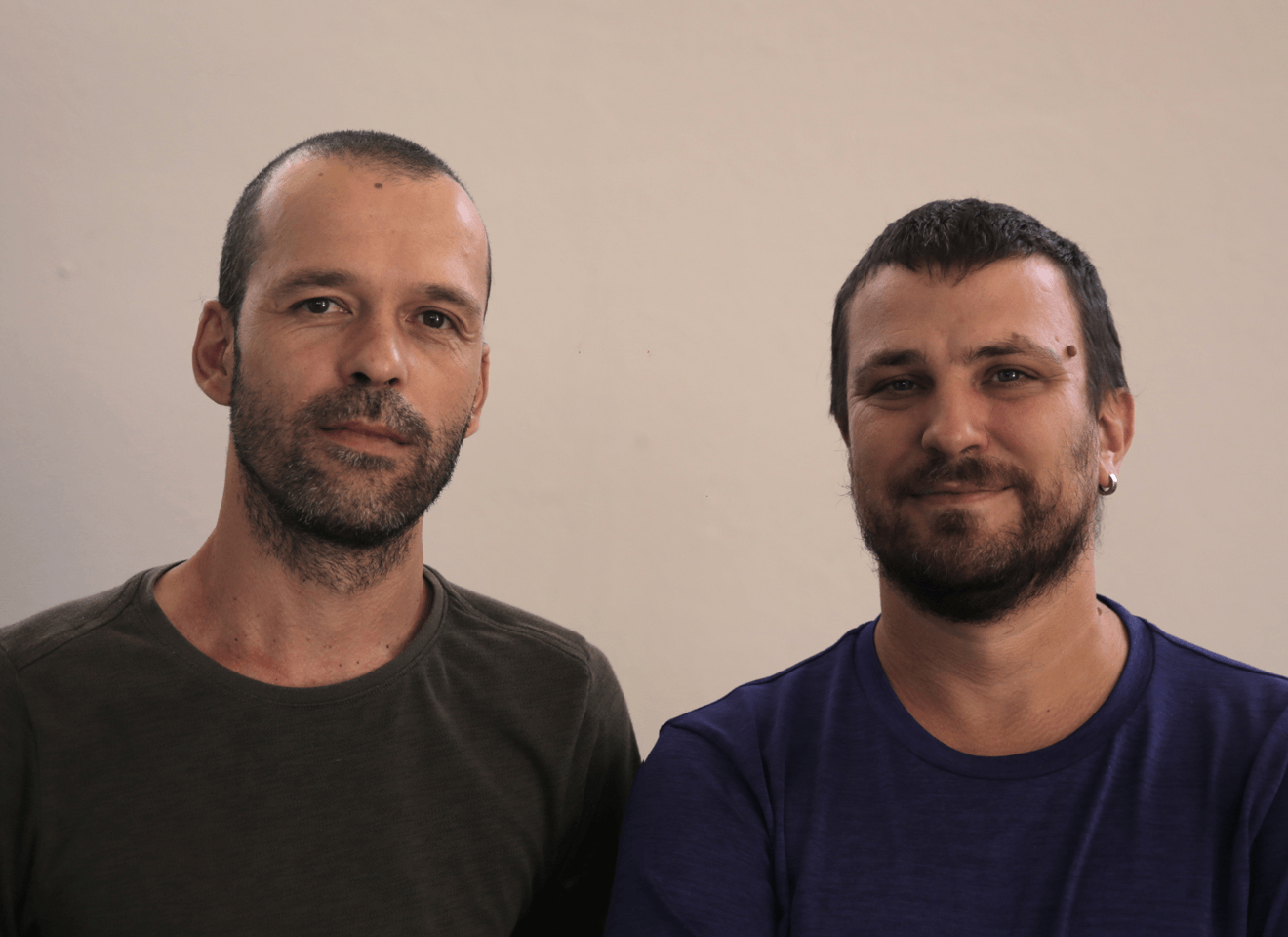
Eloi Maduell & Santi Vilanova, Playmodes
Open Lecture
From Screen To Space
From Screen To Space
On recent years, creative digital media has been experimenting a deep transformation. From the first on-screen graphics to the latest pixel-mapping installations, audiovisual languages have exceeded the square boundaries of traditional screens, and have started colonizing real space.
Light is playing key role on this evolution, and this interlink between engineering, music, design and art is giving birth to innovative approaches in the form of immersive installations. Spectators are no longer a passive subject but integrated inside the creative canvas.
On this lecture, Eloi and Santi from Playmodes will make a deep dive into the process and secrets behind their work, from conceptualization and scripting to algorithm development and visual music contents.
Playmodes
is an audiovisual research studio, a hybrid team of engineers, musicians and designers. Through the development of their own technologies, they bring light and sound instruments to life. This digital luthierism has led them to apply their language to sculptural formats, immersive installations or scenographies, in a journey outside the square limits of traditional screens.
In their projects, data flows generate audio and images with software made by themselves.


February 1 → 5, 2021

Matteo Moretti, Sheldon.studio
Workshop
Data Journalism
Only for MADD students
Only for MED students
Visual Journalism
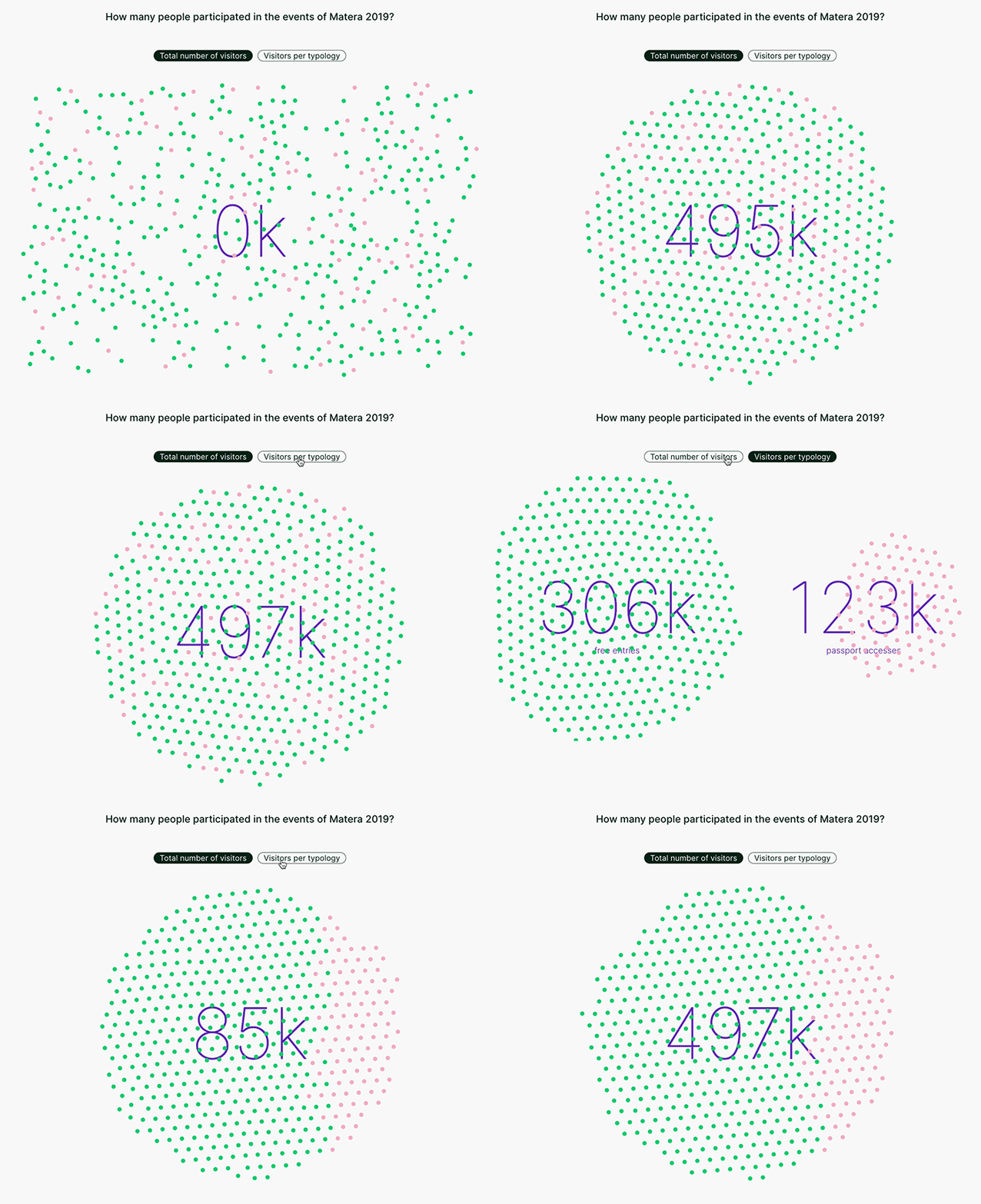
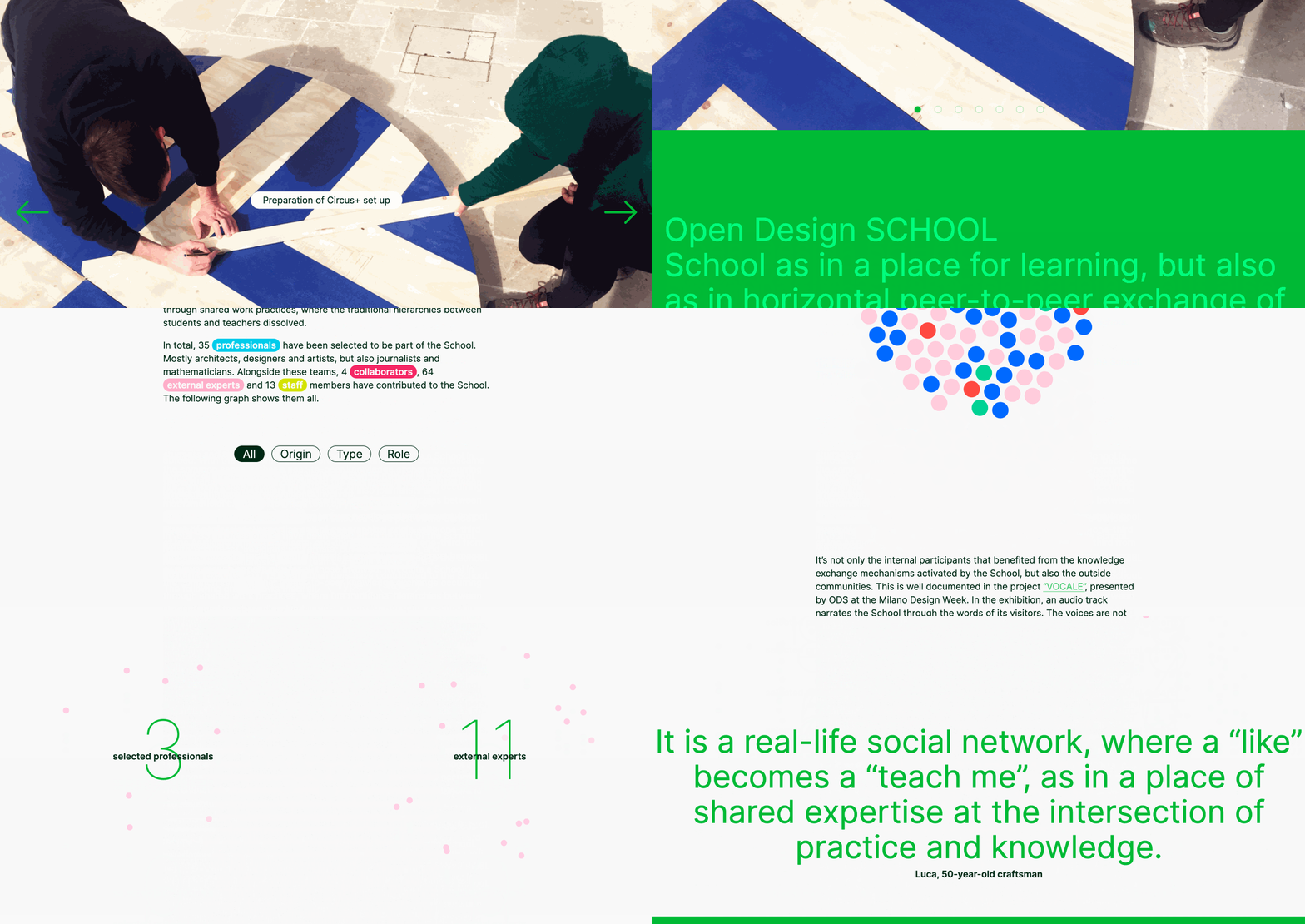
Data and Visual journalism are an interdisciplinary practice which combines editorial design, UX, web design, data visualization, interaction design, visual storytelling, and narratives to return the complexity of contemporary phenomena to a broader audience in a more engaging and approachable way.
The intensive workshop articulates on a single project development, which starts from a socio-political issue raised by the students group. Once framed that issue, students search for meaningful connected data, map the controversies the topic embeds, and then explores visual languages and metaphors toward the highlighting of a point of view. Finally, the students design the whole digital informative experience combining data and editorial design, to reach a specific audience.
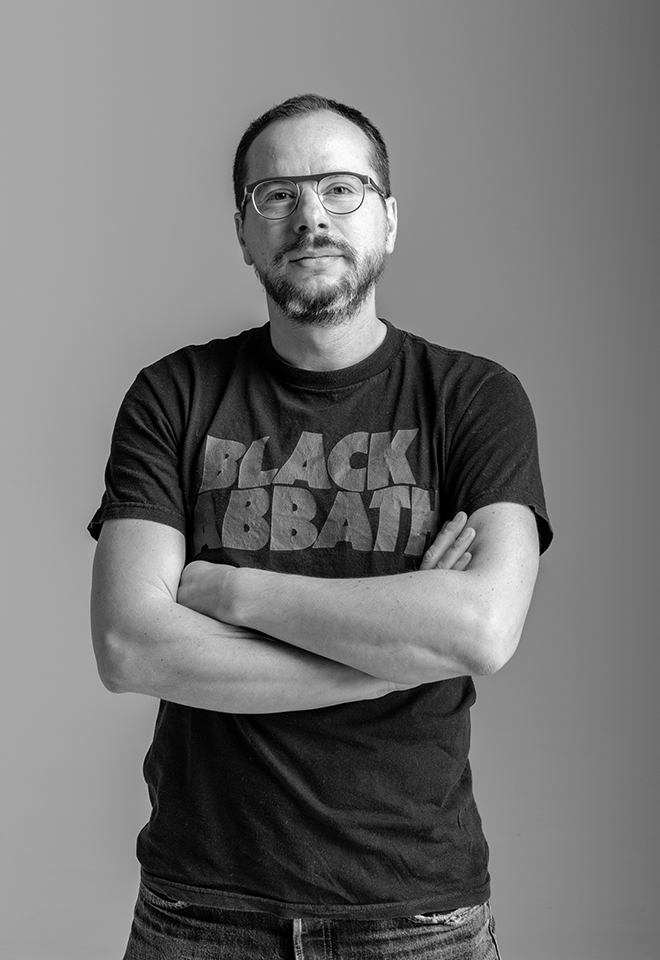
Matteo Moretti
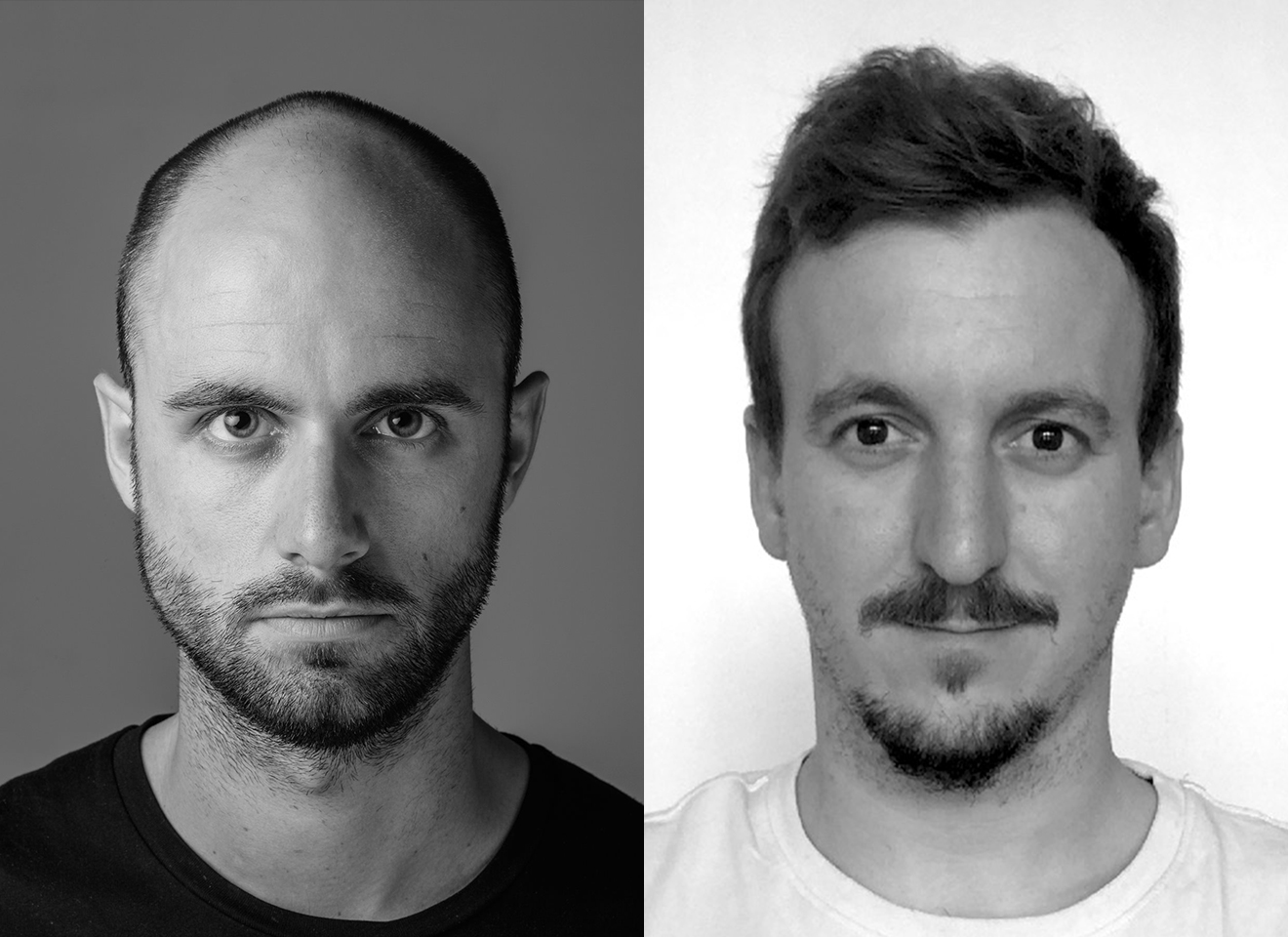
Co-founded Sheldon.studio the first studio that focuses on immersive information-experience-design. Matteo Moretti is a lecturer at the Faculty of Design of the Free University of Bolzano, at the University of San Marino, at the University of Florence, at the SPD Milan.
His design research projects, presented in many academic conferences and events such as TEDx and Visualized.io received the Data Journalism Award 2015, the European Design Award 2016 and 2017.
January 25 → 29, 2021
D Galar + G Mallandrich, Gimmewings
Workshop
Motion Graphic Systems
Only for MVD students
Motion Graphic Systems
We are witnesses of a new way of consuming information. Today digital media are the new information containers. If we look at this from a graphic design prism, we could say that we are in front of new ways of communication.
Through Motion we can explain complex messages in a simple way. We need to understand that the paradigm of traditional design that tries to summarize everything in a single image changes completely. Animation offers us a timeline in which we can explain concepts through a “step by step” storytelling. Because sometimes the “journey“ is more interesting than the final result.
Gimmewings
is a motion design studio specialized in using animation and interaction to communicate concepts through movement.
Gimmewings treat motion as something implicit within design, not as a complementary tool.
January 20, 2021

On Czech Avantgarde + the Lustigs
Bookworm
with Andreu Jansà
Only for MED students
The Czech Avantgarde experienced renewed vitality in the inter-war period. A new generation of artists came together in an association called Devětsil which maintained contacts with the European avant-garde. The graphic design of books aroused particular interest among the young creators who were members of this group.Two aesthetic currents coexisted in Devětsil: Poetry, which exalted the subjective essence of the creative act, and Constructivism, which aspired to objectivity and the standardization of mass production.
Alvin Lustig created covers for the American publishing house New Directions between 1945 and 1952 that show a deep knowledge of the artistic movements of the first half of the 20th century. The collection maintains a strong unity, although each book manifests its individual character: subtle, abstract, evocative.
Elaine Lustig Cohen began her career in the studio of Alvin Lustig. After Lustig’s death in 1955, she continued to design book covers on her own for various publishers and other clients in the cultural world.
Bookworm is a journey through books guided by Andreu Jansà, librarian and curator of the Enric Bricall Reserve Fund. Students will have the privilege of studying unique copies of the Elisava Library.
The objective of the Reserve Collection is to become a true universal history of modern graphic design applied to the publishing world. The books that make up the collection are documented in the main accounts of the history of 20th century graphic design.


January 13, 2021
On Jan Tschichold + Swiss graphics
Bookworm 1
with Andreu Jansà
Only for MED students
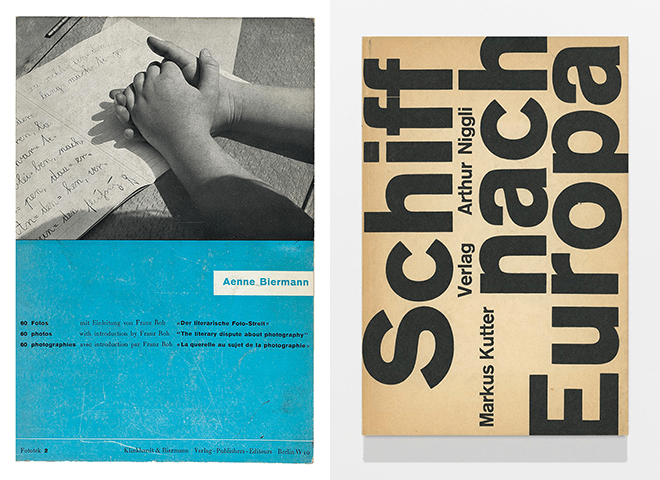
Jan Tschichold experienced one of the most resounding conversions in the history of 20th century graphics. After the revolution brought about by his manual Die Neue Typographie (Berlin, 1928), he reconsidered his theses in the mid-1930s with Typographische Gestaltung (Basel, 1935) and finally experienced an absolute return to classicism from the 1940s until the end of his life. The dynamic and asymmetrical compositions of the first stage, based on dry wood types, gave rise to pages that were perfectly centred, respecting the formal conventions of the historical tradition of printing.
Swiss graphics of the 20th century developed from the precepts of the German “new typeface” established by Jan Tschichold throughout the 1920s. It proposed a new concept of graphics characterized by asymmetric composition, the use of dry-stamp typography and the use of photography. One of the pioneers was Herbert Matter who, with his splendid tourist posters, represented a new vision of visual communication, strongly influenced by Russian constructivism and the interwar photographic avant-garde.
Bookworm is a journey through books guided by Andreu Jansà, librarian and curator of the Enric Bricall Reserve Fund. Students will have the privilege of studying unique copies of the Elisava Library.
The objective of the Reserve Collection is to become a true universal history of modern graphic design applied to the publishing world. The books that make up the collection are documented in the main accounts of the history of 20th century graphic design.


October 14
↳ December 22, 2020
Elisava Àgora + Atri

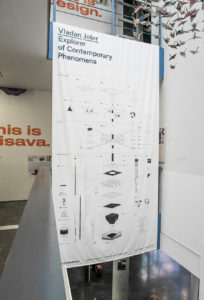
Vladan Joler, Explorer of Contemporary Phenomena
Exhibition
Vladan Joler, Explorer of Contemporary Phenomena
Prof. Vladan Joler
[b. 1977] Is an academic, researcher and artist whose work blends data investigations, counter cartography, investigative journalism, writing, data visualization, critical design, and numerous other disciplines.
He explores and visualizes different technical and social aspects of algorithmic transparency, digital labor exploitation, invisible infrastructures, and many other contemporary phenomena in the intersection between technology and society.
Vladan Joler’s work is included in the permanent collections of the Museum of Modern Art, New York (MoMA), the Victoria and Albert Museum (V&A) and Design Museum in London and included in the permanent exhibition of Ars Electronica Center.
Aside from his permanent professorship position, i.e. tenure, at the Academy of Arts in Novi Sad, Serbia, where he teaches at the New Media department, he has given lectures at numerous educational and art institutions.
Explorer of Contemporary Phenomena
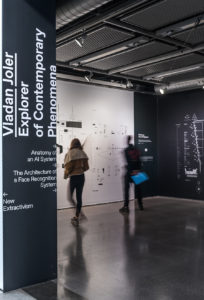
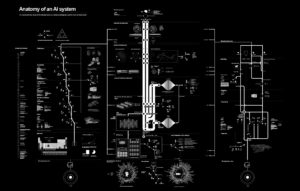
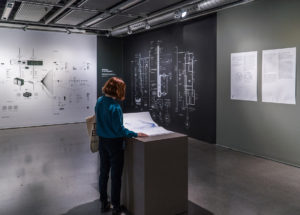
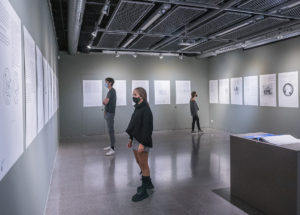
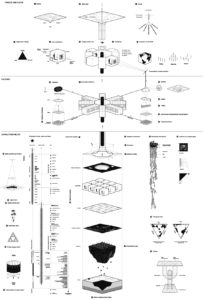
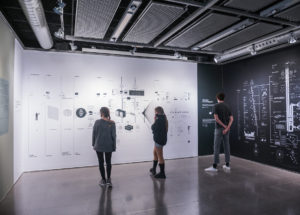
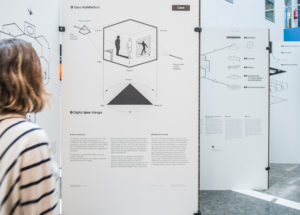
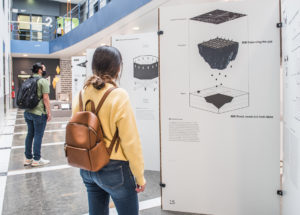
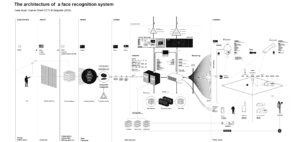
Three recent works are on display at Elisava: Anatomy of an AI System, 2018, A large-scale map and a long-form essay (in collaboration with Kate Crawford) investigating the human labor, data, and planetary resources required to build and operate an Amazon Echo. Awarded Design of the Year 2019 by the Design Museum, London. And two new works from 2020: The Architecture of a Face Recognition System and New Extractivism. It is the first time these works are exhibited in Barcelona.
December 14 → 18, 2020

Patrick Thomas, The transformative Power of AI
Workshop
The transformative Power of AI
Only for MDE students
The transformative Power of AI
Until now AI is not real intelligence. Essentially it is imitation: algorithms that have learned to do really specific things by being trained on thousands or millions of correct examples. Commonly referred to as ‘dumb’ AI, this term ignores the fact that in several fields, like face and speech recognition, it is already more accurate than humans.
Following the principles of Moore’s Law, it is only a matter of time before we are be able to create actual intelligence: conscious machines that can independently think for themselves.
The workshop will be hosted in a custom-built virtual space. Research and critical debate are central components to the project. The aim of the workshop is to develop participants’ research, writing, layout and publishing skills as well as to encourage critical thinking.
Participants will be encouraged to ask themselves the following questions:
Which opportunities will this technological development bring?
Am I aware of the implications it might have?

Patrick Thomas
is a graphic artist, author and educator. He studied at Saint Martins and the Royal College of Art in London before relocating to Barcelona in 1991. He currently lives and works in Berlin. In 2019 he created Open Collab a self-run workshop format to enable and encourage collaboration, dialogue and experimentation between participants. A free online platform was launched during Covid-19 lockdown to enable remote real-time collaboration. Since October 2013 he is a professor at ABK Stuttgart. He is a member of AGI.


Wednesday,
December, 2020
6.30 pm

Javier Jaén, Javier Jaén Studio
Open Lecture
Greetings from Javier Jaén Studio
Greetings from Javier Jaén Studio
The talk will be a journey from conceptual development to graphic solution through practical cases.
Environment, technology, love, sex, diversity, art, literature, religion, science, gastronomy, health, sport, wild capitalism, social movements, economy, terrorism, war, politics, justice, archeology, virus, music, theatre, fashion, wine and some design and illustration.
Javier Jaén
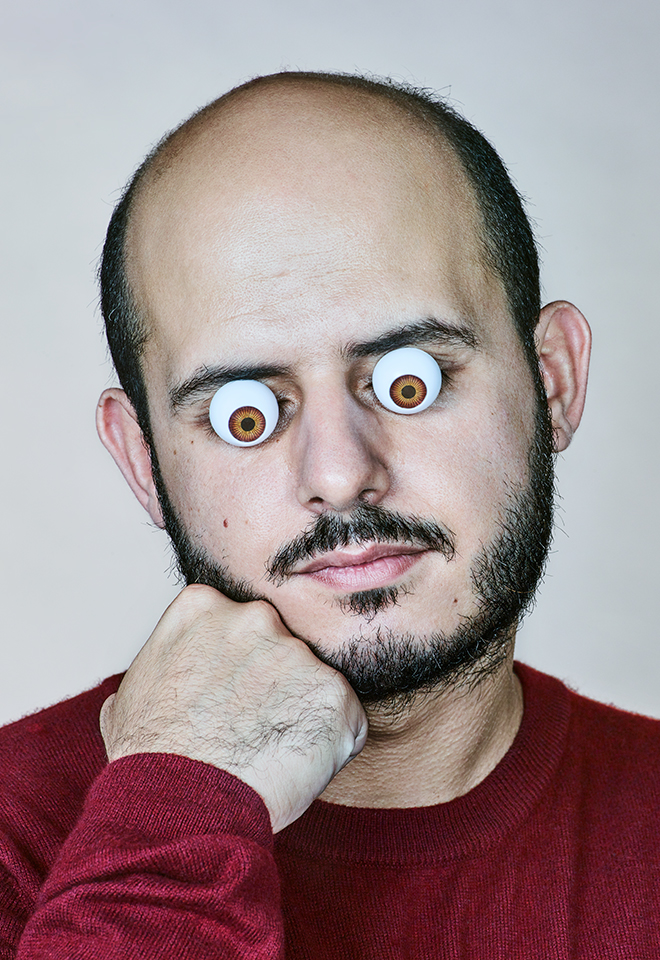
(Barcelona, 1983) Studied graphic design and fine arts in Barcelona, New York and Budapest. His professional activity has focused on editorial illustration, book covers, audiovisual projects, advertising, cultural communication and creation of his own work. He translates stories and concepts into images through a symbolic and playful language.
His work has been widely recognized. He has participated in exhibitions in New York, London, Mexico, El Salvador, Tallinn, Seoul, Rotterdam, Paris or Rome. Since 2015 he is a member of AGI (Alliance Graphique Internationale). In 2020 he has been considered by Forbes as one of the 100 most creative Spaniards. He has taught at IED, BAU, IDEP, and frequently gives workshops and lectures at various international art and design schools.
He has not yet written a child, planted a book or given birth to a tree.


Wednesday,
December 9, 2020
4 pm

Pablo Juncadella, Mucho
Case studies
Degrow or grow in another way?
Only for MVD students
Degrow or grow in another way?
The value of a project cannot be measured only in monetary terms. And we are clear about that.
It is important for us to develop ideas and concepts that contribute to society, that help to fulfill an objective and that lead us to think beyond the limits. We call these projects ‘pro-bono’ and they are part of the commitment we have with others and with society, but especially with our community of designers.
How do we organize pro-bono projects? How do we limit collaboration so that it is sustainable for both parties? How do we maintain the client relationship over time?
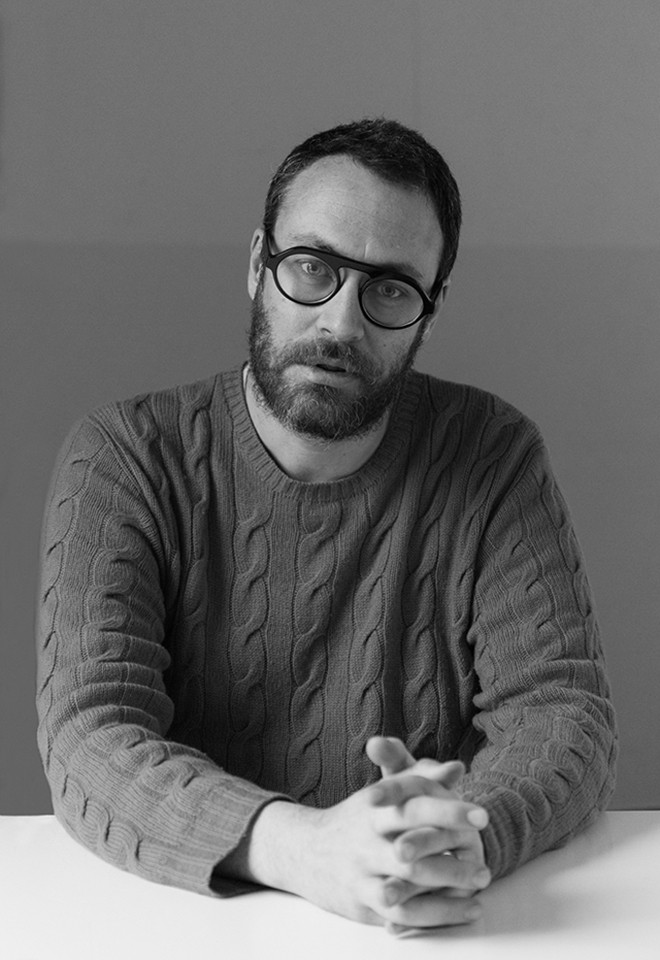
Pablo Juncadella
Co-founder and creative director at Mucho. Thanks to his constant search for new challenges, Pablo was promoted to the position of Creative Director of the English newspaper The Observer after working as a graphic designer for grafica and Pentagram. His global vision and his great interest in visual knowledge have been fundamental contributions to the growth of the studio. Today, together with his team at Mucho, he works with the purpose of finding solutions that fit in the positioning of the brands by contributing with original ideas.


