Events are an integral part of the master programs: from workshops with guests professors to lectures series with relevant practitioners.
Apr 23 — 27, 2026
Workshop
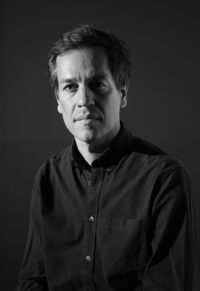
Serge Rompza, NODE Berlin Oslo
Beyond the Canon: Alternative Histories of Graphic Design
Only for MED students
Beyond the Canon: Alternative Histories of Graphic Design
Design history is not fixed — it is shaped by visibility, selection, and repetition.
This workshop revisits the canon of graphic design from a global perspective, focusing on historically relevant yet often underrepresented designers.
Each student will research and portray one designer, situating their work within its cultural, political, and technological context. Rather than simply presenting biographical information, participants will critically interpret and visually reframe these positions through editorial and typographic design.
The resulting works should not only communicate information but also respond visually to the designer’s attitude, working methods, and conceptual approach.
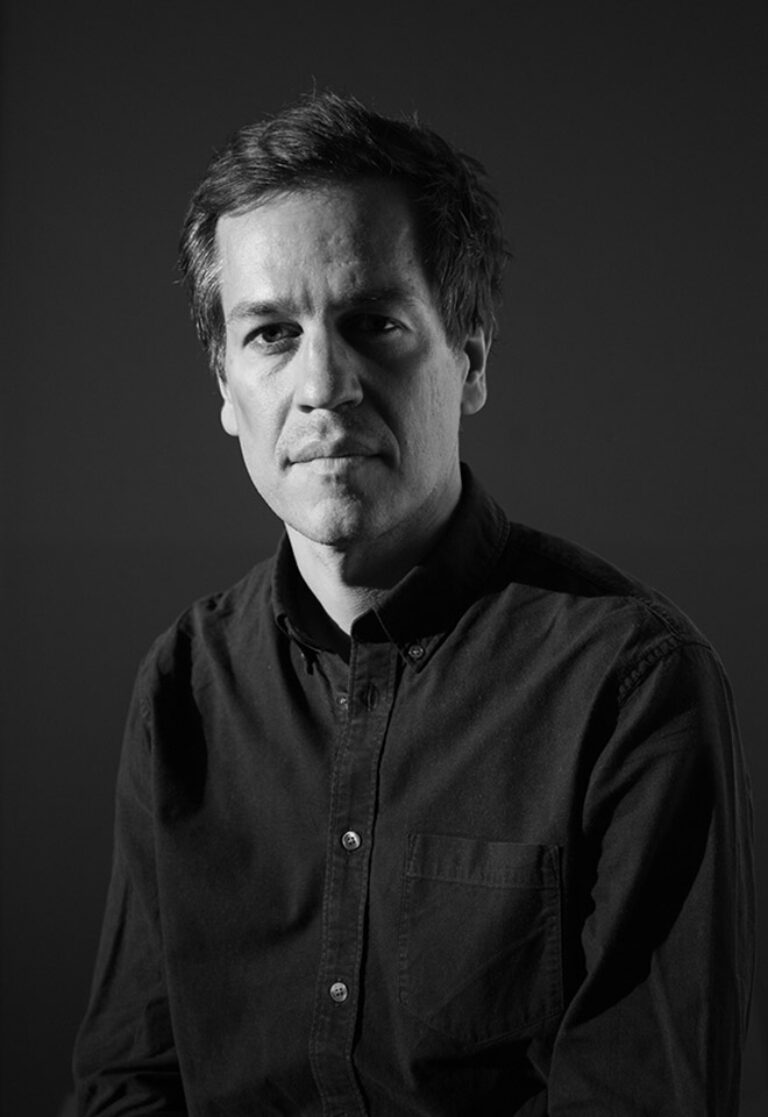
After graduating from Gerrit Rietveld Academie in Amsterdam, Serge Rompza has co-founded the Berlin and Oslo based design studio NODE in 2003, together with Anders Hofgaard. The two offices collaboratively focus on identity, print, exhibition and interactive work. Clients include Haus der Kulturen der Welt Berlin, Vitra, MIT Program in Art, Culture and Technology (ACT), Lithuanian Pavilion / La Biennale di Venezia, Office for Metropolitan Architecture (OMA).
Since 2004, he has regularly been teaching at art and design academies across Europe.


Feb 23 — 27, 2026
Workshop

Piero Di Biase, Formula Type
Modular approaches in Type Design: Resource or Restriction?
Only for MVD students
Modular approaches in Type Design: Resource or Restriction?
The workshop explores the possibilities that the module offers in structuring typographic forms, questioning whether it acts as a supportive framework or a creative constraint. Through the analysis of historical and contemporary modular typefaces, as well as the investigation of the module in art, design, and architecture, students will be guided to work within a modular system to design a display typeface. The aim is to understand how predefined structures can generate coherent visual languages while still allowing room for experimentation and expressive innovation.

© Andrea Arduini
Piero Di Biase is a graphic and type designer. He trained in the graphic arts sector and then became a graphic designer. After collaborating with various design agencies, in 2011 he co–founded Think Work Observe, where he worked for national and international clients until 2022, when he launched Formula Type, an independent digital foundry that produces and distributes retail and custom fonts. Since 2017, he has been a member of the Alliance Graphique Internationale (AGI).
Formula Type is a digital type foundry started in the wettest region in Italy. Formula is a potion blended especially for those who will drink it; Formula is a chemical equation that leads to a result. This playful yet precise idea captures the dual soul of Formula Type. Its past was graphic design, and its present is type design, but there’s no real separation between the past and the present. Our fonts are crafted with a flexible designer eye and in the fifteen years since our first releases they have evolved freely through experimentation. Our approach is that of expert beginners, always welcoming new partnerships and projects.


Wed, Apr 8, 2026
Graphic — Elisava lectures
7.30 pm — Sala Aleix Carrió
Open to the public

Bart de Baets
Paperclips
Paperclips
In his lecture, graphic designer Bart de Baets will show a large variety of works and elaborate more on the ways they find their form and are realized eventually. Although Bart’s practice is mostly spent working at the studio in Amsterdam, it is alternated by a parttime teaching position at the Royal Academy in The Hague, where he works with the first year students and the ones graduating. The way he teaches and cooks up his assignments is inspired by transforming everyday observations (at times obsessions) into educational exercises. The students are triggered to think of formal executions that evoke solutions close to Bart’s own practice visualizing abilities and editorial voice.
Although appearing less frequently today, Bart’s body of work’s been known to feature self initiated publications, such as Success and Uncertainty (together with Sandra Kassenaar), Dark and Stormy (together with Rustan Söderling), and Tabrat, a zine from 2022 in which de Baets confesses to be a tab hoarder (phone only, the browser tabs on his laptop are opened briefly and closed again efficiently) and shares them here with us in the charming A4-sized publication. His editorial assets have not been forlorn, and are frequently demonstrated more so in his collaborative works for artbook shop Page Not Found and exhibition space Nest (both are located in the city of The Hague). The talk at Elisava will prominently feature all of these works—and more—and provide insights into the developments of these designs by showing sketches, references and many inspirations.

Graphic designer Bart de Baets (1979, Knokke, BE) is based in Amsterdam. His design for the Sandberg Institute’s temporary master programme The Radical Cut Up was nominated for a Dutch Design Award. As a result, PostNL commissioned De Baets to design a series of stamps titled ‘Talk to the Hand’. With Sandra Kassenaar he designed the exhibition, campaign and catalogue for ‘Circulate’, an exhibition on photographic art acquisitions at the Stedelijk Museum Amsterdam. The two also design the graphic identity of Kunstmuseum Bochum. He designed ‘On the Necessity of Gardening: An ABC of Art, Botany and Cultivation’ (2021), which was published parallel to ‘The Botanical Revolution’, an exhibition at the Centraal Museum, Utrecht. That year, the Stiftung Buchkunst awarded the book with the highest prize in the category Best Book Design from all over the World. A second title in that series, Mothering Myths, an ABC of Art, Birth and Care was released in May of 2025, for which he collaborated once again with editors Laurie Cluitmans and Heske ten Cate. He holds a part-time teaching position at the Graphic Design department of the Royal Academy of Art in The Hague, and he has taught at the Gerrit Rietveld Academie in Amsterdam for fifteen years.
Being educated by notorious wild collaborator Will Holder, the radical typographic thinkers of Experimental Jetset and conceptual makers like Linda van Deursen, triggered Bart de Baets to think like an editor early in his graphic design studies, making zines with and for his peers, or whipping up catchy writings to go with his posters and projects. His design skills were fed ferociously when working with Maureen Mooren and Daniel van der Velden (now Metahaven) whose interest in art inspired him. For them, that always seemed to come first, then design. For the pages of Archis (an architecture magazine–now Volume), the layouts of existing periodical publications were used to give form to the magazine’s content, and Bart was taught to study their characteristics and so became an excellent copycat.
Over the years de Baets’ body of work has developed immensely mostly so by certain significant collaborations. A few early memorable ones have been those with Melanie Bonajo and Frank Koolen, two (then) Amsterdam-based artists not much older than himself and whose practice inspired an idea on which to work together, and which, in a way, kicked off de Baets’ career. The likes of Rustan Söderling and Sandra Kassenaar are of similar influence and remain crucial design partners; both are good friends to this day. Their influence on some self initiated works, such as Dark and Stormy and Success and Uncertainty is essential for de Baets’ current design approach and visual language. Kassenaar and de Baets nowadays share a studio and work together as designers regularly.
His designs are rooted heavily in a kind of conceptual thinking, and his abilities to think along editorially with commissioners has given Bart’s body of work an outspoken character. His work is distinctively playful and seemingly intuitive, giving the impression that the designs could be made quickly or hand-made. Yet, each one of the designs is a carefully put-together composition made according to a bunch of guidelines and often uses typography or visuals referencing things “found” on the street. For years Bart’s been a teacher in graphic design often working with the first year students, introducing them to the job. Surrounded by other designers, skilled coders, letter drawers and colour wizards, his teaching encourages to explore what it’s like to make art and design in today’s environments by demonstrating personal fascinations.


Wed, May 27, 2026
Masters’ Talks
7.30 pm — Event at DHub
Open to the public

Jonas Janke, b+
Love me one time, two times … x times !
Love me one time, two times … x times !
The lecture is not a conventional showcase of selected projects from our daily practice, but rather aims to provide a broader insight into the network of actors in which b+ (bplus.xyz) operates, how we understand the contemporary way of an architectural practice and scope of work of an architect, and how we approach our projects—in short: who b+ is and how we work, what our values are, and what our understanding of our duties and responsibilities as architects is.
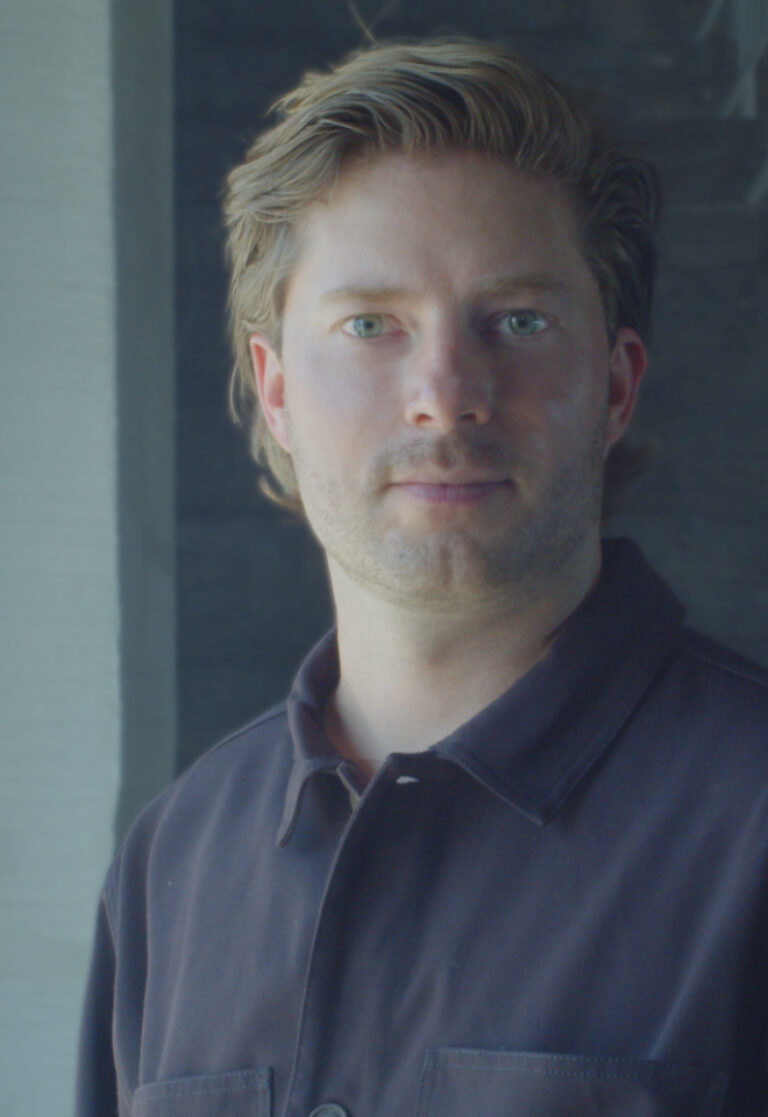
Jonas Janke (DE, 1991) is an architect and partner at bplus.xyz (Berlin). He has a diverse background in architecture, was trained as an architectural draughtsman before pursuing his studies in Hamburg, Stockholm, and Berlin. He gained valuable experience as a tutor and assistant in various departments including design & typologies, building construction, and structural design. He was part of the team 2038, the German Pavilion at 17th Venice Architecture Biennale 2021.
His early teaching experiences include guest studios at the University of Innsbruck (Austria) and Politecnico di Milano (Italy). He is regularly invited to give lectures and guest critiques at universities, cultural institutions, and public institutions. His focus is on new ecological construction materials and methods for adaptive reuse and renovation projects, seeking pragmatic and efficient technical and mechanical solutions that use material and construction thoughtfully.
bplus.xyz (b+) is a collaborative architecture practice (led by Arno Brandlhuber, Olaf Grawert, Jonas Janke and Roberta Jurčić) that operates at the intersection of theory and practice, using different media and formats. The practice seeks to engage with the contemporary challenges of our time, particularly those related to the social-ecological transformation of existing buildings, offering economically viable solutions.
b+ understands architecture as an open process, and views buildings as part of larger systems that require a systemic approach. The practice sees the given framework of existing buildings and legislation as an active design tool with the potential for transformation. Thus, b+ celebrates the potential of the existing built environment and aims to reveal and activate the latent potentials within.
b+ emphasizes working with different actors and stakeholders in project development. The practice values their knowledge and expertise and aims to create spaces for exchange and collaboration. b+ seeks to advance a new value system in architecture, one that places greater emphasis on collective responsibility, systemic thinking, and ecologically and economically viable solutions.
The current project in the field of political activism is the European citizens’ initiative HouseEurope! – HouseEurope! wants to create incentives that make renovation the new norm. This will boost the renovation market and give new value to what is already there. The goal is to preserve homes and communities, ensure a fairer and more local building industry, save energy and resources, and preserve our memories and stories.


past events
Wed, Nov 26, 2025
graphic.elisava lectures
7.30 pm — Sala Aleix Carrió
Open to the public

Anja Kaiser
Undisciplined Toolkit
The undisciplined toolkit speaks of forgotten and ‘messy’ stories, introducing a wide range of unconventional surfaces and strategies to bridge the gap between autonomous and commissioned work. Tools shape the way we point and wipe, but they also reflect what we crush and what we tackle. This lecture explores the urge to push the boundaries of tools and move beyond purely pragmatic functions—touching on bureaucratic creativity, role-playing, and alternative narratives. To work undisciplined means to navigate chaos, drifting between knowledge and unknowing.

©Simone C. Niquille
Since 2011, Anja Kaiser has been working independently, engaging in various collaborations with other graphic designers and programmers. Until March 2023, she held the interim Professorship for Typography at the Academy of Fine Arts Leipzig. 2017, she received the INFORM Award from the Gallery of Contemporary Art Leipzig, recognizing conceptual design practices. In 2020, Le Signe – Centre National du Graphisme in Chaumont dedicated a comprehensive exhibition to her work. In 2021, together with Rebecca Stephany, she co-edited the “Glossary of Undisciplined Design,” published by Spector Books.
Anja Kaiser is a graphic designer and artist working across cultural and subcultural contexts. Her practice engages with the appropriation of resistant media, and undisciplined methods. She explores alternative narratives and porous tools within graphic design. Her work investigates the thresholds between graphic design, art, and music. Since 2018, she has been responsible, together with Jim Kühnel, for the visual concept of the Rewire Festival. She also occasionally builds furniture—such as tables for the Study Rooms at the Bauhaus Dessau—or hosts sound art events as part of a collective.


Nov 17 — 21, 2025
workshop

Patrick Thomas
H2O
Only for MED students
Water holds deep cultural, historical, and environmental significance in Barcelona. It has shaped the city’s identity, economy, and urban landscape for centuries. The sea has long connected Barcelona to trade, migration, and cultural exchange, while fountains, beaches, and promenades highlight its presence in daily life. Following decades of drought and the emergence of annual flooding as the new normal, water will play an increasingly critical role in the city’s / region’s / country’s / continent’s / planet’s future.
During the five-day workshop, participants will choose a subject related to the topic and produce a 12–16 page DIN A4 publication documenting their thoughts using three print techniques.
The aim of the workshop is to develop participants’ observational, research, editing, writing, layout and publishing skills.
Subject matter may be historic, contemporary or speculative.

Patrick Thomas is a graphic artist, author and educator. He studied at Central Saint Martins and the Royal College of Art in London before relocating to Barcelona in 1991.
He currently lives and works in Berlin. He has exhibited his limited-edition silkscreens across five continents, where many are now held in private and public collections.
Since October 2013 he is a professor at Staatlichen Akademie der Bildenden Künste Stuttgart. He is a member of Alliance Graphique.


Wed, Nov 19, 2025
masterclass

Gabriel Ventura
Copy pop: new narratives in contemporary music
Only for MVD students
Copy pop: new narratives in contemporary music
In this session, we will explore how a number of musicians from different eras and styles have created narratives that bring meaning and complexity to their albums. When did music shift from a collection of songs to the “concept album” and why? What is the purpose of these narratives? How do they expand the story a record tells? And why does an album need stories to accompany it?

@ Lluís Tudela
Gabriel Ventura (Granollers, 1988) is a poet. He holds a degree in Humanities and a Master’s in Literary, Art and Thought Studies from Pompeu Fabra University (UPF). His work explores poetry, performance, and moving image as creative media. His books include W (2017), Notes for an Eye Fire (2020) —which inspired a homonymous exhibition at MACBA—, The Portuguese Night (2021) —a shooting diary for a film by Albert Serra—, and The Best of Impossible Worlds (2025). He works at the intersection of poetry and other arts, collaborating with visual artists, filmmakers, and musicians such as Rosa Tharrats, Albert Serra and Rosalía. He is currently the director of POESIA i + festival and lecturer at BAU.
Gabriel Ventura’s creative journey often begins with poetry, extending into action, pedagogy, research and video. In his approach, literature serves as a powerful tool to foster emotional connections in an era marked by hyper-information and global dispersion. Ventura views his texts as enigmatic and independent entities with the potential to reshape the reality that envelops them. His work reflects a holistic exploration of the arts, using poetry as a starting point to engage with diverse disciplines and mediums, ultimately contributing to a transformative and interconnected creative landscape.


Nov 10 — 14, 2025
workshop

Prof Dr Martin Lorenz, TwoPoints.Net
Systemic Type Design
Only for MVD students
Systemic Type Design
We live in a (new) golden age of systemic type design. New technologies and easy to use software leveled the playfield for emerging designers and gave them the chance to experiment with new ideas. The world of display fonts has witnessed a lot of new impulses in the last years. Type has become more flexible, variable and kinetic as ever, adjusting efficiently and effectively to new communication channels.
Systemic Type Design is more than designing fonts. A type system is an efficient design tool that helps designers to design. If done well, the act of writing is the act of designing without the need to further layout the text. In this course we will develop an experimental type system that almost automatically generates fantastic design applications.

Martin Lorenz could well have become a chef, comic book artist, or architect, had it not been for an internship at the Müller + Volkmann design studio. Lorenz studied Graphic Design at the Darmstadt University of Applied Sciences and at the Royal Academy of Art (KABK) in The Hague. After working for four years at the Hort studio, he moved to Barcelona to found TwoPoints.Net with Lupi Asensio and completed his Master’s and PhD in Design Research at the University of Barcelona. Lorenz has been teaching at Elisava since 2006 and still enjoys cooking.


Wed, Nov 12, 2025
masters’ talks
7.30 pm — Event at DHub
Open to the public

Dries Depoorter
Surveillance art, dying phones, and fake likes
Surveillance art, dying phones, and fake likes
In this engaging talk, Dries Depoorter delves into his world of his art, blending the boundaries between technology and creativity. Attendees will be taken on a journey through Depoorter’s recent and upcoming projects, offering insights into the conceptual and technical processes behind his works. Dries will showcase live demonstrations of his art in the form of giving away likes or followers. This lecture offers a unique opportunity to learn more about the projects that have brought him worldwide recognition.

Belgian creative technologist and artist Dries Depoorter, based in Ghent, creates thought-provoking work about technology, surveillance, AI and social media in a playful way that makes people laugh while delivering serious messages in an accessible way. His projects explore digital culture that can inspire marketers: privacy challenges, artificial intelligence applications, surveillance and authentic social media projects.
With his unique background in electronics and digital innovation, Dries has become a voice for forward-thinking brands and marketing professionals looking to navigate today’s complex digital landscape. His artistic approach can directly inspire brands to think differently and develop original marketing concepts that stand out. Through his work, Dries demonstrates how combining creativity with technological insight creates viral moments.
His award-winning “Die With Me” app, accessible only when a user’s phone battery drops below 5%, demonstrates how scarcity and unique user experiences can create powerful engagement. On Black Friday, he doubles the price of his app instead of offering discounts, showing brands how breaking marketing rules can create attention.
In his viral project “The Follower” Dries leverages open cameras and AI to reveal the reality behind curated Instagram moments—offering marketers an unfiltered look at consumer behavior and content creation.
Meanwhile, ”The Flemish Scrollers” uses AI to automatically identify politicians using smartphones during parliamentary sessions, highlighting how technology can create accountability and transparency in public spaces.
Dries has exhibited at prestigious venues including the Barbican in London, Art Basel, Mutek Festival in Montreal,ZKM, Bozar, WIRED and Ars Electronica.


Wed, Nov 5, 2025
masterclass

Juli Groshaus, Vandals
Turning Understanding into Opportunities
Only for MVD students
Turning Understanding into Opportunities
This session marks a shift — from exploring and questioning to articulating what we’ve truly understood. After framing your problem, it’s time to bring it all together and show where it leads.
You’ll present your understanding of the problem: the context it lives in, who it affects, and why it matters. But more importantly, you’ll show how it opens space for design — through a clear, grounded “How Might We” statement.
Through peer feedback and shared reflection, you’ll learn to see your own work from new perspectives, to challenge assumptions, and to find strength in diverse viewpoints.

Juli Groshaus is a Business Designer and Design Strategist at Vandals. He is passionate about turning everyday decisions into clear metrics that enable the evaluation of processes, facilitate key conversations, and ensure that strategic decisions are based on an approach that considers people, the business, and the system as a whole.
Vandals is a Strategy Consultancy that turns vision into value by bridging research, design and business to refine direction, shape what matters, and drive momentum. They go beyond building strategies by unlocking bold decisions, sharpening thinking and guiding transformation from insight to action. The goal? To move businesses forward by challenging assumptions, connecting clarity with execution and supporting teams see where they are, where they could go and how to get there.


Wed, Oct 29, 2025
graphic.elisava lectures
7.30 pm — Sala Aleix Carrió
Open to the pubic

Kris De Decker, Low-tech Magazine
High-tech problems, obsolete technologies, and low-tech solutions
High-tech problems, obsolete technologies, and low-tech solutions
This lecture underscores the potential of past and often forgotten technologies and how they can inform sustainable energy practices. Technology has become the idol of our society, but technological progress is—more often than not—aimed at solving problems caused by earlier technical inventions. Interesting possibilities arise when we combine old technology with new knowledge and new materials, or when we apply old concepts and traditional knowledge to modern technology. We discuss obsolete technologies and give examples of how they can inspire objects and ways of living that are both modern and sustainable.

Kris De Decker is the author of Low-tech Magazine, an online publication that refuses to assume that every problem has a high-tech solution. Since 2018, Low-tech Magazine runs on a self-hosted, solar powered server, and since 2019 it is also available in print. De Decker also wrote for the Demand Centre at Lancaster University (UK), which researches energy demand in relation to social practices, and is the co-founder of the Human Power Plant, an art project that investigates the possibilities of human power production in a modern society. Before the creation of Low-tech Magazine in 2007, he was reporting on cutting-edge science and technology as a freelance journalist for newspapers and magazines. He was born in Belgium and lives in Spain.
I studied journalism and worked as a journalist, but nowadays my writing is between journalism, academic writing, and the essay. I love researching and do it very thoroughly. I believe in quality rather than quantity: Low-tech Magazine doesn’t publish often but many articles remain popular for many years. Around 2016 I also started to work with designers and other collaborators to make objects that reflect the approach of the magazine: finding inspiration in the past and trying to steer technological development into a different direction. I believe in the power of community: building things together, combining different skills.


Wed, Oct 22, 2025
case studies

Nicolás Cevallos, Centro
Design Atmosphere
Only for MVD students
How do you Design Atmosphere?
Can you imagine a place, the feeling of being inside it? The smell, the temperature, the tension or the calm that holds the air together? Maybe it reminds you of somewhere you’ve been before. Maybe you want to stay, or maybe you never want to feel that way again.
A brand narrative in practice is often a collection of words and fragments, an amorphous vision that’s meant to be felt, not easily read or summarized. When we speak about building a “vibe,” we’re really talking about arranging all the elements inside a fictional room to create a specific mood.
But which kind of atmosphere do you want to create?
A tightly defined one, something perfectly controlled, can feel precise, or it can feel alienating. Sometimes, the most interesting spaces are those that hold tension: that make you question, linger, think. In other cases, the atmosphere invites comfort; it feels familiar, like something that could be ours.
In this session, we will explore the different corners from which you can start building an atmosphere, and how using it as a mindset can help you create interesting and complex worlds people want to be in.

I describe myself best by admitting that I’m curious, have a questionable sense of humor, struggle to keep my attention for long, and have an obsession with getting obsessed. I’m drawn to contradictions and often find myself most comfortable in the in-betweens.
My fascination with images led me to become a graphic designer, while my tendency to question everything pushed me toward strategic thinking. Balancing these two energies has allowed me to collaborate on unique projects with studios, brands, and individuals alike.
Previously I’ve worked for brands like: Nomad Coffee, Pull&Bear, Adidas, Bershka, Amazon Music Es, Estrella Galicia, ELISAVA, TOUS, VICIO. And collaborated with: Querida, ESCOLA, Mañana, Socis Club, Gallery Studios, Folch Studio.
Today (16/10/25) (16:05) CENTRO is a fictional strategy and creative consultancy practice run by Nicolás Cevallos. We offer tailor-made solutions for projects that need a balance between strategic thinking and creative vision, turning insights into ideas.
We’re interested in understanding the relationship between people and commerce. We study the future of culture and its imminent cannibalization. We care about art. We build relationships with individuals, collectives, and brands, and develop strategies for survival in a sea of sameness and boredom.


Wed, Oct 15, 2025
masterclass

Clara Rodés, Codea
Architecting creative work
Only for MVD students
Architecting creative work
This masterclass explores how a project evolves from being just a good idea into a proposal with direction, coherence, and purpose. Through practical frameworks and exercises, you’ll gain a method you can actually use, adapt, and make your own to transform scattered ideas into living systems . The kind of work that doesn’t just look good, but feels coherent, soulful, and capable of having the impact you envisioned.
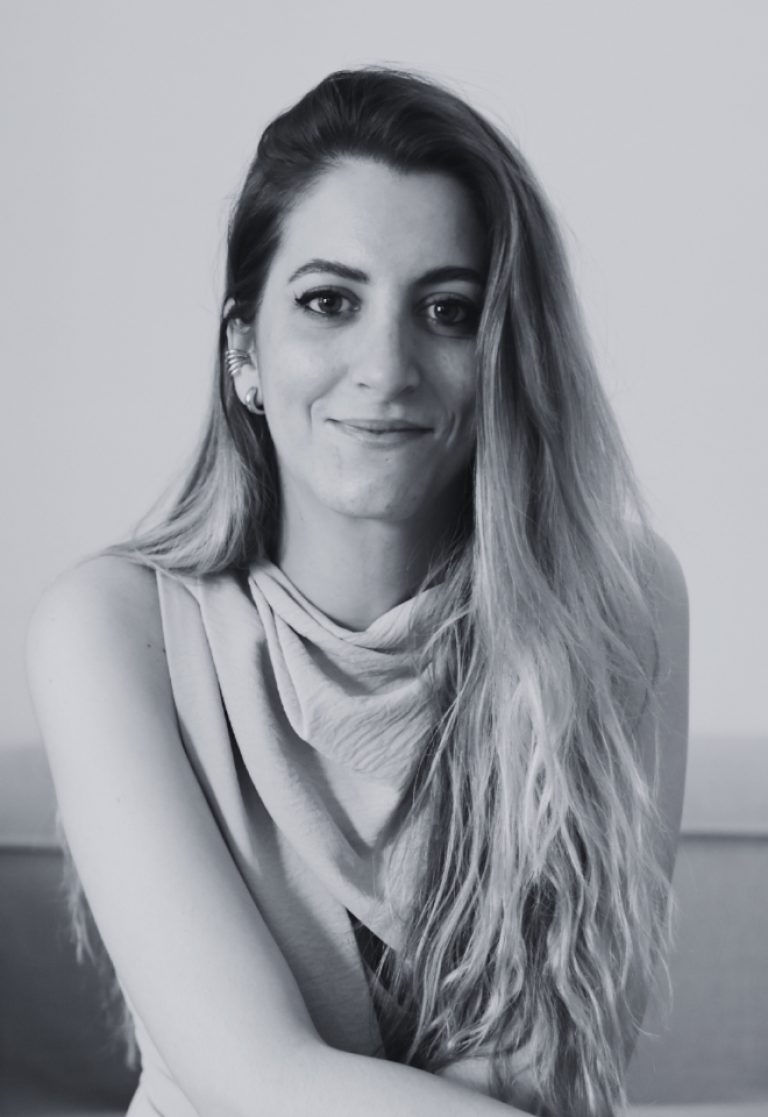
Clara Rodés is Head of Strategy at Codea, where she bridges strategy and creative direction to help brands and institutions build work with intent. Based in Barcelona, she also teaches at Elisava University, helping students think critically about their work and connect strategic thinking with creative systems that live meaningfully in culture.
Codea is a creative company specialising in creative direction, design, and production.
Based between Barcelona and London, we work at the intersection of concept and craft, merging creative direction, design, and high-end production across film and photo into a single, cohesive process. Our work identifies conventions to defy them, delivering work that hits hard while looking sharp. We believe traditional advertising is obsolete; no one wants to be interrupted by soulless messaging. It’s been said our work reflects the pulse of culture, we like to say we take our own jokes seriously.


Wed, Oct 8, 2025
masterclass

Valentina Marun, Danae Lois & Juli Groshaus, Vandals
Framing Challenges with Strategic Clarity
Only for MDV students
Projects or companies don’t fail for lack of ideas, most of them fail because they solve problems no one really had in the first place. In this Masterclass, we’ll explore how to tell the difference between noise and the sparks that can ignite real change.
We’ll give you the lenses to spot problems that are real, relevant, and worth solving. Through live examples and business design tools, you’ll learn how to separate symptoms from causes and size the magnitude of a challenge. Because the right problem doesn’t just lead to a solution: it opens the door to transformation.
You’ll walk away with a mindset to approach problems with sharper eyes, a clearer sense of where to explore further and a way of thinking you can take into the real world.
Valentina Marun, Danae Lois Gomez & Juli Groshaus, are Business Designers and Design Strategists at Vandals, a Strategy Consultancy that turns vision into value by bridging research, design and business to refine direction, shape what matters, and drive momentum. They go beyond building strategies by unlocking bold decisions, sharpening thinking and guiding transformation from insight to action. The goal? To move businesses forward by challenging assumptions, connecting clarity with execution and supporting teams see where they are, where they could go and how to get there.
Wed, May 21, 2025
bookworm

Emigre magazine
Only for MED students
Published between 1984 and 2005, Emigre was the first magazine specialising in typography to grasp the need for a change in graphic design in the digital era. In its pages appeared the representatives of a new sensibility that challenged the modern canon with typographic experiments that fragmented composition and challenged the legibility of texts. The magazine was a shock in the world of graphics at the end of the 20th century and represented the fracture between the old analogue generation, formed in the spirit of modernism, and the new post-modern generation that was beginning to develop in a digital environment. Its pages fostered debate in the fields of the profession and academia, endowing the practice of graphic design with a solid theoretical discourse.
In the Bookworm sessions we will explore iconic magazines and books that capture the spirit of the era in which they were created. The material comes from Elisava’s library collections, especially from its Reserve Fund, which contains publications that, due to their design, constitute a journey through the best of the past and present of modern graphics applied to the field of editorial design.
The Bookworm sessions are guided by Andreu Jansà, librarian and curator of the Enric Bricall Reserve Fund.
We will place the publications in their context and try to define what makes them relevant in the history of editorial design in the 20th and 21st centuries. The direct contact with the books and magazines that we will see in each session will allow us to experience the printed document from a material point of view: binding, paper, lay out, illustrations, typography. We will also be able to assess the adequacy between form and content.


Wed, May 14, 2025
masters’ talks
7.30 pm — Event at DHub
Open to the public

Rob Giampietro, Notion
20 Years in Design
20 Years in Design
Across nonprofit and for profit, startups and scale, on boards and in residence, in print and with AI, as a writer, designer, teacher, and leader — Rob’s career has spanned a wide range of projects at the intersection of design, culture, and technology. This talk will share some recent work from Notion as well as work from Google and MoMA, connected in their uses of strategic inquiry, brand-focused storytelling, and multidisciplinary human-centered design to convey unique stories and experience to global audiences.
Rob Giampietro is a designer based in New York, where he is Head of Creative at Notion, a productivity tool celebrated by Forbes’ “AI 50” list in 2024. Active across worlds of design, art, and technology, Rob has held creative leadership roles at Google (Material Design, Research & Machine Intelligence, Search/Assistant) and MoMA, where he was Director of Design during the museum’s historic 2019 expansion.
Rob taught for over a decade in RISD’s MFA Graphic Design program and has served as VP of AIGA/NY. In 2024, he was a jury chair for AIGA’s 100th Annual 50 Books 50 Covers awards. A graduate of Yale, Rob has had fellowships at MacDowell and the American Academy in Rome, along with recognition from the National Design Awards for his work at Project Projects. Rob has been an Advisor to the Aspen Ideas Festival and is a trustee and board member of the Aperture Foundation.

Notion is the connected workspace that allows teams and individuals to easily share documents, take notes, manage projects, and organize knowledge—all in one place. Users can create and customize beautiful documents, roadmaps, knowledge bases, and more, helping them work smarter and faster.
es.


