Events are an integral part of the master programs: from workshops with guests professors to lectures series with relevant practitioners.
Apr 23 — 27, 2026
Workshop
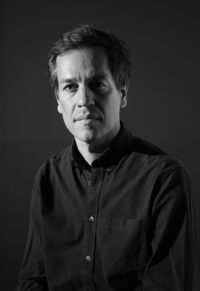
Serge Rompza, NODE Berlin Oslo
Beyond the Canon: Alternative Histories of Graphic Design
Only for MED students
Beyond the Canon: Alternative Histories of Graphic Design
Design history is not fixed — it is shaped by visibility, selection, and repetition.
This workshop revisits the canon of graphic design from a global perspective, focusing on historically relevant yet often underrepresented designers.
Each student will research and portray one designer, situating their work within its cultural, political, and technological context. Rather than simply presenting biographical information, participants will critically interpret and visually reframe these positions through editorial and typographic design.
The resulting works should not only communicate information but also respond visually to the designer’s attitude, working methods, and conceptual approach.
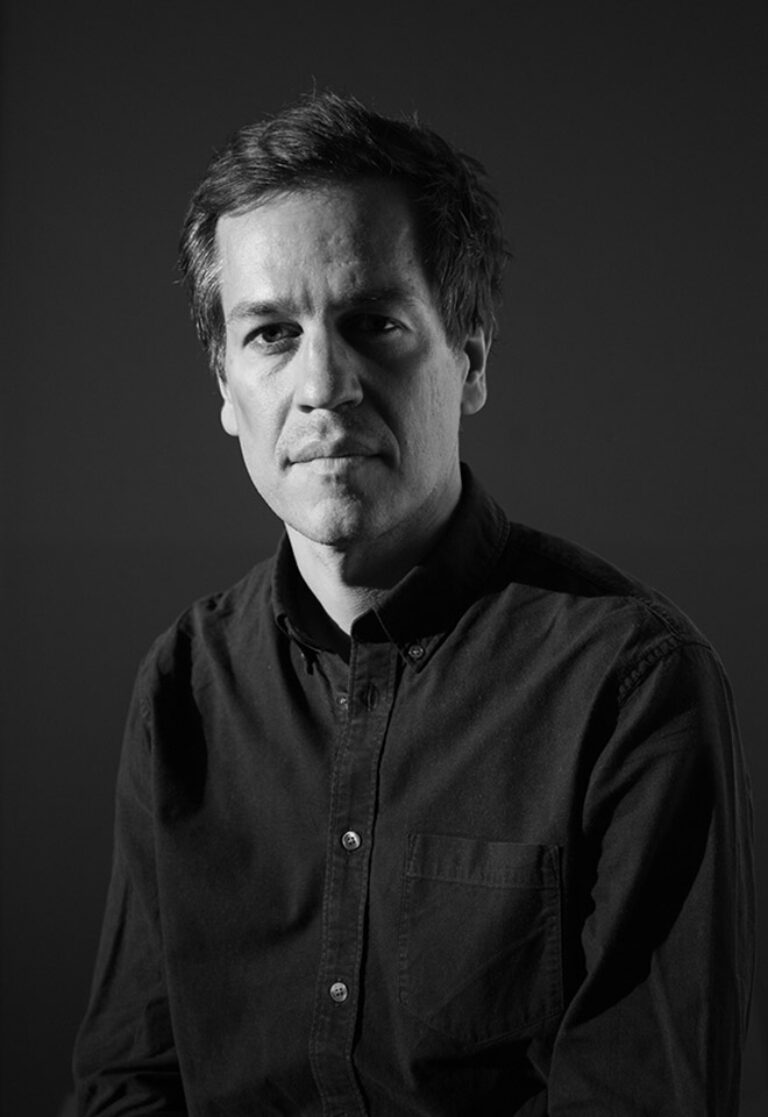
After graduating from Gerrit Rietveld Academie in Amsterdam, Serge Rompza has co-founded the Berlin and Oslo based design studio NODE in 2003, together with Anders Hofgaard. The two offices collaboratively focus on identity, print, exhibition and interactive work. Clients include Haus der Kulturen der Welt Berlin, Vitra, MIT Program in Art, Culture and Technology (ACT), Lithuanian Pavilion / La Biennale di Venezia, Office for Metropolitan Architecture (OMA).
Since 2004, he has regularly been teaching at art and design academies across Europe.


Feb 23 — 27, 2026
Workshop

Piero Di Biase, Formula Type
Modular approaches in Type Design: Resource or Restriction?
Only for MVD students
Modular approaches in Type Design: Resource or Restriction?
The workshop explores the possibilities that the module offers in structuring typographic forms, questioning whether it acts as a supportive framework or a creative constraint. Through the analysis of historical and contemporary modular typefaces, as well as the investigation of the module in art, design, and architecture, students will be guided to work within a modular system to design a display typeface. The aim is to understand how predefined structures can generate coherent visual languages while still allowing room for experimentation and expressive innovation.

© Andrea Arduini
Piero Di Biase is a graphic and type designer. He trained in the graphic arts sector and then became a graphic designer. After collaborating with various design agencies, in 2011 he co–founded Think Work Observe, where he worked for national and international clients until 2022, when he launched Formula Type, an independent digital foundry that produces and distributes retail and custom fonts. Since 2017, he has been a member of the Alliance Graphique Internationale (AGI).
Formula Type is a digital type foundry started in the wettest region in Italy. Formula is a potion blended especially for those who will drink it; Formula is a chemical equation that leads to a result. This playful yet precise idea captures the dual soul of Formula Type. Its past was graphic design, and its present is type design, but there’s no real separation between the past and the present. Our fonts are crafted with a flexible designer eye and in the fifteen years since our first releases they have evolved freely through experimentation. Our approach is that of expert beginners, always welcoming new partnerships and projects.


Wed, Apr 8, 2026
Graphic — Elisava lectures
7.30 pm — Sala Aleix Carrió
Open to the public

Bart de Baets
Paperclips
Paperclips
In his lecture, graphic designer Bart de Baets will show a large variety of works and elaborate more on the ways they find their form and are realized eventually. Although Bart’s practice is mostly spent working at the studio in Amsterdam, it is alternated by a parttime teaching position at the Royal Academy in The Hague, where he works with the first year students and the ones graduating. The way he teaches and cooks up his assignments is inspired by transforming everyday observations (at times obsessions) into educational exercises. The students are triggered to think of formal executions that evoke solutions close to Bart’s own practice visualizing abilities and editorial voice.
Although appearing less frequently today, Bart’s body of work’s been known to feature self initiated publications, such as Success and Uncertainty (together with Sandra Kassenaar), Dark and Stormy (together with Rustan Söderling), and Tabrat, a zine from 2022 in which de Baets confesses to be a tab hoarder (phone only, the browser tabs on his laptop are opened briefly and closed again efficiently) and shares them here with us in the charming A4-sized publication. His editorial assets have not been forlorn, and are frequently demonstrated more so in his collaborative works for artbook shop Page Not Found and exhibition space Nest (both are located in the city of The Hague). The talk at Elisava will prominently feature all of these works—and more—and provide insights into the developments of these designs by showing sketches, references and many inspirations.

Graphic designer Bart de Baets (1979, Knokke, BE) is based in Amsterdam. His design for the Sandberg Institute’s temporary master programme The Radical Cut Up was nominated for a Dutch Design Award. As a result, PostNL commissioned De Baets to design a series of stamps titled ‘Talk to the Hand’. With Sandra Kassenaar he designed the exhibition, campaign and catalogue for ‘Circulate’, an exhibition on photographic art acquisitions at the Stedelijk Museum Amsterdam. The two also design the graphic identity of Kunstmuseum Bochum. He designed ‘On the Necessity of Gardening: An ABC of Art, Botany and Cultivation’ (2021), which was published parallel to ‘The Botanical Revolution’, an exhibition at the Centraal Museum, Utrecht. That year, the Stiftung Buchkunst awarded the book with the highest prize in the category Best Book Design from all over the World. A second title in that series, Mothering Myths, an ABC of Art, Birth and Care was released in May of 2025, for which he collaborated once again with editors Laurie Cluitmans and Heske ten Cate. He holds a part-time teaching position at the Graphic Design department of the Royal Academy of Art in The Hague, and he has taught at the Gerrit Rietveld Academie in Amsterdam for fifteen years.
Being educated by notorious wild collaborator Will Holder, the radical typographic thinkers of Experimental Jetset and conceptual makers like Linda van Deursen, triggered Bart de Baets to think like an editor early in his graphic design studies, making zines with and for his peers, or whipping up catchy writings to go with his posters and projects. His design skills were fed ferociously when working with Maureen Mooren and Daniel van der Velden (now Metahaven) whose interest in art inspired him. For them, that always seemed to come first, then design. For the pages of Archis (an architecture magazine–now Volume), the layouts of existing periodical publications were used to give form to the magazine’s content, and Bart was taught to study their characteristics and so became an excellent copycat.
Over the years de Baets’ body of work has developed immensely mostly so by certain significant collaborations. A few early memorable ones have been those with Melanie Bonajo and Frank Koolen, two (then) Amsterdam-based artists not much older than himself and whose practice inspired an idea on which to work together, and which, in a way, kicked off de Baets’ career. The likes of Rustan Söderling and Sandra Kassenaar are of similar influence and remain crucial design partners; both are good friends to this day. Their influence on some self initiated works, such as Dark and Stormy and Success and Uncertainty is essential for de Baets’ current design approach and visual language. Kassenaar and de Baets nowadays share a studio and work together as designers regularly.
His designs are rooted heavily in a kind of conceptual thinking, and his abilities to think along editorially with commissioners has given Bart’s body of work an outspoken character. His work is distinctively playful and seemingly intuitive, giving the impression that the designs could be made quickly or hand-made. Yet, each one of the designs is a carefully put-together composition made according to a bunch of guidelines and often uses typography or visuals referencing things “found” on the street. For years Bart’s been a teacher in graphic design often working with the first year students, introducing them to the job. Surrounded by other designers, skilled coders, letter drawers and colour wizards, his teaching encourages to explore what it’s like to make art and design in today’s environments by demonstrating personal fascinations.


Wed, May 27, 2026
Masters’ Talks
7.30 pm — Event at DHub
Open to the public

Jonas Janke, b+
Love me one time, two times … x times !
Love me one time, two times … x times !
The lecture is not a conventional showcase of selected projects from our daily practice, but rather aims to provide a broader insight into the network of actors in which b+ (bplus.xyz) operates, how we understand the contemporary way of an architectural practice and scope of work of an architect, and how we approach our projects—in short: who b+ is and how we work, what our values are, and what our understanding of our duties and responsibilities as architects is.
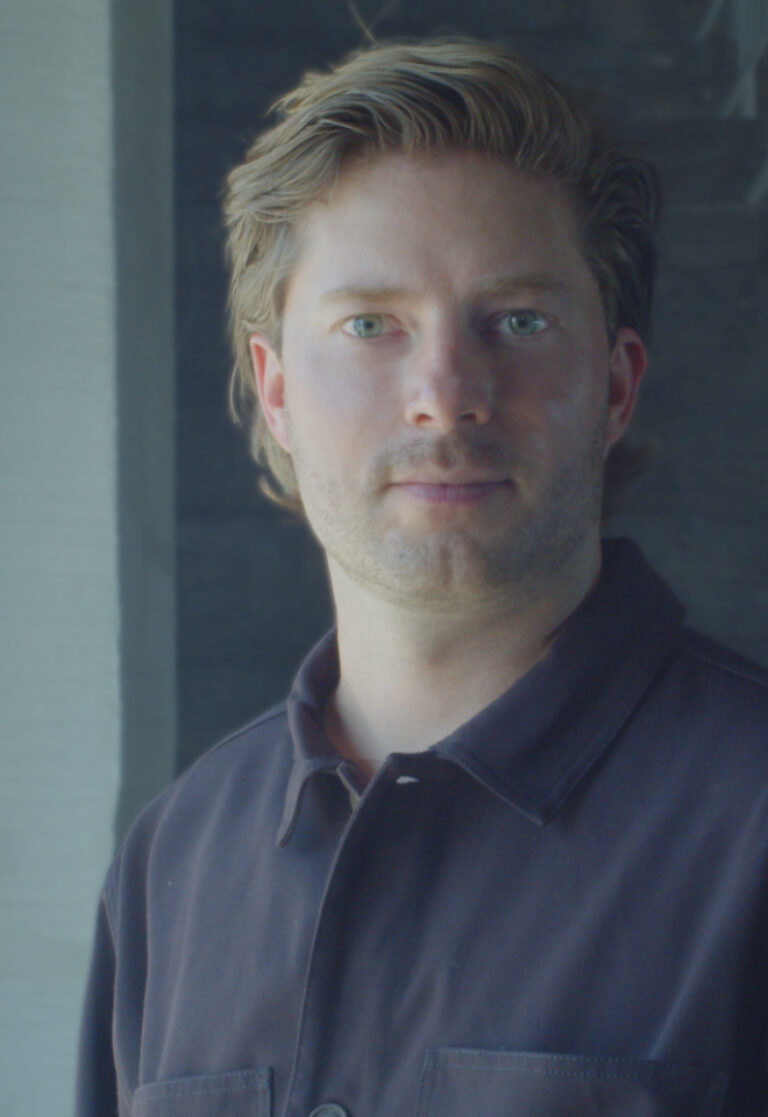
Jonas Janke (DE, 1991) is an architect and partner at bplus.xyz (Berlin). He has a diverse background in architecture, was trained as an architectural draughtsman before pursuing his studies in Hamburg, Stockholm, and Berlin. He gained valuable experience as a tutor and assistant in various departments including design & typologies, building construction, and structural design. He was part of the team 2038, the German Pavilion at 17th Venice Architecture Biennale 2021.
His early teaching experiences include guest studios at the University of Innsbruck (Austria) and Politecnico di Milano (Italy). He is regularly invited to give lectures and guest critiques at universities, cultural institutions, and public institutions. His focus is on new ecological construction materials and methods for adaptive reuse and renovation projects, seeking pragmatic and efficient technical and mechanical solutions that use material and construction thoughtfully.
bplus.xyz (b+) is a collaborative architecture practice (led by Arno Brandlhuber, Olaf Grawert, Jonas Janke and Roberta Jurčić) that operates at the intersection of theory and practice, using different media and formats. The practice seeks to engage with the contemporary challenges of our time, particularly those related to the social-ecological transformation of existing buildings, offering economically viable solutions.
b+ understands architecture as an open process, and views buildings as part of larger systems that require a systemic approach. The practice sees the given framework of existing buildings and legislation as an active design tool with the potential for transformation. Thus, b+ celebrates the potential of the existing built environment and aims to reveal and activate the latent potentials within.
b+ emphasizes working with different actors and stakeholders in project development. The practice values their knowledge and expertise and aims to create spaces for exchange and collaboration. b+ seeks to advance a new value system in architecture, one that places greater emphasis on collective responsibility, systemic thinking, and ecologically and economically viable solutions.
The current project in the field of political activism is the European citizens’ initiative HouseEurope! – HouseEurope! wants to create incentives that make renovation the new norm. This will boost the renovation market and give new value to what is already there. The goal is to preserve homes and communities, ensure a fairer and more local building industry, save energy and resources, and preserve our memories and stories.


past events
May 5 — 9, 2025
workshop
Jorge León & Mikel Romero, León Romero
A Future in Symbols:
Redefining Global Architecture Through Its Flag
Only for MVD students
In a constantly changing world, architecture faces the challenge of representing, inhabiting, and shaping diverse realities on a global scale.
This workshop proposes an experimental exercise: the design of flags for the International Union of Architects (UIA), the organization that brings together architects from all continents under a shared vision of the built future.
The flag, as a symbol, concentrates the identity of a community.
Its power lies in its ability to synthesize values, territories, and aspirations into an essential graphic language.
Although their exact origin is unknown, flags have accompanied civilizations since ancient times, establishing themselves as an essential language to express identity, belonging, and shared aspirations.
The exercise consists of redesigning the flag of the International Union of Architects (UIA), reinterpreting its identity through a contemporary lens.
The new design must move entirely away from the current UIA flag, aiming instead to construct a symbol that reflects the diversity, sustainability, and future of architecture on a global scale.
The exercise will begin by merging three reference points that will serve as the foundation for the development of the flag:
1. Architectural movements
2. Geographies and climates
3. UIA core values
LEÓN ROMERO is a Barcelona-based visual communication studio founded by Jorge León and Mikel Romero. The studio approaches projects through creative direction and visual design, delivering bold and functional solutions in both cultural and commercial fields, while seamlessly merging the physical and digital worlds in a cohesive manner.
Driven by typographic design, LEÓN ROMERO offers a wide array of services, including visual identity, graphic campaigns, editorial and web design, packaging, and art direction. Maintaining strong relationships with a vibrant network of photographers, illustrators, editors, and copywriters, the studio delivers projects of all sizes.
Wed, Apr 30, 2025
graphic.elisava lectures
7.30 pm — Sala Aleix Carrió
Open to the public

Michelle Phillips, Studio Yukiko
Maintaining the “Creative” in “Creative Industry”
The leap between being a design student at university, exploring and practicing creativity every day and learning how to apply all that creative expression I had developed as a student, felt like trying to jump across a canyon when I got my first job. That was 16 years ago. Today I still grapple with the tension between “creative” and “industry” only now I see the challenges that once daunted me as opportunities to grow and thrive. I’ll be taking a deep dive on the lessons I’ve learned from my meandering journey from student to studio, sharing projects and processes that have got me here, the joy of collaboration and letting go of your ego and the importance of finding inspiration outside of the “industry”.

Michelle Phillips studied graphic design at the University of Brighton in England. In 2010 she moved to Berlin and made music videos before co founding Studio Yukiko, a Berlin-based design and creative agency.
Michelle is also a founding member and Art Director of Flaneur Magazine and Sofa Magazine and has been on the jury for TDC new york and D&AD awards.
Studio Yukiko was co-founded by Michelle Phillips and Johannes Conrad in 2012, a Berlin-based creative agency specialising in creative direction, art direction, brand strategy, concept generation and graphic design for commercial, cultural and indie clients alike.
The studio also runs it’s own projects, such as Flaneur and Sofa Magazine. With these research projects Yukiko continually experiments with contemporary forms of visual storytelling and fosters a deeper understanding of the audiences with which its projects engage.


Wed, Apr 10, 2025
case studies

Cris Moya y Álvaro Ferrer, Odd Spaces
Between Authenticity and Viability: Designing in the Tension
Only for MVD students
The Odd Approach — Navigating the balance between bold creative visions and real-world constraints.
Case Studies — Exploring key projects through:
Concept — Keeping authenticity while ensuring functionality.
Production — Materializing ideas within technical and sustainable limits.
Execution — Adapting without losing identity.
Key Takeaways — Turning tension into a creative advantage
Cris Moya designs and manages spaces and events, from renovations to brand activations at festivals. With a background in Advertising, Cultural Management, and Spatial Design, she blends research, design, and marketing. After directing festivals like Offf Barcelona and 4YFN, she founded Detour in 2016, later leading This is Odd. Now, at Odd Spaces, she works mixing emotion and function to bring brand identities to life.
Álvaro Ferrer is a Barcelona-based architect focused on thoughtful, simple, and effective designs that integrate physical, natural, and cultural contexts. He believes in the respectful coexistence of buildings and their surroundings, balancing contemporary solutions with tradition. His work spans residential projects, public spaces, exhibitions, museography, landscape, playgrounds, and ephemeral architecture.
a.
Odd is a studio that designs and produces ephemeral and permanent spaces from Barcelona. We explore where cultural production, design, communications, and architecture meet, blending diverse perspectives to craft solutions that spark meaningful change in our environment.


Wed, Apr 9, 2025
bookworm

Dot Dot Dot magazine
Only for MED students
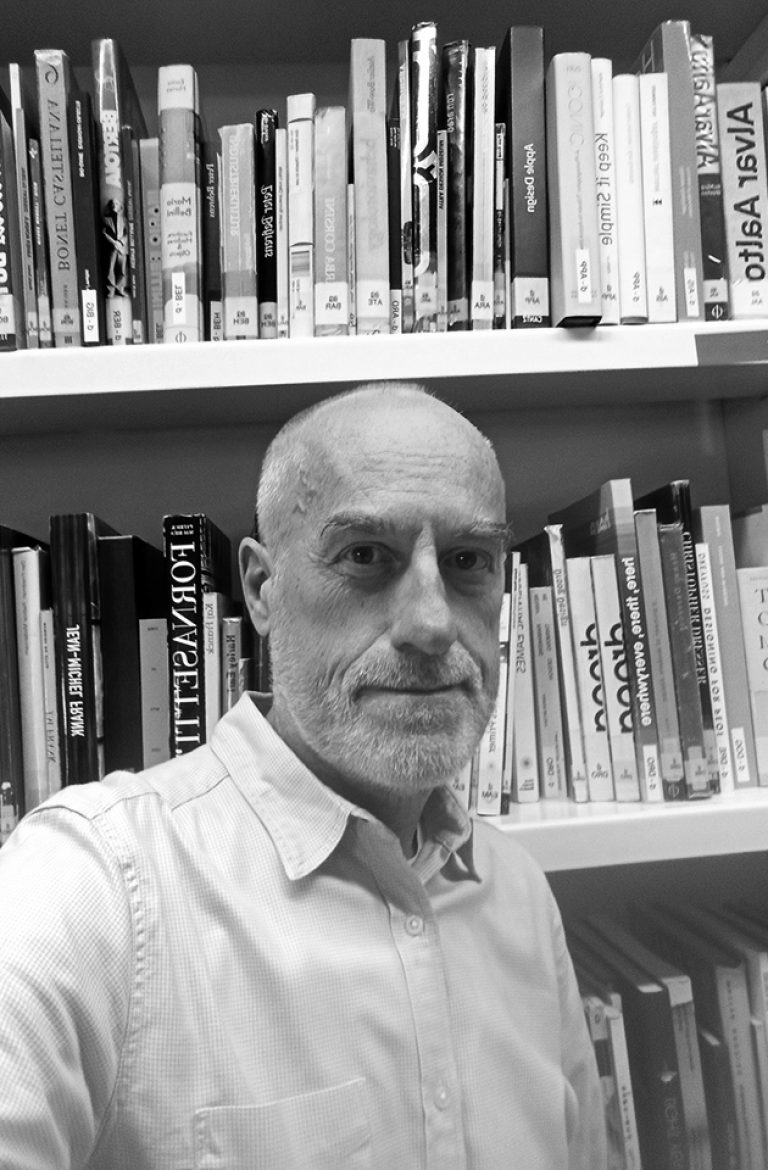
Dot Dot Dot Dot represented a paradigm shift in the sector of magazines dedicated to graphics and visual culture. Published between 2000 and 2010, it promoted a more experimental and critical editorial design. Over the course of 20 issues, it contributed to enriching the discourse on graphic design, demonstrating that it was profoundly connected with other disciplines and aspects of the cultural sphere. In this way, the designer ceased to be exclusively at the service of commercial interests and became an author and researcher willing to question reality and propose alternative aspects of culture. In the magazine, the popular coexists with the erudite and the sublime with the anodyne in a dense amalgam that is often disconcerting but intellectually powerful.
In the Bookworm sessions we will explore iconic magazines and books that capture the spirit of the era in which they were created. The material comes from Elisava’s library collections, especially from its Reserve Fund, which contains publications that, due to their design, constitute a journey through the best of the past and present of modern graphics applied to the field of editorial design.
The Bookworm sessions are guided by Andreu Jansà, librarian and curator of the Enric Bricall Reserve Fund.
We will place the publications in their context and try to define what makes them relevant in the history of editorial design in the 20th and 21st centuries. The direct contact with the books and magazines that we will see in each session will allow us to experience the printed document from a material point of view: binding, paper, lay out, illustrations, typography. We will also be able to assess the adequacy between form and content.


Wed, Apr 2, 2025
case studies

Lucía Herrero & Christian Rodríguez, APN
Some projects, from design to development
We’ll walk through some of our projects and how we’ve worked on them, from design to development. APN is focused on collaboration; we work with a lot of different clients, studios, and designers, which makes each project completely different, with its own set of challenges, collaborators, needs, and structure. Whether we’re building a website from scratch, working with an established identity, or collaborating with other design studios, each project brings something new. Throughout this talk, we’ll show the different stages we go through.

After studying graphic design at Elisava, Christian worked at design studios such as Deutsche und Japaner and Naranjo-Etxeberria. In 2018, he co-founded Carter Studio, a Madrid-based graphic design studio. After nearly three years, he left Carter to start APN, aiming to focus more on the digital side, with a particular emphasis on web design.
Lucía studied fashion design in Madrid and worked for several independent clothing brands before spending three years as a fashion designer at Inditex. During this time, she learned how to code and developed a strong interest in graphic design, which led her to leave her job and join APN.
APN is a creative studio focused on design and web development. We offer a wide range of services including branding, graphic design and digital production. Our work spans across various sectors, collaborating with cultural institutions, fashion brands, independent creatives and commercial enterprises.


Wed, Mar 26, 2025
graphic.elisava lectures
7.30 pm — Sala Aleix Carrió
Open to the public

Vera van de Seyp
Computational Craft
Computational Craft
Next to offering an insight into Vera’s work, this talk dives into creating motion through craft and computation. Vera shows how the tactility of weaving, knitting, and other tangible crafts can extend to the digital realm.
.

Vera van de Seyp is a computational designer and educator based in NYC. Her work explores generative design tools, computational typography, and using artificial intelligence for design. Vera recently completed a Research Assistantship with the Future Sketches group at MIT Media Lab, and studied at KABK and Leiden University.
Vera van de Seyp has collaborated with clients like WIRED, Serpentine Galleries London, and Google Arts and Culture. She also teaches and gives workshops and lectures to inspire creatives to make (and code) their own design tools. She is a member of Alliance Graphique Internationale (AGI). Projects include playful websites, generative language installations, perpetually morphing typefaces, typographic tools, creative coding symposia, and textiles made with a hacked knitting machine.

Mar 17 — 21, 2025
workshop
Jon Uriarte
Photobook
Only for MED students
Introduction in the world of the photobook from its foundations, history and current situation.
Students will acquire knowledge about their conception and work process developing a project with an author. Narrative, rhythm and sequence when the main content is image.
Jon Uriarte studied photography at the Institut d’Estudis Fotogràfics de Catalunya and at the International Center of Photography in New York, as well as a master’s degree in Artistic Projects and Theories from PhotoEspaña and the Universidad Europea de Madrid. He has exhibited in various art centers and galleries, both in collective and individual shows, among which are La Casa Encendida in Madrid, the Koldo Mitxelena in Donostia, Studio 304 in New York, the HBC center in Berlin and the Sala d’Art Jove in Barcelona.
He was the founder of Widephoto, an independent platform dedicated to curating and activities around contemporary photography. In addition, he conceptualized and coordinated for 3 years DONE, the project on reflection and visual creation promoted by Foto Colectania. He currently lives in San Sebastián, from where he combines the curatorship of The Photographers’ Gallery digital programs with the curatorship of the Getxophoto International Image Festival.


Mar 17 — 21, 2025
workshop

Ana Criado
Main Title Sequence for Film
Only for MVD students
Five-day workshop learning how to create a Main Title Sequence for film.
In this workshop, we will learn the art behind creating a main title sequence for a movie step by step.
We will put the weight of the workshop on the critical importance of a solid concept, the understanding of motion to tell a story, and how to use our graphic design knowledge to create a 9-frame storyboard.

Ana Criado is an Emmy-nominated Graphic Designer and Creative Director based in California and Valencia. Known for her exceptional work in developing outstanding main title sequences for film and television. With +20 years of experience in graphic design, corporate identity, communication, and motion graphic design.
Over the past 12 years, Ana has collaborated with some of the most prestigious studios in Hollywood, creating captivating title sequences for notable productions such as Star Trek: Discovery, Star Trek: Picard, American Horror Story, Godzilla, also created graphic works for The 89th Oscars Ceremony, Apple, Nike, T-Mobile, IBM, among others.


Wed, Mar 19, 2025
bookworm

Irma Boom books
Only for MED students
Irma Boom is one of the most influential contemporary book designers, known for her innovative and experimental approach to editorial design. Boom challenges conventions and forces the reader to interact with the book in a different way, reconsidering its function and structure. She works closely with the authors and publishers of the books she designs, influencing not only the aesthetics but also the visual narrative and content. Her work has led to a revaluation of the book as a physical object, an unbeatable experience compared to e-books. We will see some of her most important books, such as the one dedicated to the textile artist Sheila Hicks, the invisible book about Chanel or the tiny catalogues devoted to her own work.
In the Bookworm sessions we will explore iconic magazines and books that capture the spirit of the era in which they were created. The material comes from Elisava’s library collections, especially from its Reserve Fund, which contains publications that, due to their design, constitute a journey through the best of the past and present of modern graphics applied to the field of editorial design.
The Bookworm sessions are guided by Andreu Jansà, librarian and curator of the Enric Bricall Reserve Fund.
We will place the publications in their context and try to define what makes them relevant in the history of editorial design in the 20th and 21st centuries. The direct contact with the books and magazines that we will see in each session will allow us to experience the printed document from a material point of view: binding, paper, lay out, illustrations, typography. We will also be able to assess the adequacy between form and content.


We, Mar 19, 2025
masters’ talks
7.30 pm — Event at DHub
Open to the public

Michael Hansmeyer
Tools of Imagination
Today, we can fabricate anything. Digital fabrication now functions at both the micro and macro scales, combining multiple materials, and using different materialization processes. Complexity and customization are no longer impediments in design.
While we can fabricate anything, design arguably appears confined by our instruments of design: we can only design what we can directly represent. If one looks at 3D-printed artifacts, there is oftentimes a discrepancy between the wonder of technology, and the conventionalism of design. We appear unable to exploit the new freedom that digital fabrication offers us. In short: we can currently fabricate more than we can design.
What is needed is a new type of design instrument. We need tools for search and exploration, rather than simply control and execution. As of yet, we have countless tools to increase our efficiency and precision. Why not also create tools that serve as our muse, that inspire us and help us to be creative? Tools to draw the undrawable, and to imagine the unimaginable.
What we stand to gain are entirely new spatial and haptic experiences. A playful design that stimulates the senses, elicits curiosity, and invites interaction. A design environment that simultaneously allows control and surprise, and that embraces and celebrates the unforeseen.

© Jacek Poremba
Michael Hansmeyer is an architect and programmer who writes algorithms to generate and fabricate architectural form. Recent work includes the design of a 3D printed concrete tower in the Swiss alps, an installation of a forest of columns at Grand Palais in Paris, and the fabrication of a muqarna for Mori Art Museum in Tokyo. Michael taught architecture as visiting professor at the Academy of Fine Arts in Vienna and at Southeast University in Nanjing, and as a lecturer at the CAAD group at ETH Zurich. He previously worked for Herzog & de Meuron architects, and holds an architecture degree from Columbia University.


Wed, Mar 5, 2025
showcase

Marc Castellví, Abuela
Getting by with little
Only for MVD students
In this showcase I will review different projects and experiences that have to do with things that make us happy at the studio. Usually related with creating and thinking with as fewer ingredients as posible. Also about rethinking why are we doing what we do and regenrating the motivation about our profession.
Marc Castellví (Barcelona, 1989) is a motion designer and director. He has co-founded projects such as No Más de Mamá (2012), Outro Studio (2014), and Abuela (2020-present). At Abuela, he specializes in visual narratives, helping clients shape their stories, define a unique visual language, and explore new production languages and formats.
Abuela is a Barcelona-based studio formed by creative directors Kevin Sabariego & Marc Castellví.
Specializing in visual narratives, we help our clients write down their story, create a unique visual language and produce it by any means.
We welcome projects with a flexible, versatile and open-minded approach.
Nobody will talk about you like your Abuela.
Wed, Feb 26, 2025
graphic.elisava lectures
7.30 pm — Sala Aleix Carrió
Open to the public

Bram Broerse & Maurits Wouters, Studio Airport
Storytelling on the Intersection of Film and Graphic Design
Studio Airport works at the intersection of graphic design and film, showcasing a decade of storytelling across various formats, including print publications, feature films, and interactive documentaries. During the lecture we’ll explore what storytelling can mean to New York City’s largest public cemetery but also to the San Quentin prison on the West Coast. We’ll learn about the development of a brand for bio-based materials and the publication of a magazine featuring ecology, design, and science for the London Design Museum.
The studio gives an insight in their design approach and how the team works on larger and small scale projects with the same dedication to detail and embracing artistry, craft and innovation to all aspects of their work. Most of their projects have become in-depth mechanisms of storytelling balancing between the editorial and artistic worlds.

Gravitating around the expressions of art, culture, ecology, and science Studio Airport redefines the relationship between graphic design and film by composing moments into experiences. The studio engages in commissioned projects as well as self-initiated endeavors, always guided by an artistic sensibility.
Founded in 2011 by Bram Broerse and Maurits Wouters, Studio Airport comprises a tight-knit team of creatives supported by a network of specialists. Over the past decade, Studio Airport has garnered national and international acclaim for its work with Emergence Magazine, SeeAllThis, Normal Phenomena of Life, the Hart Island Project, Slowness, and Sapiens Magazine, earning numerous awards amongst European Agency of the year 2024. Next to the studio they’re also tutors at the master department of Information Design at the Design Academy Eindhoven.


